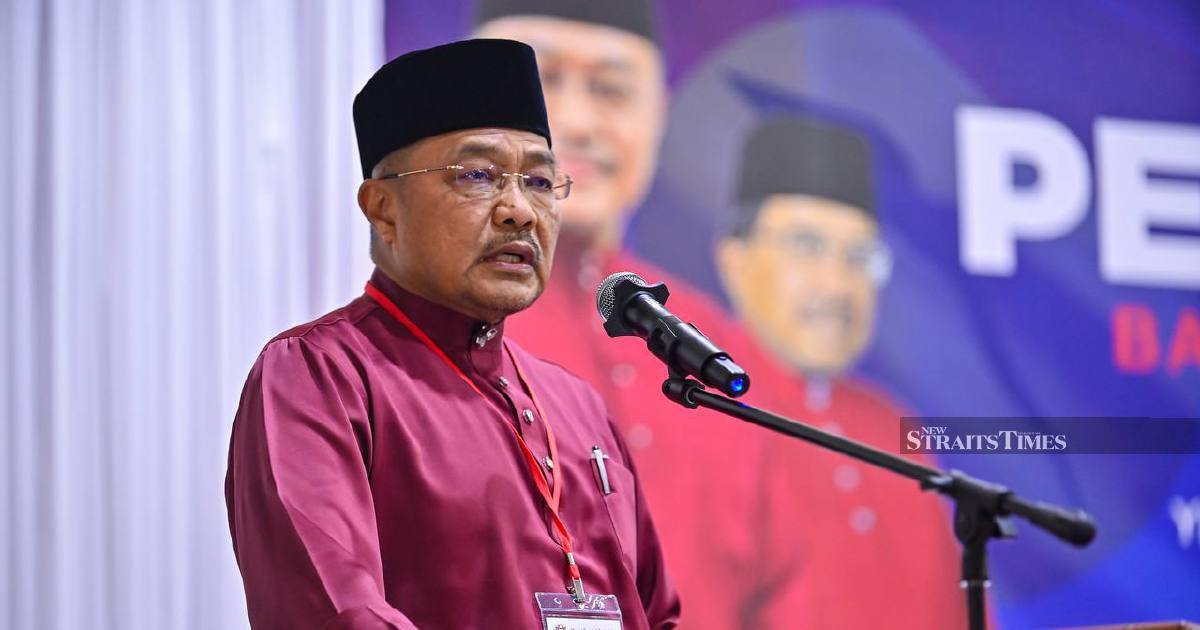
The Barisan Nasional-Perikatan Nasional coalition arrangement tested in Negeri Sembilan should not be regarded as a framework applicable across Malaysia's other states, according to Umno Supreme Council member Sharkar, who highlighted the fundamental differences in political composition and voter sentiment between regions. Speaking in Kuantan, Sharkar underscored that tailoring electoral tactics to the distinctive characteristics of each state remains essential to maximising coalition effectiveness and maintaining strategic flexibility in Malaysia's evolving political landscape.
The cautionary statement reflects broader tensions within the ruling coalition as it navigates multiple state elections and seeks to establish workable partnerships between Umno-dominated Barisan Nasional and the Islam-focused Perikatan Nasional. While both coalitions have demonstrated willingness to cooperate at the federal level, their electoral arrangements at the state level reveal competing interests and divergent strategic priorities. The Negeri Sembilan experience, where BN and PN negotiated seat allocations and campaign coordination, has prompted speculation about whether such arrangements might be replicated in forthcoming contests across other states.
Shirking a one-size-fits-all approach carries significance for multiple reasons. Malaysia's states exhibit markedly different voter demographics, historical voting patterns, and community concerns that demand contextualised political messaging. Rural-dominated states with strong traditional leadership structures may respond differently to coalition frameworks than urbanised, multi-ethnic states with younger, more volatile electorates. Urban centres like Selangor and Penang, for instance, have developed distinct political cultures over successive elections, making blanket strategic transfers ineffective and potentially counterproductive.
The Negeri Sembilan arrangement itself emerged from specific circumstances. As a state where Umno has traditionally held considerable influence but faced challenges in recent elections, and where Islam-focused politics carries significant traction among certain voter segments, the BN-PN alliance represented a pragmatic calculation to avoid three-cornered contests that might disadvantage both coalitions. The decision to cooperate, however, was negotiated carefully, with both sides seeking to protect their respective electoral bases while preventing Pakatan Harapan or other opposition forces from capitalising on divided support.
Extending this model to states with fundamentally different political ecosystems could prove problematic. Selangor, Malaysia's most urbanised and economically significant state, presents a vastly different challenge, with Pakatan Harapan having established deep organisational roots and considerable popular support. A Negeri Sembilan-style arrangement might appear inconsistent with Umno's broader positioning in Selangor or could alienate voters who support one coalition but resist formal partnerships with the other. Similarly, states where Perikatan Nasional commands stronger independent support might view subsuming their interests into a Barisan-led framework as strategically unwise.
Sharkar's remarks also navigate sensitivities within Umno's internal dynamics. The party has historically dominated Malaysian politics through regional strongholds and customised state-level strategies rather than centralised national directives. Powerful Umno figures in individual states guard their territorial prerogatives closely, and imposing electoral templates from the centre risks triggering resistance from influential state-level leaders who see their autonomy and influence threatened. The federation of Malaysian states means that what works in one political geography may alienate crucial constituencies elsewhere.
The statement arrives amid broader repositioning of Malaysia's coalition architecture. Following the 2022 federal elections and subsequent political realignments, both Barisan Nasional and Perikatan Nasional have sought to strengthen their respective positions while exploring tactical alliances that might prove advantageous in specific contests. Rather than pursuing permanent, monolithic partnerships at all levels, the current approach favours pragmatic, election-specific arrangements that reflect local conditions and immediate political objectives.
For Malaysian voters and observers, Sharkar's distinction underscores an important principle: electoral coalitions operate most effectively when designed with sensitivity to local politics rather than imposed uniformly across diverse regions. This approach respects the legitimate diversity of political preferences across states and acknowledges that no single coalition formula can serve equally well across Malaysia's varied political landscape. States retain meaningful autonomy in determining which national-level coalitions best serve their constituents' interests.
Looking forward, this framework suggests that forthcoming state elections will feature negotiated, state-specific arrangements rather than replication of the Negeri Sembilan model. Perak, Pahang, Terengganu, and other states facing elections will likely see coalition strategies crafted to address their particular circumstances, voter compositions, and political histories. While Barisan Nasional and Perikatan Nasional may cooperate in certain contests, the terms and scope of such cooperation will remain fluid and contingent on local factors rather than fixed by national precedent.

