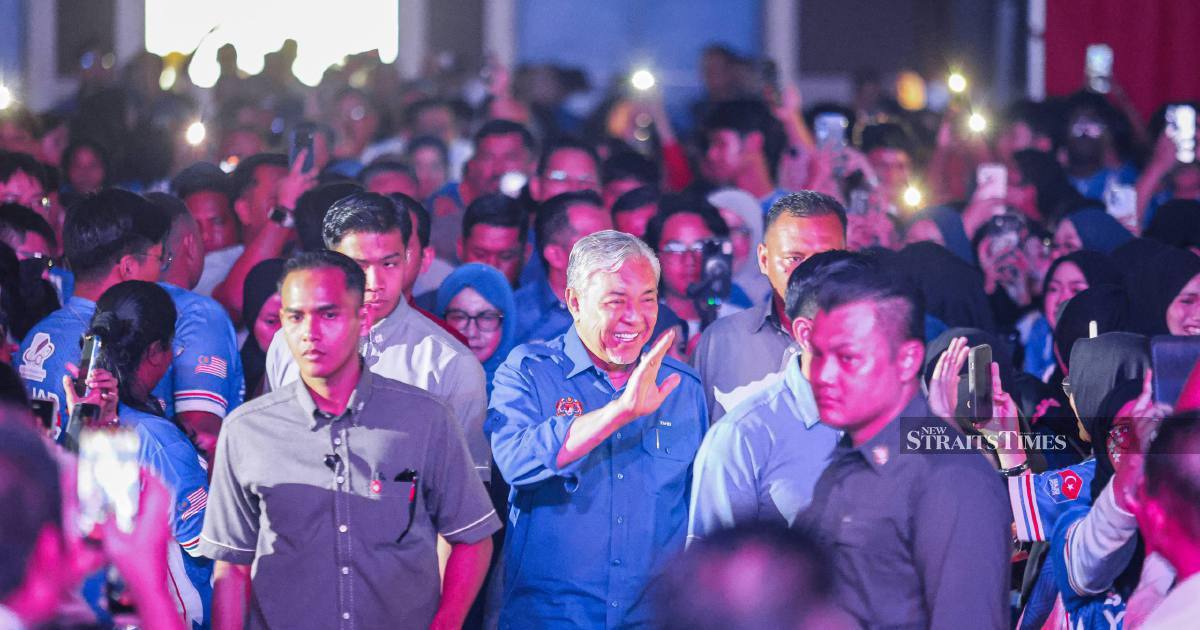
Barisan Nasional is intensifying its campaign to retain Johor by appealing directly to young voters to support caretaker menteri besar Datuk Onn Hafiz Ghazi, who has become the coalition's focal point in the state ahead of the July 11 election. Party leaders are banking on the youth demographic to provide crucial backing for continued governance, framing the contest as a choice between proven development progress and untested alternatives.
The strategy underscores BN's recognition that electoral fortunes in Malaysia increasingly depend on securing strong youth engagement. In Johor, where economic opportunities and urban development remain pressing concerns for younger residents, the coalition appears intent on demonstrating that Onn Hafiz's tenure has delivered tangible benefits. By positioning him as a development champion, BN is essentially asking voters to translate satisfaction with recent progress into renewed electoral mandates.
Onn Hafiz has emerged as a significant figure within Johor's political landscape over the past few years, building a reputation focused on state infrastructure improvements and economic initiatives. His role as caretaker menteri besar gives him considerable visibility and the ability to showcase projects that benefit constituents. BN appears confident that this combination of position and track record will resonate with young voters who may prioritise practical governance outcomes over partisan ideology.
The youth vote in Johor represents a demographic segment that has shown increasing sophistication in recent elections. Young voters tend to evaluate performance on specific metrics—job creation, education opportunities, public amenities, and digital infrastructure—rather than purely traditional political affiliations. BN's focus on Onn Hafiz as a development-oriented leader suggests the coalition believes it can win this segment by emphasising concrete achievements rather than abstract political promises.
Johor's economic significance to Malaysia makes this election particularly consequential. The state serves as a major manufacturing and logistics hub, with significant foreign direct investment flowing into zones like Iskandar Puteri. Young professionals and entrepreneurs in these areas have specific expectations around governance efficiency, regulatory certainty, and quality of life improvements. BN's emphasis on continuing development under Onn Hafiz's leadership appears designed to appeal to this economically dynamic segment.
Regional context adds another dimension to the campaign. Johor's proximity to Singapore and its role as a cross-border economic zone means young residents often have exposure to sophisticated governance standards and competitive labour markets. They may compare their state's infrastructure, education systems, and business environment against neighbouring jurisdictions. This makes BN's development narrative particularly relevant—it offers a clear framework for evaluating whether Johor is progressing competitively.
The coalition's strategy also reflects awareness of generational change within its own base. Younger voters who came of age after the 1998 financial crisis have different political reference points than older generations. They are less likely to support BN out of habit and more likely to demand evidence of effective stewardship. By centring the campaign on Onn Hafiz's development credentials rather than institutional loyalty or historical narratives, BN is adapting its appeal to these evolving expectations.
However, this approach carries inherent risks. Development narratives are only effective if voters perceive that benefits are distributed equitably and reach their communities directly. If significant segments feel excluded from economic progress or overlooked in infrastructure allocation, opposition parties will exploit these grievances. Young voters, particularly those in smaller towns or more rural areas, may question whether growth statistics translate to improved personal circumstances.
The July 11 election will test whether BN's development-focused positioning can overcome any broader currents of political change affecting Malaysian states. Recent electoral cycles have demonstrated that even states with strong economic performance can experience shifts in voter sentiment when other factors—such as perceived corruption, leadership credibility, or specific policy disappointments—enter the equation. BN's concentration on Onn Hafiz as a singular asset might prove vulnerable if other narratives gain traction.
Youth mobilisation efforts in contemporary Malaysian elections increasingly rely on digital engagement and grassroots networking rather than traditional rallies alone. BN's capacity to reach young voters through social media, online forums, and community platforms will be as important as conventional campaigning. The coalition must ensure that its development message reaches these audiences through channels where they actually consume political information.
For Southeast Asia's broader political landscape, Johor's election holds significance beyond state boundaries. Malaysia's electoral dynamics influence how regional parties approach development messaging and youth engagement. A successful BN performance would validate the development-focused campaign strategy; conversely, losses would suggest that such appeals have limited resonance among younger voters increasingly concerned with governance quality and social priorities beyond infrastructure.
Ultimately, BN's wager on Onn Hafiz and development-centred governance reflects confidence that Johor's youth will prioritise demonstrated progress over political change. Whether this calculation proves correct will depend partly on how effectively the coalition communicates its achievements and partly on whether broader political currents favour continuity or change. The coming weeks will reveal how compelling young voters find this argument.

