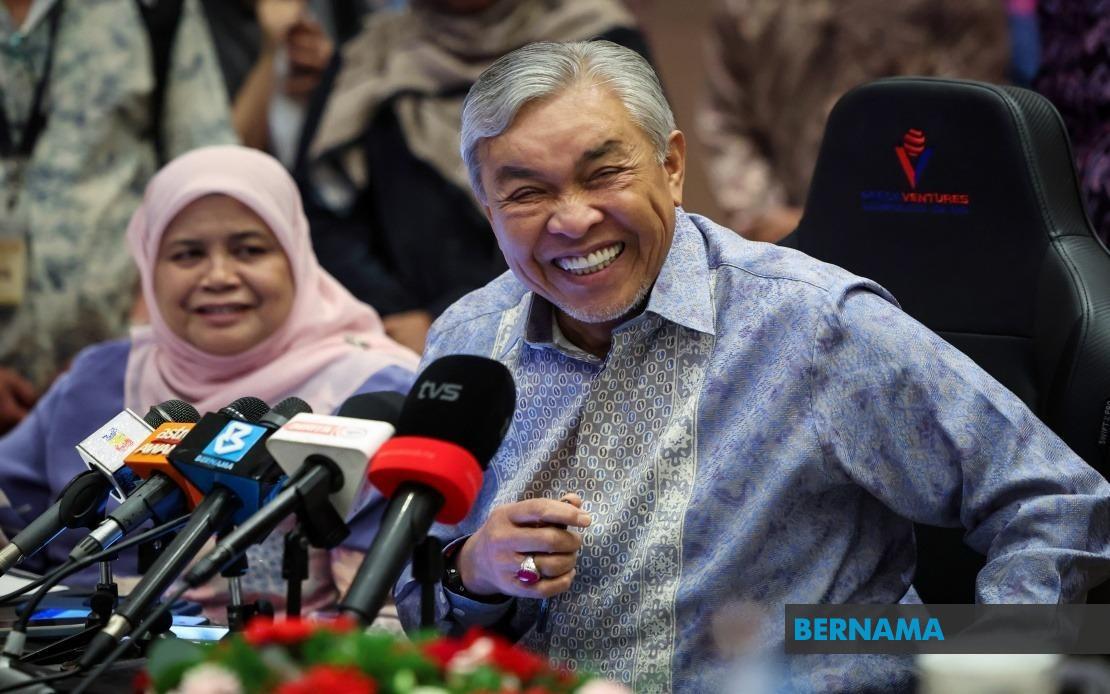
The Barisan Nasional coalition has moved to quash persistent speculation about its stability within the Unity Government, with Deputy Prime Minister Datuk Seri Dr Ahmad Zahid Hamidi publicly reaffirming that BN intends to remain a steadfast partner in the current administration through to the end of the 15th Parliamentary term. Speaking in George Town on Tuesday, Ahmad Zahid, who also chairs the BN leadership, categorically rejected claims that the coalition harbours any designs to undermine Prime Minister Datuk Seri Anwar Ibrahim's government, using colloquial references to dismiss such talk as unfounded.
The reassurance comes amid an environment where Malaysian political observers have grown accustomed to sudden shifts in allegiances and coalition dynamics, particularly following the aftermath of the 2022 General Election and the subsequent formation of the Unity Government. Ahmad Zahid's explicit disavowal of what he termed "Bangkok Move" or "Dubai Move" tactics—colloquialisms for orchestrated political defections—underscores BN's intention to maintain the current settlement that emerged from the Yang di-Pertuan Agong's constitutional guidance in establishing the cross-party arrangement. For Malaysian readers familiar with the country's volatile political history, such declarations carry weight because they attempt to provide assurance in an era marked by unpredictable realignments.
The coalition chairman framed BN's participation in the Unity Government not merely as a temporary tactical alliance but as a binding commitment grounded in deference to the royal decree that facilitated the formation of the current cabinet architecture. By invoking the Yang di-Pertuan Agong's role in orchestrating the settlement, Ahmad Zahid grounds BN's commitment in a higher constitutional principle rather than pragmatic political calculation, a rhetorical move that carries particular resonance in Malaysia's constitutional monarchy. This positioning suggests that any future departure from the arrangement would require not just a shift in BN calculations but would implicitly constitute a rupture with the royal guidance that established the current order.
Ahmad Zahid's comments were delivered during his chairmanship of the 61st Coordination Meeting between the Minister of Rural and Regional Development and State Executive Councillors for Rural Development, bringing together state leaders from BN-controlled administrations including Perlis Menteri Besar Abu Bakar Hamzah and Penang representatives. This institutional setting provided a platform to transmit the coalition's position to grassroots leadership and party machinery, ensuring that messaging about commitment to the Unity Government would cascade through BN's organisational structures during a period when internal discipline has been tested by electoral contests.
The timing of Ahmad Zahid's reaffirmation coincides with the Negeri Sembilan state election campaign, during which BN has been campaigning separately from Pakatan Harapan in some constituencies, creating visible fissures within the Unity Government's public face. The Klawang state seat contest exemplifies this complexity: a three-cornered contest involving Pakatan Harapan's Bakri Sawir, Perikatan Nasional's Danni Rais, and Bersatu's Muhammad Adib Musa reflects the fragmented political landscape at state level, where coalition partners compete directly against one another. Ahmad Zahid acknowledged that a BN polling district centre in Klawang had suspended operations amid tensions over candidate selection, framing this as an administrative matter being resolved by Negeri Sembilan party leadership rather than evidence of deeper fractures.
Regarding the suspension of the Klawang centre, reports suggested that BN did not field its own candidate for the state seat, prompting the local branch to halt operations in protest. Ahmad Zahid indicated that discussions with Negeri Sembilan UMNO chief Datuk Seri Jalaluddin Alias were underway to address the grievance, with nine days remaining before polling day. This episode encapsulates the tension between maintaining coalition discipline at the federal level while navigating the practical challenges of state-level electoral competition where all coalition partners compete for legitimacy and seats.
The Deputy Prime Minister also addressed speculation about a proposed "Perikatan Barisan Nasional" (PBN) alliance, characterising such proposals as merely campaign rhetoric that has never progressed to formal discussions between BN and Perikatan Nasional. Ahmad Zahid's dismissal of the PBN concept as requiring "careful consideration" suggests that while BN has not entirely closed the door to alternative arrangements, the coalition's present trajectory is toward maintaining the existing Unity Government framework. For observers tracking potential political realignment in Malaysia, this represents a stabilising signal, albeit one contingent upon whether grassroots satisfaction with the current arrangement can be sustained through changing electoral circumstances.
The relationship between Ahmad Zahid and Prime Minister Anwar Ibrahim, despite their positioning on opposing sides in the Negeri Sembilan campaign, remained sufficiently cordial for the Deputy Prime Minister to engage in a warm exchange of traditional Malay verse with the Prime Minister. Anwar had previously shared a pantun emphasising unity and discipline in political cooperation, and Ahmad Zahid responded in kind, demonstrating that coalition management does not preclude personal rapport between the top leadership. This cultural exchange, while seemingly lighthearted, serves a political function by reinforcing the notion that coalition partners can maintain friendly relations even while competing in electoral contests.
For Malaysian readers, the broader significance of Ahmad Zahid's statements lies in what they reveal about the current political settlement's fragility and the mechanisms through which it is being maintained. The necessity for the Deputy Prime Minister to issue categorical denials about toppling the government suggests that such speculation remains sufficiently prevalent to warrant public rebuttal. Moreover, the explicit invocation of the Yang di-Pertuan Agong's constitutional role in establishing the Unity Government indicates that BN leadership recognises the value of anchoring its commitment in a framework that transcends ordinary political calculation and appeals instead to higher constitutional principles.
The practical challenges evident in the Negeri Sembilan state election—where coalition partners compete directly and local party structures register discontent—illustrate the inherent tensions within unity governments where partners maintain distinct organisational identities and electoral bases. Ahmad Zahid's confidence that the Klawang matter could be resolved within nine days suggests a belief that such friction can be managed through dialogue and administrative adjustment, though observers might question whether such faith is warranted given the structural incentives that drive coalition members to maximise their electoral gains even at the expense of unity.
Looking forward, the commitment Ahmad Zahid articulated is contingent upon several factors remaining stable: continued ability of BN to extract benefits from the Unity Government arrangement; absence of major electoral setbacks that might prompt senior leaders to recalculate their strategic position; and preservation of the perception among BN's grassroots that remaining in the coalition serves their interests better than alternative arrangements. Should the Negeri Sembilan state election produce disappointing results for BN, or should other electoral contests suggest a broader erosion of BN's position, such reaffirmations might ring increasingly hollow. For now, however, Ahmad Zahid has provided the clearest possible statement that BN intends to remain a partner in the Unity Government through the completion of the 15th Parliament, barring extraordinary developments that shift the calculus underpinning the current arrangement.

