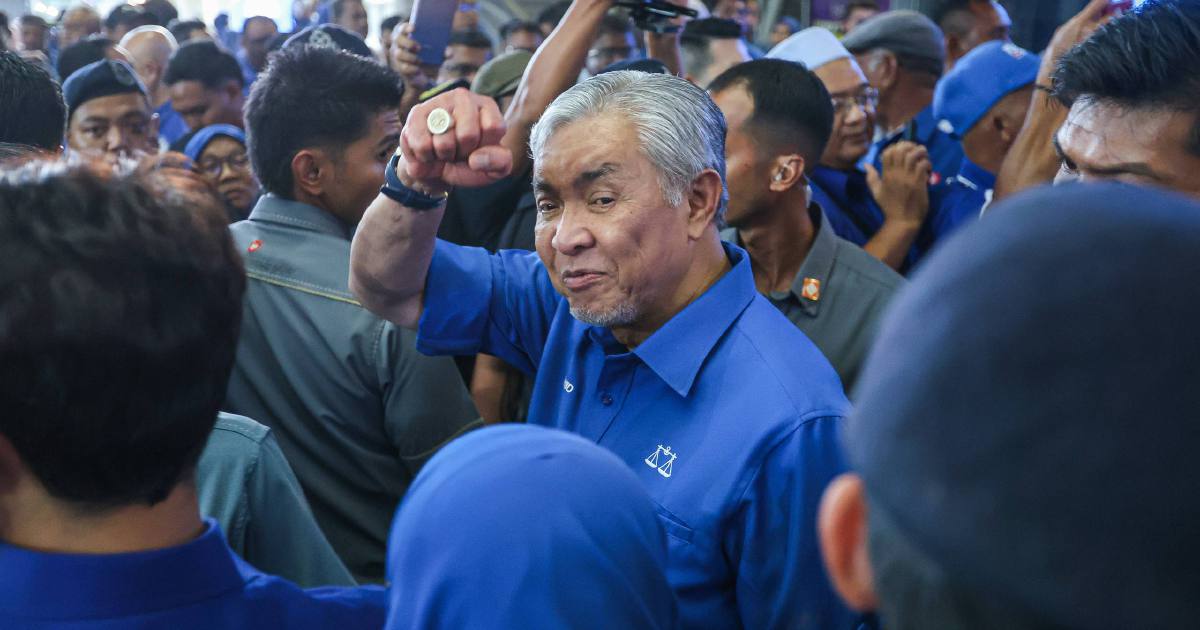
Barisan Nasional is banking on a stronger electoral performance in the forthcoming Johor state election, aiming to expand its footprint in the assembly compared with its showing in the previous contest. The coalition's chairman, Datuk Seri Dr Ahmad Zahid Hamidi, revealed the objective while campaigning in Simpang Renggam, signalling the party's determination to build momentum in a state that remains strategically vital to its political standing in the peninsula.
The push for increased representation reflects BN's broader recovery narrative following its diminished fortunes in recent years. The coalition suffered a significant setback in the 2018 general election, losing federal power after six decades, and has since been working to restore public confidence and rebuild its machinery across all states. Johor, as one of the nation's most populous and economically significant states, carries disproportionate weight in this reconstruction effort. A stronger showing there would provide both symbolic and practical momentum heading into future national contests.
Zahid's statement underscores BN's confidence in its campaign strategy and organisational readiness. The coalition has traditionally maintained substantial influence in Johor, drawing support from the state's large rural and semi-rural constituencies, where BN's grassroots networks remain robust. However, the competitive landscape has shifted markedly. The emergence of stronger opposition coalitions and the fragmentation of the Malay-Muslim voter base in recent elections have complicated BN's path to consistent majorities in state assemblies across the country.
The timing of Zahid's remarks carries significance beyond the immediate electoral context. As BN's chairman and the Prime Minister, his public commitment to seat gains in Johor sends a signal both to party members that high expectations are being set and to potential voters that the coalition is projecting confidence. Such statements in campaign season typically reflect internal assessments of electoral prospects, though they can also function as motivational messaging to energise a sometimes-dispirited party apparatus.
For Malaysian political observers, BN's performance in Johor will function as a crucial barometer of its broader electoral viability. The state has historically been a BN stronghold, and any retreat from its traditional vote share would indicate persistent challenges in connecting with voters despite the coalition's time in government since returning to power federally. Conversely, seat gains would suggest that BN has successfully stabilised its support base and is translating that into tangible electoral gains.
The composition of constituencies in Johor presents both opportunities and challenges for the coalition. Urban and semi-urban areas have become increasingly competitive, with opposition parties making inroads among younger, better-educated voters concerned about governance and economic issues. Meanwhile, rural constituencies continue to lean towards BN, though demographic changes and rural-to-urban migration patterns are gradually shifting the electoral mathematics. BN's campaign strategy will need to address these distinct voter segments with tailored messaging while maintaining cohesion across its diverse component parties.
Regional context adds another layer to BN's calculations. Johor's proximity to Singapore and its role as a commercial and industrial hub mean that voters in many constituencies are conscious of broader economic trends, trade competitiveness, and business-friendly governance. BN's pitch will likely emphasise continuity, administrative experience, and economic development credentials, contrasting these against opposition alternatives that voters perceive as untested in state-level governance in Johor.
The coalition's organisational structure also plays a role in determining realistic seat targets. BN comprises multiple parties, primarily UMNO, MCA, and MIC, each with distinct support bases and internal dynamics. Smooth coordination between these parties, particularly UMNO and MCA in states with significant Chinese communities, is essential for maximising seat gains. Any friction or poor candidate selection could undermine the overall performance, making internal management as critical to success as external campaigning.
Zahid's emphasis on seat increases rather than mere retention or reduced losses suggests BN believes it can move beyond defensive positioning. This confidence may reflect private polling data showing improved sentiment, stronger registration efforts among supporters, or perceived weaknesses in opposition preparations. However, such optimistic public statements must be weighed against the reality that many state elections in recent years have produced surprising results, defying pre-election predictions and pundit expectations.
The broader implications for Malaysian politics are substantial. A successful performance by BN in Johor could reinvigorate the coalition's narrative of restoration and relevance, potentially affecting its performance in future state elections and positioning for the next general election. Conversely, a disappointing result would raise questions about BN's ability to cement recovery and maintain voter confidence, potentially triggering internal party discussions about leadership, strategy, and direction.

