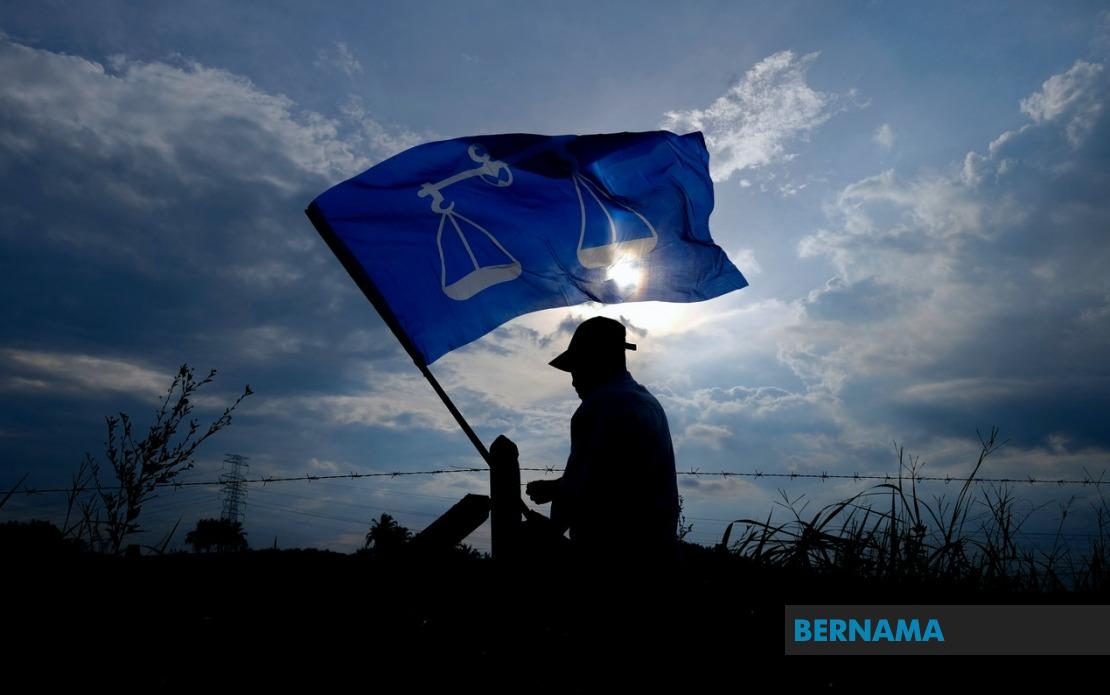
Barisan Nasional will recalibrate its political approach and candidate selection process for the forthcoming Negeri Sembilan state election to reflect the state's distinctive demographic profile and historical voting trends. BN chairman Datuk Seri Dr Ahmad Zahid Hamidi, who doubles as Deputy Prime Minister, underscored that the coalition recognises Negeri Sembilan presents a markedly different political landscape compared to other Malaysian states, necessitating a tailored rather than standardised campaign methodology.
The remarks came during a media address following Ahmad Zahid's attendance at a briefing session involving the TVET@KKDW contingent preparing for WorldSkills Shanghai 2026. He elaborated that structural differences in seat allocation, population composition, and established voting patterns across Negeri Sembilan's constituencies demand a calibrated coalition strategy rather than a one-size-fits-all approach. The BN leadership signalled that candidate announcements would proceed imminently, with the party moving swiftly toward finalising its electoral preparations.
Ahmad Zahid framed the upcoming Negeri Sembilan contest within the context of BN's recent performance, pointing to the coalition's victory in the Johor state election held the previous Saturday. He attributed that success to what he termed mental resilience and emotional creativity displayed by party operatives throughout the campaign period, suggesting that similar qualities would be mobilised for the Negeri Sembilan effort. The statement implicitly acknowledged that electoral outcomes increasingly hinge not merely on organisational machinery but on the adaptive capacity of political actors to navigate campaign dynamics.
On the question of ongoing coordination with PAS regarding potential cooperation arrangements, Ahmad Zahid adopted a cautious position, emphasising that no binding formal agreement currently exists between BN and the Islamist party. He clarified that previous discussions between the coalitions constituted exploratory dialogue premised on mutual understanding rather than finalised commitments. Notably, the PAS partnership discussions have encompassed consideration of a joint candidate for the Negeri Sembilan Menteri Besar position, though Ahmad Zahid stressed such matters remain preliminary and subject to further negotiation.
The Deputy Prime Minister's emphasis on the preliminary nature of BN-PAS talks reflected the delicate position facing Malaysia's ruling coalition. Any perception of BN capitulating to coalition partners or yielding key positions too readily could undermine party morale and complicate internal negotiations with component parties. By framing discussions as understanding-based rather than agreement-based, Ahmad Zahid preserved flexibility for BN's negotiating posture while signalling openness to partnership arrangements that might enhance electoral prospects in Negeri Sembilan.
Ahmad Zahid addressed recent calls for Housing and Local Government Minister Nga Kor Ming to resign, adopting a pragmatic stance that distinguished between opposition-style political rhetoric and conduct appropriate within a ruling coalition. He argued that aggressive demands for ministerial resignations, whilst perhaps conventional when parties occupy opposition benches, become inappropriate when all parties function within a unity government framework. His assertion that he maintains cordial personal relations with Nga, describing him as a friend, underscored the Coalition's interest in projecting unity rather than internecine conflict.
The Malaysian political context renders Ahmad Zahid's comments on Unity Government cohesion particularly significant. The federal administration comprises multiple political parties spanning the ideological spectrum, from UMNO-led BN to DAP to PAS to smaller components. This extraordinary arrangement necessitates suppressing the kind of acrimonious criticism characteristic of traditional two-party systems. Ahmad Zahid's implicit warning against public recriminations between coalition members reflects awareness that the Unity Government remains fragile and that excessive internecine sniping could precipitate its collapse.
Regarding broader federal-level dynamics, Ahmad Zahid reported that relations among Unity Government leadership remain constructive and professionally functional. He insisted all coalition parties operate cohesively as a unified team and maintain commitment to continuity throughout the administration's remaining tenure. These assurances carry weight given periodic tensions within the coalition over ministerial appointments, policy priorities, and allocation of cabinet portfolios, tensions that periodically surface in media reporting and political commentary.
The Negeri Sembilan state election represents a tactical opportunity for BN to demonstrate electoral vitality beyond its recent Johor success and test refined campaign methodologies in a demographically distinct setting. The state's relatively smaller size and population compared to larger states like Selangor or Perak make it an ideal laboratory for experimental political approaches. A BN victory would reinforce momentum and validate claims that the coalition remains electorally competitive despite years spent in opposition from 2018 to 2023.
For Malaysian observers tracking coalition dynamics, Ahmad Zahid's positioning of BN as a flexible, adaptive political force capable of calibrating strategy to local conditions contrasts with perceptions of a rigid, centralised party apparatus. By emphasising demographic and voting pattern analysis in candidate selection, BN signals embrace of data-driven politics and recognition that electoral success increasingly depends on granular understanding of constituency-level variation. This modernising rhetoric, whether matched by corresponding practice, represents implicit acknowledgment that traditional patronage-based and personality-driven politics require supplementation by more sophisticated analytical approaches.
The Negeri Sembilan contest also carries implications for regional political dynamics within Southeast Asia, where Malaysia's coalition arrangements represent a distinctive experiment in multi-party governance. How successfully BN and its partners navigate the Unity Government framework will influence perceptions of whether fractious Southeast Asian democracies can function effectively through broad-based coalition structures or whether such arrangements inevitably generate gridlock and internal contradiction.

