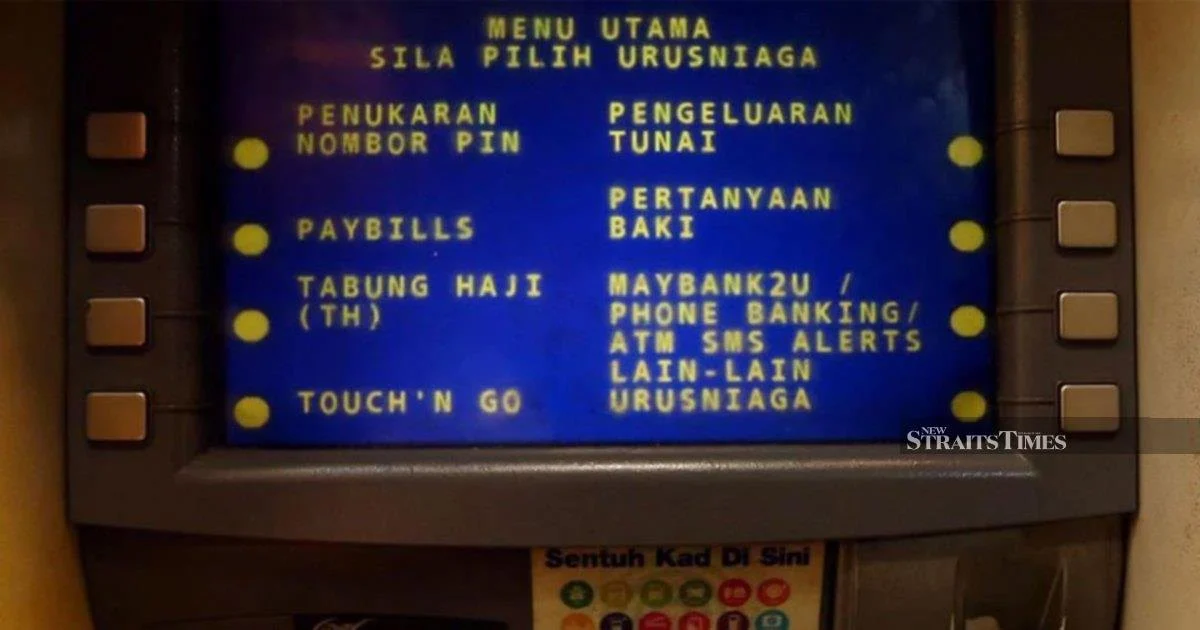
Bank Negara Malaysia has launched a public appeal for customers to report any instances in which they are charged the RM1 interbank withdrawal fee when accessing ATMs operated by their own financial institution, according to Communications Minister Datuk Fahmi Fadzil. The directive represents the central bank's proactive stance on protecting consumer rights and ensuring banking service standards remain fair and transparent across Malaysia's financial sector.
The RM1 interbank withdrawal charge has long been a source of friction in Malaysia's banking landscape, particularly when consumers find themselves facing unexpected levies on transactions that should theoretically be fee-free. When customers use ATM terminals owned and operated by their own bank, they typically expect zero charges, as these machines are ostensibly part of the bank's core service offering to account holders. The emergence of complaints about improper charges at such machines suggests potential systemic issues or isolated incidents of misconfiguration that warrant regulatory attention.
By encouraging public reporting, Bank Negara Malaysia appears to be strengthening its consumer protection mechanisms and data gathering capabilities. The central bank relies significantly on customer feedback to identify patterns of non-compliance or service failures across the banking network. When sufficient evidence of improper charges accumulates, regulators can investigate whether specific institutions are violating established guidelines or whether technical issues within ATM networks are causing erroneous charges to be applied to accounts.
The significance of this issue extends beyond mere inconvenience. For ordinary Malaysians, unexpected charges erode trust in their banking relationships and can accumulate into meaningful losses over time, particularly among frequent ATM users or those managing tight household budgets. Pensioners, informal workers, and individuals living paycheck to paycheck are often most vulnerable to such unintended fees, making the regulatory focus on this matter a matter of consumer protection equity.
From a broader perspective, the banking sector's move toward greater digital integration and network interconnectivity has introduced complexity that occasionally results in billing errors or unclear delineation of which charges apply to which transactions. ATM networks across Malaysia involve multiple stakeholders—individual banks, shared networks, and third-party service providers—creating opportunities for miscommunication about pricing policies. The onus falls on Bank Negara Malaysia to ensure all participants in this ecosystem adhere to the fundamental principle that customers using their own bank's ATMs should not incur interbank withdrawal fees.
The Communications Minister's public statement serves a dual function: it alerts consumers to their rights while simultaneously putting banking institutions on notice that the regulator is monitoring compliance closely. This type of transparency-focused communication helps close the gap between regulatory expectations and actual banking practices on the ground. In an environment where many consumers remain unaware of their entitlements, such announcements play an educational role beyond the immediate regulatory framework.
For Malaysian bank customers, the practical implication is clear: any charge of RM1 when using an ATM belonging to their own bank should be reported rather than quietly accepted. This could involve contacting the bank's customer service, filing a formal complaint through the bank's internal dispute resolution process, or escalating the matter to Bank Negara Malaysia directly through its available channels. The accumulation of such reports creates an evidence base that can justify regulatory action, whether that involves issuing guidance to banks, imposing penalties for systematic violations, or requiring remediation of technical systems causing erroneous charges.
The timing of this advisory also reflects the increasing scrutiny of banking fees in Malaysia and the broader Asia-Pacific region. As digital banking expands and consumers become more sophisticated about financial management, tolerance for inexplicable charges diminishes. Central banks across the region have similarly focused on fee transparency and justification, recognising that trust in the banking system depends partly on customers understanding exactly why and when they are charged for services.
This regulatory initiative aligns with Bank Negara Malaysia's broader consumer protection mandate, which extends across lending practices, data security, digital banking standards, and fee structures. By addressing the seemingly narrow issue of ATM charges, the central bank demonstrates its attention to detail and commitment to safeguarding even small but meaningful aspects of customer experience. Such vigilance contributes to systemic integrity and helps prevent the accumulation of small grievances that can eventually undermine confidence in formal financial institutions.
Moving forward, the banking industry should interpret this announcement as a clear signal to audit their ATM charging protocols and ensure that all systems, whether automated or manual, correctly identify customer accounts and apply appropriate fees. Banks that proactively identify and refund improper charges may also gain competitive advantage through enhanced reputation for customer service and integrity. For consumers, the message is equally straightforward: awareness of their rights and willingness to report violations represents the most effective mechanism for maintaining fair banking practices across Malaysia.

