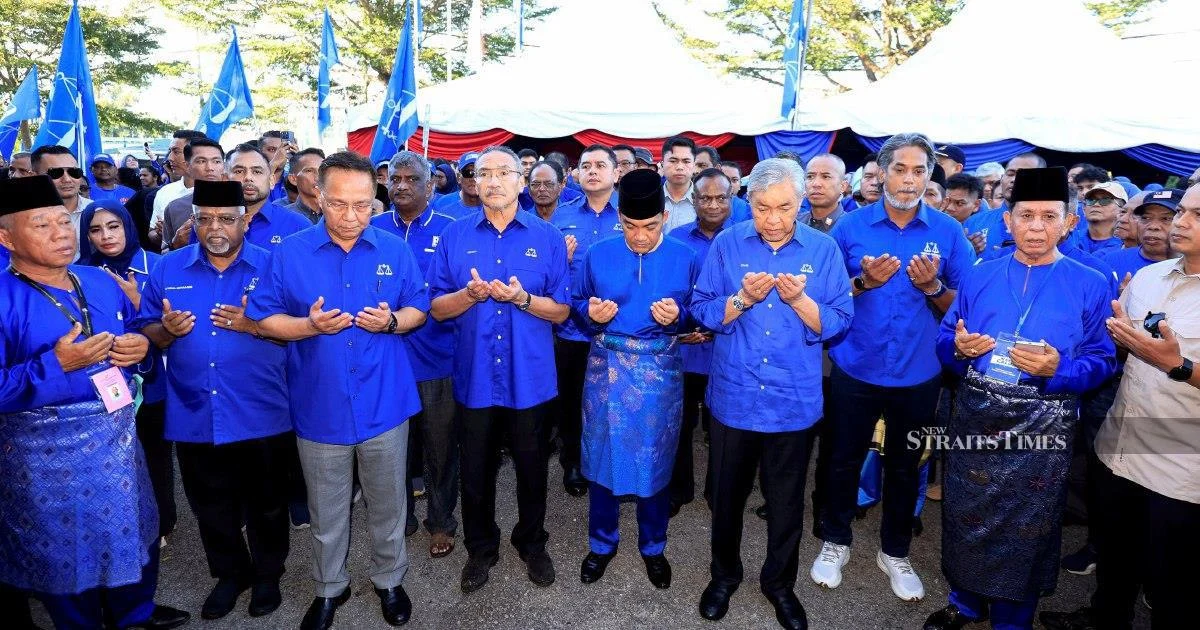
Senior figures from Barisan Nasional descended on Simpang Renggam District Council on Monday morning to throw their weight behind Datuk Onn Hafiz Ghazi, marking a significant show of solidarity within Malaysia's traditional political powerhouse. The turnout of high-ranking party officials underscores the importance BN places on maintaining its stronghold in Johor, a state that has served as the coalition's bastion for decades and remains crucial to any national government formation.
The convergence of party heavyweights at a single location carries considerable symbolic weight in Malaysian politics. Such coordinated demonstrations of support rarely occur without careful orchestration, reflecting strategic messaging designed to project an image of internal cohesion and unified leadership. For Onn Hafiz, who has navigated the complex landscape of Johor politics in recent years, the presence of these senior figures validates his position as a figure worthy of BN's collective backing and suggests confidence in his ability to advance the coalition's interests in the state.
Johor's political significance extends beyond its status as BN's traditional stronghold. The state accounts for a substantial portion of parliamentary seats and has historically influenced the trajectory of national politics. Control of the state government carries implications for resource allocation, development projects, and the distribution of patronage that shapes political loyalty across the broader region. BN's commitment to strengthening its position here reflects recognition that maintaining dominance in resource-rich states remains essential for the coalition's long-term viability and bargaining power within any future federal arrangement.
The timing of this gathering warrants careful consideration within the context of Malaysian electoral cycles. State elections in Johor do not occur in isolation but rather form part of a broader political calendar that shapes national discourse and inter-party dynamics. The presence of multiple senior figures suggests that BN is already mobilising its machinery and activating key constituencies well ahead of any formal announcement, demonstrating the institutional maturity and organisational depth that distinguishes the coalition from newer political formations.
Onn Hafiz's political journey reflects the intricate balance required to survive and advance within BN's structure. The Datuk has had to navigate factional interests, maintain support across diverse constituencies, and demonstrate loyalty to party leadership while building his own political base. The visible backing of party elders suggests he has successfully managed these competing pressures, at least for now, positioning himself as a reliable custodian of BN interests in a state where such reliability carries measurable value.
The gathering also provides insight into BN's broader strategic orientation as it seeks to recover from recent electoral setbacks at both state and federal levels. By concentrating resources and leadership attention on Johor, the coalition signals that it intends to fight hard for retention of its traditional strongholds rather than pursuing high-risk expansion into new territory. This defensive strategy, while less ambitious than attempting major gains, reflects a realistic assessment of the political landscape and a determination to stabilise the coalition's base before pursuing broader gains.
For observers in other Malaysian states, the Johor mobilisation carries lessons about BN's capacity to function as a coordinated force. Despite occasional public disagreements and periodic tensions between component parties, the coalition demonstrated its ability to marshal senior figures in support of a particular leader and agenda. This institutional capacity, built over decades of dominance, remains a significant asset even as BN faces demographic and electoral challenges that did not exist in previous electoral cycles.
The gathering at Simpang Renggam also reflects how Malaysian politics continues to operate at multiple levels simultaneously. While national media and public discourse often focus on federal politics and inter-coalition rivalry, crucial work occurs at the state and district level where the real work of government happens and where voting populations make decisions based on proximity, local issues, and relationship-building with political representatives. BN's willingness to deploy senior figures at this granular level demonstrates that the coalition understands the importance of integrating national messaging with local political work.
Looking forward, the visible unity displayed at this gathering will likely set the tone for BN's campaign strategy in Johor. The projection of confidence and cohesion serves multiple audiences simultaneously: it reassures BN's own supporters that their party remains strong and functional, it signals to potential defectors that the coalition remains capable of delivering benefits to its members, and it conveys to other political forces that BN intends to defend its position vigorously. Whether such displays of unity translate into electoral success will ultimately depend on broader factors including economic conditions, local grievances, and the relative appeal of alternative political options available to Johor voters.
The convergence of BN leadership in support of Onn Hafiz represents more than a simple endorsement. It constitutes a public statement about the coalition's priorities, its assessment of key political assets, and its determination to maintain control over states that have long provided the financial and political resources essential to BN's national standing. As Malaysian politics continues to evolve and fragment, such demonstrations of traditional coalition machinery assume even greater significance.

