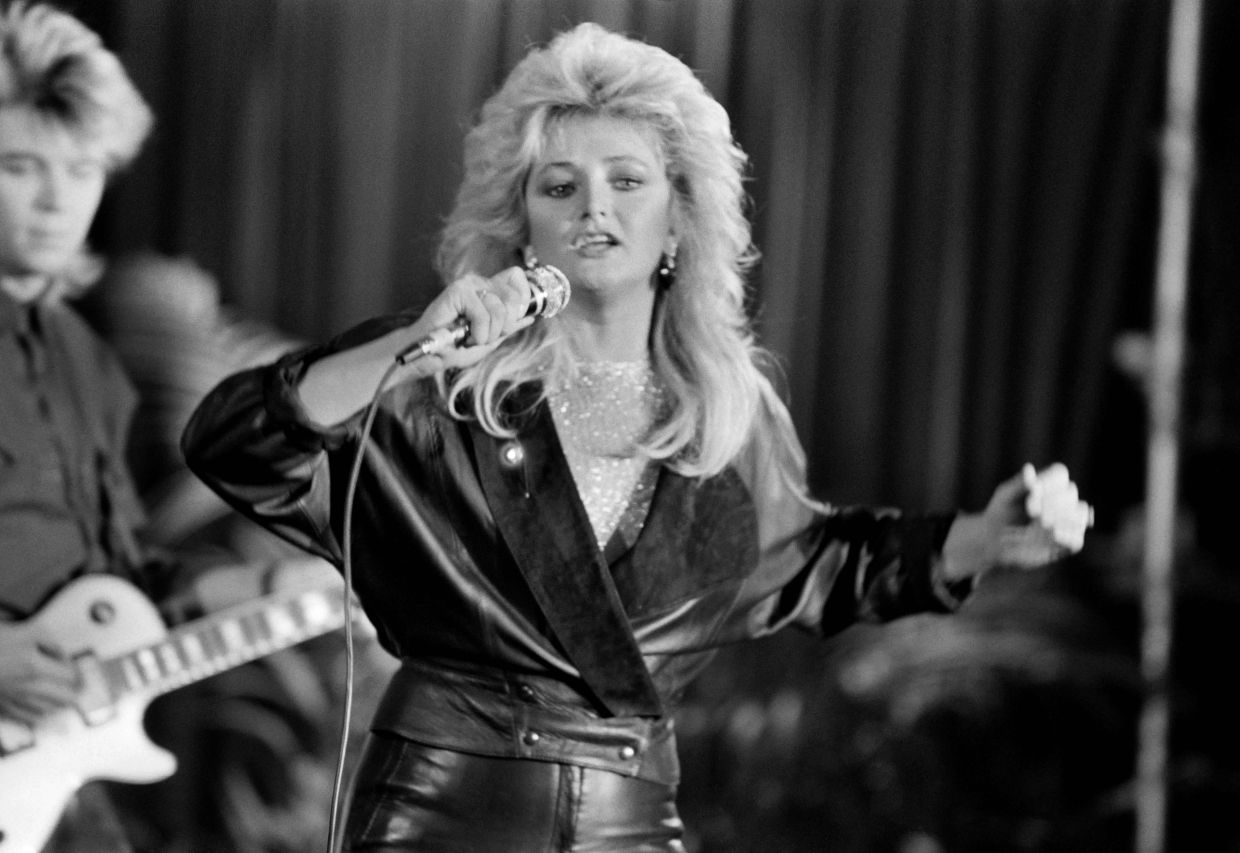
Bonnie Tyler, the Welsh pop singer whose distinctive gravelly voice and 1983 chart-topping power ballad "Total Eclipse of the Heart" became synonymous with pop spectacle, has died at the age of 75. She passed away unexpectedly at a hospital in Portugal where she was being treated for an illness, according to a statement from her family released Thursday. Tyler had been hospitalised in Faro in May, where she maintained a home, undergoing emergency intestinal surgery before being placed into an induced coma from which she did not recover.
The trajectory from Skewen, Wales—a working-class mining community where Tyler was born as Gaynor Hopkins in a council house with an outside toilet—to becoming a Grammy-nominated international recording artist represents one of popular music's most compelling narratives. She grew up in a household of six siblings, shaped from childhood by her passionate absorption of American soul and rhythm-and-blues legends. Her formative years immersed in the music of Janis Joplin, Nina Simone, Tina Turner, and Otis Redding would later manifest in her singular vocal timbre. She developed a habit of recording performances from "Top of the Pops" on a reel-to-reel machine, meticulously transcribing lyrics and performing them endlessly into a hairbrush—a devoted apprenticeship that laid the foundation for her eventual career.
A transformative event occurred in 1976 when surgical removal of nodules on her vocal cords left her with the trademark husky, sandpaper-textured voice that would become her most recognisable artistic signature. After working under the stage name Sherene Davis while fronting a soul outfit, she was discovered by talent scout Roger Bell and brought to London for demo recordings. RCA Records eventually signed her, and under the Bonnie Tyler name she released "The World Starts Tonight" in 1977, scoring her debut chart success with "Lost in France". A No. 3 hit with "It's a Heartache" in 1978 suggested the beginning of sustained commercial momentum, but her trajectory stalled until a fortuitous creative partnership altered her destiny entirely.
After witnessing Meat Loaf perform "Bat Out of Hell" on the BBC, Tyler recognised in that bombastic theatrical production a template for her own artistic ambitions and deliberately requested collaboration with the song's architect, Jim Steinman. The producer-songwriter brought to her attention "Total Eclipse of the Heart," a composition Steinman had originally crafted as the centrepiece of his 1969 student musical "The Dream Engine" while at Amherst College. He presented it to Tyler as material sourced from a proposed musical adaptation of the vampire classic "Nosferatu". Recording at Steinman's meticulous standards—laying down basic rhythm tracks, executing nine complete takes, selecting the finest performance, then layering additional production elements in the manner of Phil Spector—Tyler and Steinman settled on the second take as their definitive version.
Featuring E Street Band members Roy Bittan and Max Weinberg, the recording emerged as an apocalyptic meditation on romantic devastation. The lyric "Once upon a time there was light in my life / But now there's only love in the dark" encapsulated emotional devastation through operatic grandeur rather than introspective restraint. "Total Eclipse of the Heart" spent four consecutive weeks at No. 1 and accumulated more than one billion streams across digital platforms. The accompanying music video, filmed in a genuinely unsettling former psychiatric hospital in Surrey where electroshock therapy had been administered, became an MTV institution—a five-minute extravaganza of gothic imagery including slow-motion doves, candles, dancing ninjas, fencers, gymnasts, shirtless swimmers in goggles, and Tyler herself draped in shoulder pads of preposterous proportions.
Critics and music analysts have continued reassessing the song's cultural significance decades after its release. When Stereogum conducted a comprehensive reevaluation in 2020, the publication characterised "Total Eclipse of the Heart" as "an extinction-level event rendered in musical form," describing it as "pop music as heart-pounding, chest-thumping, blood-gargling, heavens-falling passion explosion." The composition transcended generational boundaries through unexpected cultural moments: Cate Blanchett performed it while assaulting Billy Bob Thornton with an automobile in the 2001 film "Bandits"; it appeared during a wedding sequence in "Old School" in 2003; One Direction performed it on the British version of "The X Factor" in 2010. Subsequent cover versions by Nicki French in 1995 and Westlife in 2006 demonstrated its enduring commercial appeal.
The song experienced unprecedented renewal during astronomical events. Solar eclipse mania in 2017 and a total solar eclipse spanning North America in 2024 triggered renewed streaming engagement, introducing the composition to audiences discovering it for the first time. This phenomenon—where terrestrial and astronomical spectacles reinvigorated decades-old pop material—exemplified Tyler's most lasting cultural contribution. Her 1983 album "Faster Than the Speed of Night" earned Grammy nominations in the best rock vocal performance and best pop vocal performance categories, though the awards ultimately went to Pat Benatar and Irene Cara respectively.
While Tyler never replicated the commercial magnitude of "Total Eclipse of the Heart," she maintained professional relevance through film soundtrack contributions, most notably "Holding Out For a Hero" from "Footloose" and "Here She Comes" from "Metropolis", both released in 1984. Her career demonstrated staying power through genre experimentation: a 2013 country-music venture in Nashville produced "Rocks and Honey", featuring collaborations with Vince Gill and representing the United Kingdom at that year's Eurovision Song Contest in Sweden, where she finished 19th. A 2019 album "Between the Earth and the Stars" featured duets with Rod Stewart, Cliff Richard, and Status Quo's Francis Rossi, establishing Tyler as a respected collaborator among her generational peers.
Tyler's final years witnessed significant institutional recognition. Queen Elizabeth II awarded her an MBE for services to music in 2023, a honour reflecting her sustained cultural impact and the enduring affection global audiences maintained toward her singular artistry. Beyond the monumental success of "Total Eclipse of the Heart"—which accumulated over one billion video views and became embedded in popular consciousness—Tyler embodied a particular moment in 1980s pop when melodrama, theatrical production values, and genuine vocal power merged into commercially irresistible forms. Her trajectory from a Welsh coal miner's daughter to an internationally celebrated recording artist, whose voice continues resonating through eclipse celebrations and popular culture references, constitutes a substantial artistic legacy that transcends her most famous composition.

