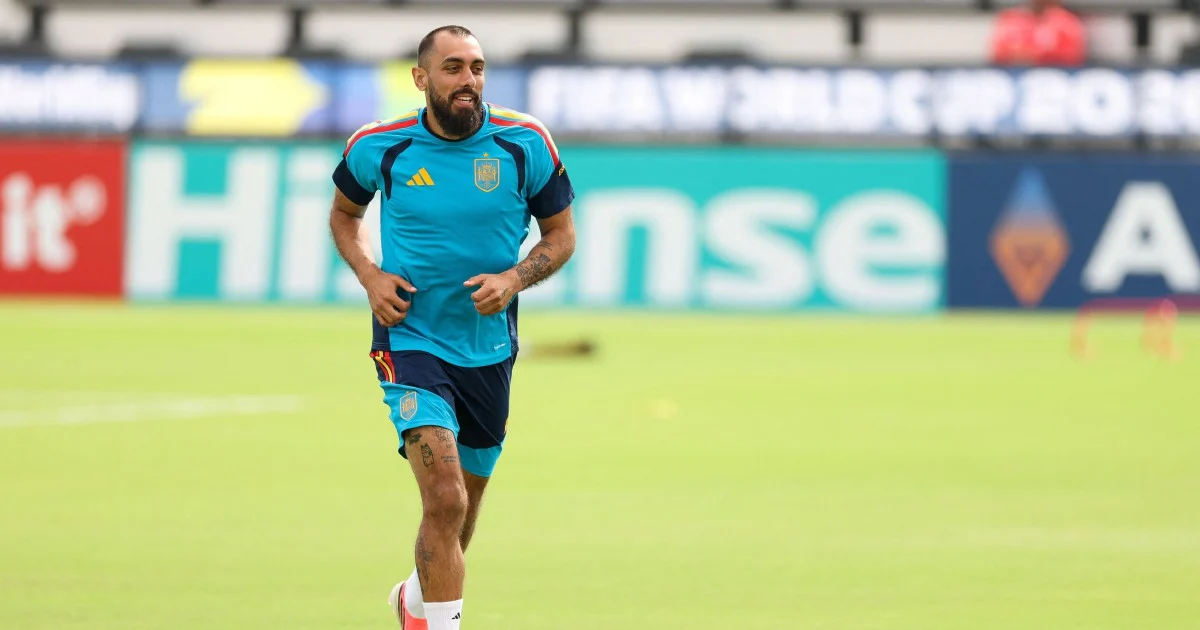
Borja Iglesias stands apart in professional football, not merely for his prowess as a striker who represented Spain at the World Cup, but for his unshakeable commitment to speaking candidly about matters that many athletes avoid. The 31-year-old has cultivated a public persona that challenges the sport's traditionally conservative boundaries, openly discussing complex geopolitical and social issues while presenting himself with deliberate artistic choices—including painted nails—that defy football's unwritten codes of conformity.
In an era when footballers often limit their public commentary to pre-match platitudes and carefully vetted statements, Iglesias has emerged as a refreshing anomaly. His willingness to address Gaza's humanitarian crisis and football's persistent homophobia problem reflects a broader shift among younger athletes who view their platform as carrying moral responsibility. This stance has resonated with supporters who appreciate the intellectual engagement, though it has simultaneously drawn criticism from traditionalists who believe athletes should focus solely on their craft.
The nickname "the alien of football" captures the peculiar position Iglesias occupies within the sport's ecosystem. Football, despite its global reach and influence, remains remarkably insular in terms of political and social discourse. Players who step beyond carefully delineated boundaries often face backlash from media, rival supporters, and sometimes even their own clubs. Iglesias has navigated these treacherous waters with apparent comfort, treating controversial topics with the same seriousness that teammates might reserve for tactical discussions.
His approach to personal presentation amplifies this message of non-conformity. Painted nails, once entirely absent from professional football's aesthetic, have become increasingly visible as younger players reclaim control over their own image and identity. For Iglesias, this choice represents more than mere fashion; it symbolises a deliberate rejection of the sport's historically rigid masculine codes. In the context of his broader advocacy, painted nails become a visual statement accompanying his verbal commitments to social progress.
The Gaza question demonstrates how Iglesias approaches international affairs with genuine engagement rather than the shallow virtue signalling that characterises many celebrity statements. Rather than issuing generic humanitarian pleas, he has engaged substantively with the conflict's complexities, understanding that meaningful advocacy requires moving beyond comfortable platitudes. This intellectual rigour distinguishes his commentary from the often-performative activism that dominates social media.
Homophobia in football remains a persistent challenge despite the sport's increasing diversity. The professional game still lacks openly gay players at elite levels, a striking absence in a sport with thousands of professionals worldwide. Iglesias's willingness to address this systemic problem head-on contributes to the cultural shift necessary for football to become genuinely inclusive. His commentary suggests that change requires active participation from heterosexual allies with platform and influence, rather than waiting for marginalised individuals to always lead conversations about their own rights.
The Spanish striker's career trajectory has provided him with sufficient security to take these positions. His accomplishments in La Liga and international football grant him credibility and some protection from the most severe professional consequences that might befall less established figures. Yet this reality also underscores a crucial point: meaningful social progress in football depends on prominent players choosing to risk their carefully cultivated images. Iglesias demonstrates that such risk is manageable when talent and achievement provide a foundation.
For Southeast Asian audiences, Iglesias's approach offers interesting parallels to athletes navigating similar tensions between sporting excellence and social responsibility. The region has produced footballers facing their own pressures to conform or speak out, particularly around human rights, inequality, and religious harmony. Iglesias's example suggests that international visibility combined with genuine conviction creates space for athletes to transcend their sport's conventional boundaries.
The reaction to Iglesias reveals deep divisions within football's fanbase regarding athletes' social roles. Supporters increasingly expect their heroes to engage with world events, yet substantial segments remain wedded to the notion that footballers should remain apolitical. This tension reflects broader societal debates about celebrity influence and responsibility. Iglesias navigates this divide by remaining authentic rather than performative, discussing issues because they genuinely matter to him rather than because strategic positioning requires it.
Future generations of footballers will likely remember Iglesias not just for his contributions on the pitch but for normalising substantive social discourse within professional sport. Every player who follows his example, speaking plainly about injustice without corporate sanitisation, builds momentum toward a football culture where conscience and athleticism coexist naturally. The "alien of football" may ultimately accelerate the sport's evolution into something more fully human.

