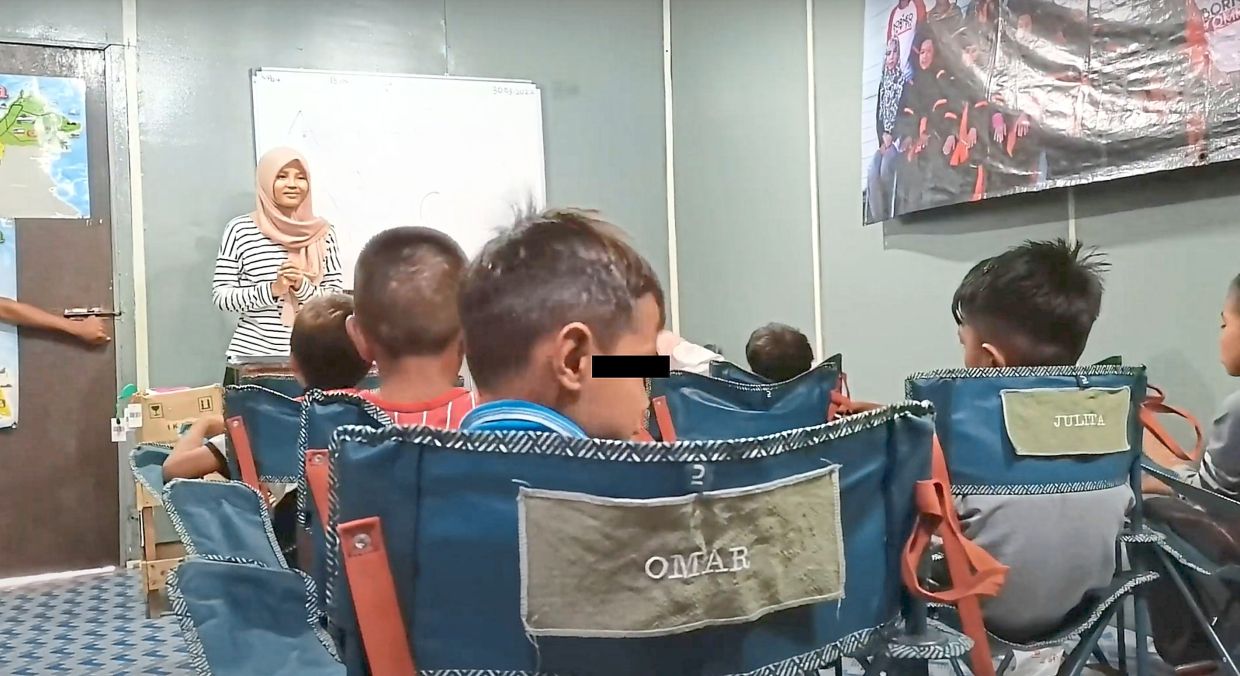
The Court of Appeal's recent rulings in two citizenship cases have exposed a fundamental tension in Malaysian law: children can be born, raised, and spend their entire lives in Malaysia yet remain stateless because of their parents' marital status at the time of their birth. In both cases, the court determined that despite DNA evidence confirming biological links to their Malaysian fathers, the children could not acquire Malaysian citizenship because the parents were not legally married. The mothers, both from Indonesia and the Philippines, had departed when their children were young, leaving the boys to be raised entirely within Malaysia's borders with no meaningful connection to their mothers' countries of origin. The ruling hinges on constitutional provisions that determine citizenship through the mother in such circumstances—a legal framework designed in an era when such situations were uncommon and DNA paternity testing was impossible.
This constitutional provision reflects assumptions about family structure and legitimacy that have become increasingly disconnected from contemporary social reality. The Federal Constitution stipulates that for children born to unmarried parents, citizenship must follow the maternal line. Courts have consistently applied this rule mechanically, treating it as an absolute bar regardless of the child's actual circumstances, ties to Malaysia, or the certainty of paternity science now provides. The reasoning appears straightforward from a legal standpoint: the Constitution is clear, and courts must apply it as written. Yet this mechanical application creates profound injustice when applied to children who have spent their formative years in Malaysia, attended Malaysian schools, formed Malaysian friendships, and regard this nation as their only home.
The implications extend far beyond these two cases. Development of Human Resources for Rural Areas (DHRRA), a civil society organisation focused on rural communities, has highlighted that Malaysia occupies an exceptional and troubling position globally: it is one of only two countries where fathers cannot confer citizenship to their children under such circumstances. Most nations have moved toward recognising biological paternity, particularly when scientifically confirmed, as a basis for citizenship regardless of whether the parents were married. This places Malaysia among a shrinking minority of jurisdictions clinging to legal frameworks that prioritise marital status over the tangible reality of a child's belonging and rootedness within a territory.
The historical context illuminates why these provisions exist, but also why they demand reconsideration. For centuries, societies across Europe, Asia, and beyond imposed legal disabilities on children born outside marriage, affecting inheritance rights, family names, and social standing. This reflected both moral judgments about adult behaviour and patriarchal systems designed to ensure property passed through recognised lineages. However, over recent decades, most jurisdictions have recognised a crucial distinction: while laws may legitimately regulate adult conduct and choices, they should not inflict lifelong consequences on children for decisions made by their parents. A child bears no responsibility for whether their parents married; yet under Malaysia's current framework, the child alone suffers the consequence—statelessness.
The distinction between these two spheres—regulating adult behaviour versus protecting children's rights—is legally and morally significant. When an adult violates traffic laws, they receive a ticket. When someone evades taxes, penalties apply. When an individual commits fraud or violence, imprisonment follows. In each case, the person whose choice violated the law bears the consequence. But in these citizenship cases, the logical chain breaks: the adults made choices about their relationship and whether to marry, yet the child—who made no choice whatsoever—bears the permanent consequence of statelessness. This inverts the basic principle that penalties should attach to wrongdoing, not to innocent third parties.
Moreover, citizenship serves a fundamentally different social purpose than regulations designed to enforce adult accountability. Marriage is a voluntary institution—consenting adults choose whether to marry, and that choice carries legal recognition and various consequences. Citizenship, by contrast, determines a person's legal identity and relationship to a state. For a child, citizenship is not chosen; it is assigned. It should reflect where the child actually belongs and will actually live, not serve as a mechanism to express legal disapproval of their parents' relationship choices. A child's nationality should answer a straightforward question: Does this child have a genuine, substantive connection to this country, and will denying citizenship leave them without any country to call home?
The practical consequences of statelessness extend throughout a person's life in ways that profoundly undermine individual dignity and national development. Stateless children and adults face barriers accessing education, healthcare, and formal employment. They cannot open bank accounts, obtain driving licenses, or secure housing through conventional means. They remain trapped on society's margins, unable to fully participate in economic and civic life. Many descend into poverty and exclusion that persists across generations. From a purely pragmatic perspective, Malaysia gains nothing from rendering children stateless; instead, the nation loses the potential contributions of young people consigned to permanent precarity. How does creating a class of stateless residents strengthen Malaysia's social fabric or economy?
This constitutional tension has surfaced repeatedly through different contexts over recent years. Beyond unmarried partnerships, the issue manifests in cases involving foundlings with unknown parentage, children born in remote indigenous communities where birth registration remains difficult, and undocumented births. Each scenario differs in particulars, yet the underlying tragedy remains consistent: children end up in legal limbo through circumstances entirely beyond their control. These are not rare edge cases; they represent a pattern demonstrating that Malaysia's citizenship framework inadequately addresses how children actually come into existence and are raised in the modern world.
Parliament has recently demonstrated that constitutional citizenship provisions can and should evolve to reflect contemporary realities. In 2024, the Federal Government amended the Constitution specifically to allow Malaysian mothers to automatically confer citizenship to their children born overseas—recognising that citizenship laws must align with modern family structures and principles of gender equality. This reform acknowledged that constitutional provisions drafted decades ago no longer fit how families actually function. The same logic applies with equal force to children born in Malaysia to Malaysian fathers and foreign mothers. If Parliament can reform the law to ensure Malaysian mothers' children acquire citizenship regardless of birthplace, consistency demands that Malaysian fathers should have the same capacity to confer nationality to children born within Malaysia's territory.
The human dimensions of this issue deserve prominence alongside legal and constitutional analysis. Consider what these rulings communicate to a child: you have lived your entire life in Malaysia, attended school here, made your life here, but because your parents were not married, you do not legally belong here. You must seek citizenship in Indonesia or the Philippines—countries where you have no family, no support network, no knowledge of the language beyond what you learned at home, and no connection whatsoever. This message does not advance any legitimate state interest; instead, it tells a child that legal status is more important than actual belonging, that parental marital choices matter more than a child's genuine connection to home.
Addressing this issue requires nuance about competing interests. Citizenship policy touches on sovereignty, security, and national identity—matters legitimately within the state's concern. However, protecting stateless children does not require sacrificing these interests. Malaysia can maintain borders, regulate immigration, and manage naturalisation while still ensuring that children born and raised within its territory, with proven Malaysian paternity, acquire the citizenship that reflects their actual circumstances. Judicial discretion—allowing courts to consider the best interests of the child, the strength of ties to Malaysia, and the likelihood of statelessness—would provide flexibility without abandoning principled citizenship policy.
The question posed at the outset deserves serious engagement from Parliament, courts, and civil society: Does this child belong in Malaysia? For these two boys, who have spent their lives in Malaysian homes, Malaysian schools, and Malaysian communities, speaking Malaysian languages, internalising Malaysian culture, and regarding Malaysia as their home, the answer seems inescapable. Yet current law denies this obvious truth. Whether through constitutional amendment, legislative reform, or judicial reinterpretation, Malaysia should move toward frameworks ensuring that children born and raised here can acquire the citizenship reflecting where they genuinely belong. Every child deserves to begin life with a clean slate—not burdened by their parents' choices, not trapped in legal limbo, but free to participate fully in the nation they call home.

