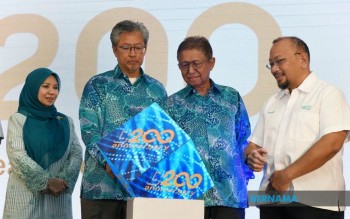
Boustead Holdings Bhd has unveiled an ambitious transformation strategy that seeks to nearly triple the conglomerate's revenue to RM30 billion within five years, marking a significant pivot from its origins as an agricultural trading company. The George Town-based entity, which currently generates around RM12 billion in annual revenue, plans to achieve this expansion by repositioning itself as a cornerstone player in three strategic sectors: national defence, large-scale property development, and commercial services. Group managing director Datuk Dr Ahmad Sabirin Arshad outlined the restructuring programme at a soft launch event for the company's bicentennial campaign, signalling a wholesale reimagining of how Malaysia's oldest conglomerate creates shareholder value.
The transformation reflects a broader alignment with government priorities set out in the National Defence Industry Policy introduced in January. Rather than remaining a passive defence contractor, Boustead has been designated as an active architect of Malaysia's indigenous military capabilities, tasked with shepherding the development of satellite systems, armoured vehicle rolling chassis, light weapons platforms, and advanced combat management software. This responsibility positions the group at the intersection of commercial opportunity and national security imperatives—a delicate balance that will require robust governance frameworks and transparent stakeholder accountability.
A cornerstone objective underpinning the defence strategy centres on cultivating a domestic supply ecosystem for military technology. Boustead aims to nurture approximately 400 vendors across the defence industrial base, creating what amounts to a new industry vertical within Malaysia's manufacturing landscape. By establishing vendor networks and fostering specialisation among local companies, the conglomerate hopes to generate sustained wealth creation while simultaneously reducing Malaysia's dependency on imported defence systems. This approach mirrors successful models adopted by advanced defence economies, where tiered supplier networks strengthen supply chain resilience.
Localisation targets embedded within the strategy carry particular significance for Malaysia's industrial development agenda. The group has committed to achieving at least 30 per cent local content in defence industry technology products by 2030, a threshold that reflects both ambition and realism in the context of Malaysia's current manufacturing maturity. This localisation commitment will require Boustead to facilitate knowledge transfer from international technology partners into Malaysian companies, enhancing domestic engineering and production capabilities over time. The target serves dual purposes: it protects national security interests by reducing technological dependency, whilst simultaneously upgrading the skill base of Malaysia's industrial workforce.
Beyond defence, Boustead's property portfolio represents another pillar of the growth strategy. The group has been entrusted with developing the Batu Cantonment strategic development project in collaboration with the Armed Forces Fund Board, a transformative initiative that involves consolidating and relocating nine military installations before repurposing the prime Kuala Lumpur real estate into a mixed-use commercial hub. This megaproject exemplifies how defence-adjacent obligations can unlock substantial property value, particularly in urban centres where land scarcity drives premiums. For Malaysian investors and property watchers, the Batu Cantonment project signals potential future trends in how government-controlled assets are monetised through large-scale urban renewal.
Chairman General (Retired) Tan Sri Abdul Aziz Zainal emphasised that the restructuring programme carries explicit public trust responsibilities. Beyond maximising returns to shareholders, Boustead must discharge its obligations to Malaysian Armed Forces contributors and members with unwavering accountability and sound governance principles. This stakeholder composition—where military personnel and defence interests represent material constituencies—means that profit maximisation cannot supersede public interest considerations. The 200-year institutional legacy invoked in the bicentennial messaging underscores management's commitment to long-term stewardship rather than extractive short-termism.
International partnerships constitute a vital enabler for Boustead's defence ambitions. Rather than pursuing autarky in military technology, the group intends to forge strategic alliances with credible overseas partners capable of transferring advanced capabilities to Malaysian companies. Technology transfer arrangements require meticulous partner selection and contract design to ensure genuine knowledge diffusion rather than perpetual dependency on imported systems and expertise. The group's approach acknowledges that Malaysia cannot instantly develop advanced defence capabilities in isolation, but recognises that partnered development with deliberate localisation targets can progressively elevate domestic competencies.
The three-sector focus also reflects pragmatic risk diversification. Whilst defence manufacturing offers growth and strategic alignment, it remains subject to government procurement cycles and geopolitical volatility. Property development provides countercyclical exposure to real estate markets and urban development trends, whilst commercial services encompassing insurance and tourism operations generate steady revenue streams less vulnerable to sector-specific shocks. This portfolio approach insulates Boustead from over-dependence on any single market segment, though the defence emphasis suggests management confidence in Malaysia's continued defence modernisation trajectory.
Existing operations in tourism and insurance will continue supporting the group's overall expansion objectives, even as they recede in relative strategic importance. Boustead Hotels and Resorts represents a smaller but established revenue contributor, whilst insurance interests provide financial services diversification. These segments will likely sustain their current trajectories whilst the management narrative increasingly emphasises defence manufacturing and property development as primary growth vectors.
The RM30 billion target represents an aspirational but achievable objective contingent upon successful execution of the four major defence projects, accelerated vendor ecosystem development, and timely realisation of property development gains. For Malaysian investors tracking Boustead's performance, the coming years will reveal whether management can translate strategic ambition into operational delivery. The transformation also carries broader implications for Malaysia's defence industrial base, potentially catalysing ecosystem-wide supply chain sophistication and reducing technology import dependency across multiple military domains.

