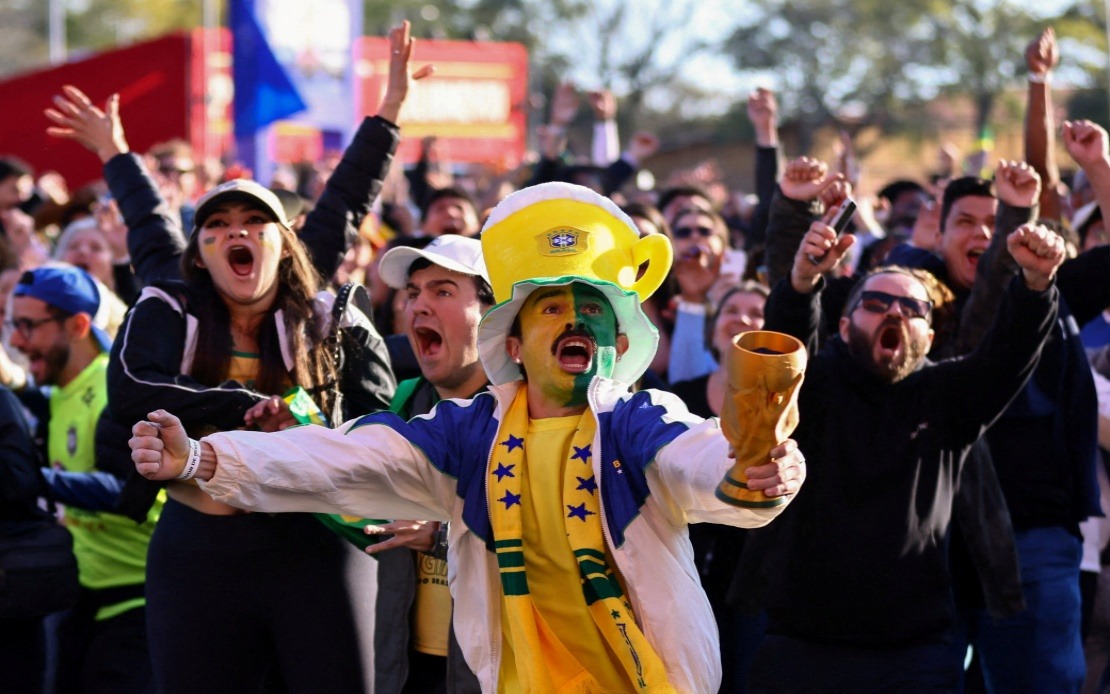
Brazil's path to the Round of 16 at the 2026 FIFA World Cup proved far more arduous than expected when they faced a spirited Japanese side at Houston Stadium in the United States. What unfolded was a contest of contrasting styles—Japan's disciplined defensive organisation testing Brazil's attacking prowess in a match that ultimately hinged on the Selecao's superior depth and experience under pressure.
The opening half presented a masterclass in tactical pragmatism from Japan, who deployed a compact 5-4-1 formation that effectively neutralised Brazil's traditional wide-play dominance. The Samurai Blue's defensive shape squeezed the space that typically allows the Brazilian attacking midfielders and wingers to flourish, forcing Ancelotti's team to recycle possession repeatedly without penetrating the box with meaningful frequency. For extended periods, Japan appeared content to soak up pressure and wait for opportunities to break, a calculated risk that would spectacularly pay dividends before halftime.
The pivotal moment arrived in the 29th minute when Kaishu Sano intercepted a poor pass from Danilo, spotting space ahead of him in the centre-midfield zone. Rather than hesitating, Sano burst forward with purposeful strides and unleashed a low drive from distance that found the corner of the net beyond Alisson's reach. The goal represented not merely Sano's first international strike but also signified something far more significant for Japanese football—a genuine opportunity to finally breach the Round of 32 barrier that has historically proved elusive for the Samurai Blue in World Cup competition.
Brazil's response to falling behind was characterised by methodical adjustment rather than panic. The second half witnessed a notable shift in intensity, with the attacking players operating with greater incision and tempo. The Selecao's wing players found more space to operate, and their crossing became increasingly purposeful, creating a constant stream of deliveries into the Japanese penalty area. This sustained pressure eventually yielded results in the 56th minute when Casemiro rose unmarked at the back post to convert Gabriel Magalhaes' well-placed cross, levelling the contest and reigniting the hopes of the Brazilian contingent in the stadium.
As regulation time entered its final moments, the match appeared destined for extra time, with both sides seemingly resigned to extending their battle. However, in a dramatic intervention at the 90+5th minute, Bruno Guimaraes surged forward and identified Gabriel Martinelli making a run into the penalty box. The midfielder's pass proved perfectly weighted, allowing Martinelli to angle his shot just beyond the outstretched hand of goalkeeper Zion Suzuki, who had little chance of preventing what would prove the decisive strike. The goal delivered a crushing blow to Japan's aspirations, ending what had threatened to be a remarkable tournament run for the East Asian nation.
Japan's exit marks another chapter in their continuing struggle for World Cup knockout progression. Despite showing tactical discipline and clinical finishing in Sano's opener, the Samurai Blue ultimately lacked the technical quality and composure required to maintain their advantage against a team of Brazil's calibre. Their defensive structure, whilst initially effective, gradually became exhausted by the relentless Brazilian pressure, exposing the inherent vulnerability of defensive football when pressed without respite by superior attacking personnel.
For Brazil, the victory validates their tournament credentials despite the unconvincing manner of their progress. That they required a late goal to dispatch Japan suggests potential vulnerabilities, particularly in transitional phases and when opponents exploit defensive lapses. However, the Selecao's ability to recover from adversity and maintain attacking intent throughout the second half demonstrates the resilience and technical foundation that multiple World Cup victories have instilled.
Brazil now advance to the Round of 16, where they anticipate facing either Norway or Ivory Coast depending on how those remaining group fixtures resolve. The pathway to ultimate success has opened, but the narrow margin of victory will likely serve as a reminder to Ancelotti and his coaching staff that complacency against well-organised opposition carries considerable risk in modern tournament football. The Selecao will need to improve their defensive stability and decision-making in attacking transitions if they harbour genuine aspirations of adding to their World Cup legacy in this competition.

