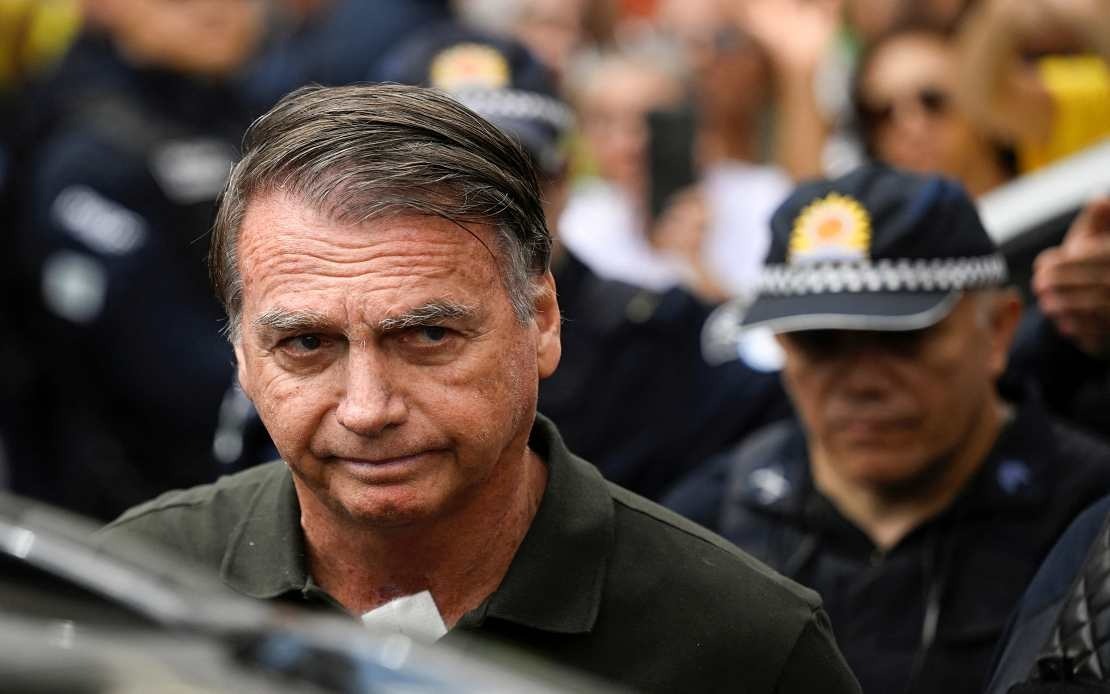
A Brazilian federal judge has blocked Argentine President Javier Milei from visiting former Brazilian president Jair Bolsonaro at his Brasília residence, rejecting the request as authorities maintain stringent controls over the detained political figure ahead of October's presidential election. The rebuff came after Judge Alexandre de Moraes substantially tightened the terms of Bolsonaro's house arrest just a day prior, implementing measures that effectively isolate the former leader from political contacts during the campaign season.
Millei had scheduled a diplomatic visit to Brazil for July 25 with the explicit intention of meeting Bolsonaro at his home and publicly demonstrating solidarity with Flávio Bolsonaro, the former president's son and current presidential candidate. The Argentine president's planned trip represented a significant show of support from one of South America's most influential right-wing leaders to another, signalling the deepening political alliance between conservative movements across the continent. Such a meeting would have carried symbolic weight, cementing ties between two populist figures who have reshaped their respective nations' political landscapes.
Judge de Moraes' decision to strengthen Bolsonaro's confinement conditions stems directly from a handwritten letter that the former president composed expressing backing for his son's presidential campaign. Flávio Bolsonaro, seeking to amplify his father's political endorsement, published the correspondence on social media platforms, inadvertently triggering the judicial intervention that now constrains the family's political operations during the critical election period. The court determined this act violated the existing restrictions governing Bolsonaro's house arrest, necessitating even tighter limitations.
The reinforced restrictions now explicitly prohibit Bolsonaro from receiving visitors engaged in political or electoral activities until after October's general election concludes. Additionally, de Moraes has forbidden the transmission of political messages through intermediaries, effectively muting the former president's ability to influence the campaign indirectly. These measures underscore the judiciary's determination to prevent Bolsonaro from leveraging his considerable political influence despite his physical detention, reflecting deep institutional tensions within Brazil's governance structure.
The broader electoral context makes these developments particularly consequential for Brazilian politics. Incumbent President Luiz Inácio Lula da Silva is preparing to seek reelection, positioning himself against Flávio Bolsonaro, whose candidacy represents the political continuation of his father's right-wing legacy. The judiciary's aggressive restrictions on Bolsonaro effectively constrain the opposition's ability to mobilise support through the family's established networks and the former president's substantial popular backing among conservative voters. This interference raises questions about the balance between law enforcement and electoral fairness in Brazilian democracy.
Bolsonaro's current situation reflects the extraordinary circumstances surrounding his prosecution and detention. Convicted of attempting to orchestrate a coup d'état against Brazil's constitutional order, he received a sentence exceeding 27 years of imprisonment. However, citing health considerations, judicial authorities permitted him to serve this sentence under house arrest rather than in conventional prison facilities, a concession that now appears increasingly conditional and subject to further tightening as his political activities create complications. The arrangement exemplifies the complex interplay between exceptional legal circumstances and political dynamics in contemporary Brazil.
For Malaysia and the broader Southeast Asian region, this episode illuminates the turbulent state of South American democracy and the recurrent struggles between judicial systems and political forces. The willingness of Brazilian courts to aggressively restrict former leaders' movements and communications demonstrates both the judiciary's independence and the risks of politicised justice. Regional observers monitoring democratic resilience globally will note how different institutional actors—courts, elected officials, and former leaders—navigate power transitions and accountability mechanisms when significant portions of the electorate support figures facing criminal prosecution.
The Bolsonaro-Milei relationship also reflects the transnational nature of contemporary right-wing political movements. Both leaders have championed anti-establishment platforms, cultivated strong social media presences, and positioned themselves against traditional elites and progressive governance models. Milei's journey from economist to Argentina's president parallels Bolsonaro's unexpected rise, and their mutual support signals the construction of ideological networks spanning South America. Blocking their planned meeting represents judicial efforts to fragment these transnational political communications during sensitive electoral periods.
As Brazil approaches its October election, these restrictions will likely intensify political tensions. The Bolsonaro family faces unprecedented constraints on their ability to campaign and organise, potentially disadvantaging Flávio's candidacy despite his substantial polling support among conservative voters. Conversely, the judiciary's actions may energise the former president's supporters, who perceive judicial overreach as persecution rather than legitimate law enforcement, further polarising an already fractured political landscape.
The episode also underscores how exceptional legal circumstances can complicate governance and electoral competition. Bolsonaro's house arrest, initially framed as a health accommodation, has become a tool for managing his political influence, raising durability questions about Brazil's institutional stability. Whether courts should employ detention restrictions to shape electoral outcomes—even against figures convicted of serious crimes—remains philosophically contested among legal scholars and democratic theorists worldwide.

