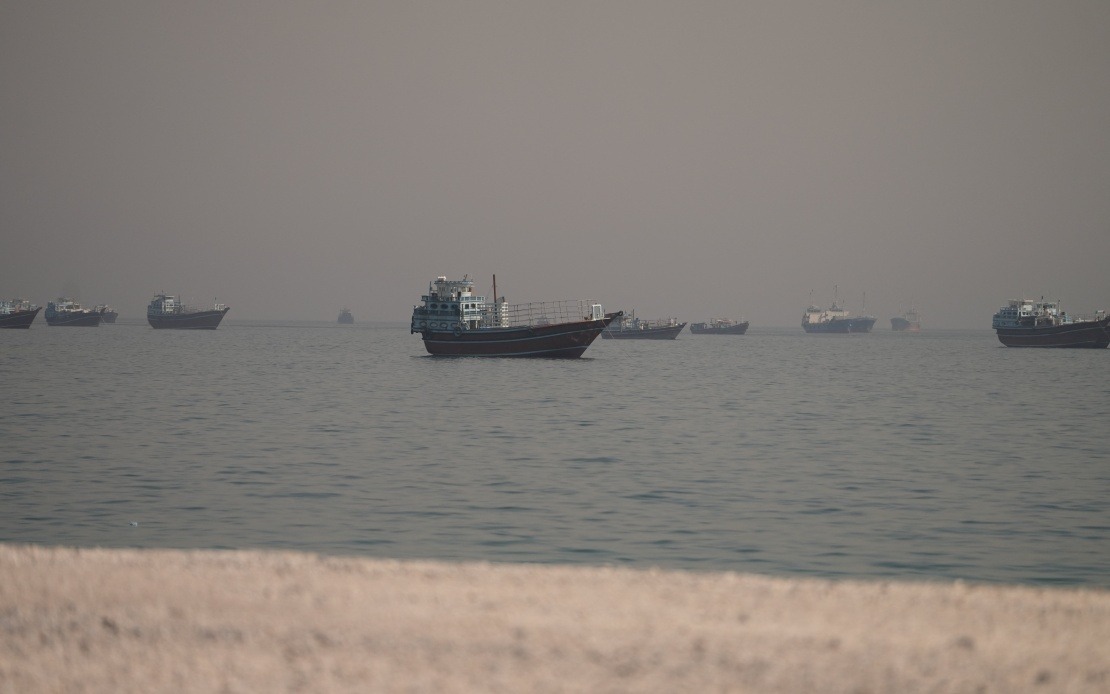
Britain and France have signalled their willingness to launch a coordinated multinational military deployment aimed at guaranteeing unobstructed passage through the Strait of Hormuz, one of the world's most strategically critical maritime chokepoints. The announcement by Prime Minister Keir Starmer and President Emmanuel Macron comes as geopolitical tensions around the vital waterway continue to mount, with Tehran consistently opposing external military involvement in what it considers a regional security matter.
The joint position emphasises the economic significance of the strait, through which an enormous volume of global energy supplies transit annually. By framing the initiative as essential for maintaining global economic stability rather than as a response to Iranian actions, London and Paris are attempting to build international consensus around the notion that freedom of navigation serves all nations' interests. This rhetorical approach reflects Western concerns that the strait's security could become hostage to regional disputes, disrupting flows of oil and liquefied natural gas that fuel economies worldwide, including across Southeast Asia.
A particularly significant development in this announcement is the explicit mention of Oman's cooperation. The sultanate's willingness to work with Britain and France provides the multinational mission with territorial legitimacy and access to regional waters, addressing one of the fundamental obstacles that would face any external military operation. For Malaysia and other Southeast Asian nations heavily dependent on energy imports transiting the strait, Oman's engagement signals that littoral states themselves recognise the need for international involvement in maintaining security through this passage.
The declaration represents an escalation in Western efforts to counterbalance Iranian influence in the region's maritime domain. The Strait of Hormuz, connecting the Persian Gulf to the Gulf of Oman and Indian Ocean, sees approximately one-third of seaborne traded oil pass through its narrow channels annually. Any disruption to traffic carries immediate economic consequences that ripple through global supply chains, affecting energy prices and manufacturing costs in nations far removed from the Middle East, including Malaysia and other ASEAN members.
Iran's response to such Western initiatives has been characteristically firm. Iranian officials have maintained that littoral states alone bear responsibility for the strait's security and have warned repeatedly against what they perceive as extra-regional powers attempting to impose military dominance over waters rightfully within their sphere of influence. This perspective, while rooted in genuine sovereignty concerns, reflects Tehran's broader resistance to what it sees as Western attempts to contain Iranian regional ambitions and maintain geopolitical hegemony.
The timing of this Anglo-French announcement reflects deepening anxieties about potential escalations in the Gulf region. Incidents involving tanker attacks, drone strikes, and naval confrontations have punctuated recent years, creating an atmosphere of instability that merchants and energy companies find deeply concerning. Insurance premiums for vessels traversing the strait have risen substantially at various points, adding to shipping costs that ultimately affect consumers globally. The prospect of a formalised multinational mission aims to provide reassurance that the waterway remains reliably open to international commerce.
For Malaysian policymakers and business leaders, these developments carry significant implications. Malaysia's economy relies substantially on stable energy supplies sourced from the Middle East and transported through the Strait of Hormuz. Additionally, Malaysian vessels regularly transit these waters as part of regional and international shipping operations. Any disruption to navigation would directly impact the nation's economy, energy security, and industrial competitiveness. The commitment from Britain and France to underwrite maritime safety in the region, therefore, aligns broadly with Malaysian national interests in maintaining global trade flows.
The multinational framework that Britain and France envision differs from unilateral American naval operations that have characterised much of recent decades. By involving multiple European powers and seeking regional cooperation, the initiative attempts to present itself as genuinely international rather than an expression of Western hegemonic ambitions. This approach potentially carries greater legitimacy among non-aligned nations and could create space for other concerned parties to participate, whether from Southeast Asia or elsewhere, in formalised arrangements for ensuring freedom of navigation.
However, the fundamental tension remains unresolved. Iran's insistence on exclusive littoral state authority over the strait contradicts the Western position that global interests in maritime security justify international involvement. This conceptual disagreement, rather than mere disagreements over tactics or scope, suggests that finding common ground will prove extraordinarily difficult. The coming months will demonstrate whether Britain and France can assemble sufficient international support for their multinational mission, or whether Iranian resistance and regional complexities will limit its effectiveness and credibility.
For Southeast Asian nations like Malaysia, these geopolitical manoeuvres underscore the reality that regional security cannot be fully disconnected from broader global power dynamics. While ASEAN maintains its historic preference for non-alignment and respect for sovereignty, the practical dependence on stable international shipping routes means that these nations have a stake in however this standoff ultimately resolves. Whether through enhanced international cooperation, regional agreements, or continued tensions, the outcome will significantly influence maritime commerce and energy security across the wider Asian region.

