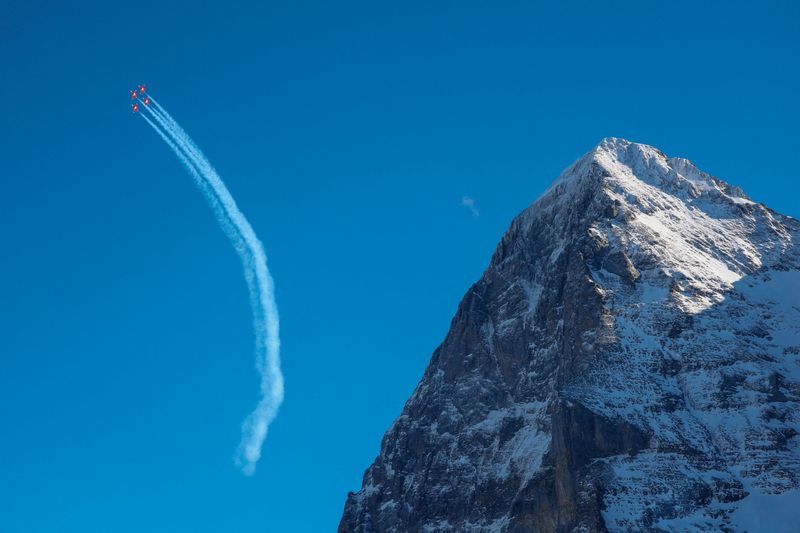
British mountaineer Fay Manners has etched her name into Alpine history this summer, not merely by climbing one of Europe's most formidable peaks, but by forging an entirely new path across the legendary Eiger North Face. Working alongside Swiss climbing partner Roger Schaeli over thirteen grueling days, Manners established "Solar Eclipse," a 900-metre route consisting of 33 pitches on the iconic 1,800-metre rock and ice wall. Her achievement carries particular significance: she is the first British woman to have opened a new route on this unforgiving face, a milestone that resonates far beyond the tight-knit world of elite mountaineering.
The Eiger North Face, nestled in the Swiss Alps, commands respect and fear in equal measure among climbers worldwide. Its towering expanse of exposed rock and ice creates a gauntlet of hazards—sudden weather changes, rockfall, and avalanches have claimed numerous lives over the decades. The wall's deadly reputation was cemented long before modern safety equipment existed; a succession of tragic attempts preceded the first successful ascent in 1938 by a German-Austrian team, an expedition that itself pushed the boundaries of what was thought possible at the time. Today, while climbing techniques and gear have evolved dramatically, the North Face remains one of mountaineering's ultimate tests of skill, endurance, and nerve.
Manners' relationship with this particular wall began four years earlier when she tackled the established Heckmair Route. That experience sparked something beyond mere conquest; it ignited an obsessive fascination with the wall itself. She began researching its geology, its history, and its possibilities with academic intensity. Rather than content herself with repeating what others had done, she envisioned returning not as a follower but as a pioneer, to discover and document a previously untouched line through the mountain's formidable terrain.
The difference between repeating an existing route and establishing a new one cannot be overstated. When climbers follow established paths, they benefit from accumulated knowledge—guidebooks detail difficulty ratings, recommended equipment, optimal approaches, and documented hazards. The uncertainty is largely removed from the equation. By contrast, establishing a new route means venturing into the unknown with genuine peril. "You don't know how hard it's going to be, you don't know the sort of protection that you'll need to put in, you really don't know if you're going to be able to make it to the top," Manners explained to Reuters, capturing the psychological toll of pioneering work on such a dangerous stage.
For Manners, however, the significance of her achievement transcends the personal triumph of success on rock and ice. At 39 years old, she has become increasingly conscious of what her presence and accomplishments represent within mountaineering's historical record. The creative act of opening a new route carries profound symbolic weight in a sport where guidebooks—the definitive records of climbing history—predominantly bear male names. "If you're looking in the guidebook and every single name of the person that's opened a route is male, somehow that's telling you that men are opening routes and women aren't," she observed. This visibility question touches on something deeper: how representation shapes perception of possibility, particularly for young women considering careers in adventure sports.
Women's participation in Eiger climbing history actually stretches back decades, though often obscured or underrecognized. In 1964, Daisy Voog became the first woman to successfully climb the North Face, an accomplishment made more remarkable by historical accounts noting she had previously been barred from joining a mountaineering club's extreme climbing section solely because of her gender. Five years later, Japanese climber Michiko Imai served as the sole female member of a six-person team that established the "Japanese Summer Direttissima" route. Yet these pioneering women remain largely invisible in the collective consciousness of mainstream mountaineering, their names buried in dated expedition reports rather than celebrated as route-openers in current guidebooks.
Manners has given considerable thought to how internalized gender assumptions limit women's aspirations before they even attempt to reach for them. She questions how subtle, lifelong messages about physical capability and career viability accumulate into self-imposed boundaries. "Maybe if I never grew up with someone saying to me, 'You can't carry as much as me, so I'll carry more,' maybe if it was just always equal from the beginning, then you just never have that doubt in your mind," she reflected. These doubts, she emphasizes, operate with such subtlety that people often fail to recognize them shaping their choices—the stereotypes become invisible architecture determining what feels possible and what feels foolish to pursue.
Manners' own journey to professional mountaineering illustrates precisely how these limiting assumptions can derail talent. Growing up in England, she possessed genuine athletic ability and harbored genuine sporting ambitions. Yet people around her—family members, mentors, peers—consistently steered her toward more conventional paths, insisting that women's sports careers offered insufficient financial security or professional prospects. Following this guidance, she pursued data science, becoming a consultant in that field while nursing her climbing passion as a sideline hobby. Only when she relocated to Chamonix, France, did the possibility of marrying her two identities begin to emerge. The North Face, the major outdoor brand, approached her about sponsorship, initially allowing her to split time between both careers. Within a year, she had abandoned the data science work entirely.
The irony was not lost on her: despite exceptional talent and determination, she needed external validation through commercial sponsorship before believing a sporting career was genuinely attainable for a woman. "I really only realised that it was possible when it was happening," she said, "because I still had in my mind that there was no way that a female could have a career in sports." This delayed realization underscores how internalized doubts can persist even among high-achieving individuals, how structural inequities become embedded in personal psychology.
Looking ahead, Manners harbors ambitions that extend beyond her own accomplishment. She intends to return to the "Solar Eclipse" route she established with Schaeli, but her deeper dream involves seeing other women tackle the climb she pioneered. "I would love to see all-female teams go try to repeat the route," she said. "That would be the next thing for me—the dream." This aspiration reveals her understanding that creating change in mountaineering requires more than individual achievement; it requires building visible traditions and establishing precedents that younger women can follow and build upon. When female climbers see other women's names in the guidebook as route-openers, the unspoken message shifts from "this isn't for us" to "this is ours to attempt."
Manners' breakthrough on the Eiger carries implications that ripple beyond Alpine climbing communities. Southeast Asia, with its own rich climbing traditions and emerging adventure sports culture, watches as global narratives around who belongs in extreme sports evolve. Her story challenges assumptions about women's roles across multiple domains—the physical, the professional, and the cultural. As more women from diverse backgrounds pursue mountaineering and other adventure disciplines, the diversification of guidebook names becomes a tangible marker of shifting possibilities. For Malaysian and Southeast Asian audiences, Manners exemplifies how questioning inherited limitations—whether gender-based, economic, or cultural—can open entirely new routes through seemingly fixed terrain, both literal and metaphorical.

