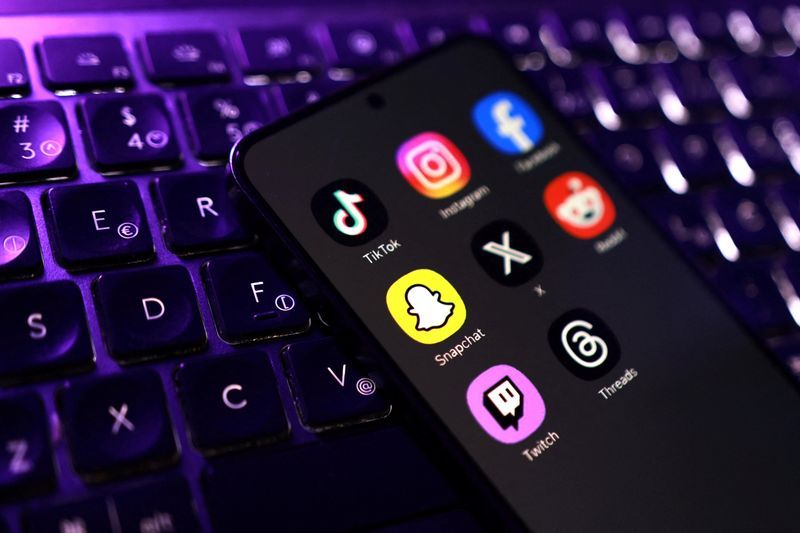
British adolescents participating in a government-backed trial of social media restrictions experienced measurable improvements in sleep quality, mental focus and overall wellbeing, according to findings released this week. The research, conducted across 309 households and involving teenagers aged 13 to 17, was commissioned by the UK administration before outgoing Prime Minister Keir Starmer moved to announce legislative measures targeting social media access for under-16s. The outcomes offer empirical backing to growing political momentum for stricter controls on teen digital engagement, though the study simultaneously highlights the practical complexities of implementation that policymakers will need to navigate.
Three distinct intervention approaches were tested over a one-month period to evaluate their effectiveness and viability. Participants were randomly assigned to either a 15-minute daily limit on individual social media applications, a 9 p.m. to 7 a.m. curfew preventing social media use during sleep hours, or complete removal of social media apps from their devices. Across all three groups, teenagers reported consistent gains in sleep duration and quality, improvements in their ability to concentrate on academic work and recreational activities, enhanced mood, and strengthened family relationships. These positive outcomes across multiple wellbeing dimensions suggest that interrupting habitual social media consumption during formative years produces benefits that resonate through various aspects of adolescent life.
However, the mechanisms through which restrictions were applied revealed markedly different levels of practicality and sustainability for family life. The overnight curfew emerged as the approach most readily adopted and maintained by households, and it delivered the most reliable sleep-related improvements. This approach appears to respect the reality of teenage social dynamics while still protecting the critical restorative hours necessary for physical and cognitive development. By contrast, the 15-minute-per-app limitation encountered persistent compliance issues and was frequently abandoned by participants who found it disruptive to authentic peer communication. Teenagers described the constant interruptions as making meaningful conversation impossible, essentially fracturing the social functionality that platforms provide for their age group.
The complete removal of social media applications produced the most dramatic improvements in concentration and academic focus, addressing a concern that has animated policy discussions across the English-speaking world. Freeing cognitive resources from the competing demands of notifications and algorithmic feeds appeared to unlock significant attention gains. Yet this blanket approach also generated the highest levels of reported social friction, as adolescents felt isolated from friendship groups for whom Instagram, TikTok and especially Snapchat function as primary communication channels. This tension between individual health benefits and peer integration costs underscores why simple prohibition may prove politically and socially untenable, particularly for older teenagers with established digital social infrastructures.
The study's findings on enforcement gaps highlight a critical vulnerability in any regulatory framework seeking to restrict teen social media access. Participants readily circumvented restrictions by accessing social media through alternative devices—tablets, laptops and older smartphones—that were not subject to the trial's controls. More sophisticated workarounds also emerged, with teenagers indicating they could bypass age-verification systems through false declarations and deploy virtual private networks to obscure their location or identity. These technical workarounds suggest that any legislation modelled on the trial's approaches will require either device-level enforcement mechanisms of considerable sophistication, or complementary measures targeting platform architecture itself.
The 15-minute-per-app constraint proved particularly counterproductive from a behavioral standpoint. Beyond its impracticality, the constant time warnings and forced disconnections created a user experience so fractured that teenagers simply abandoned the restriction. This finding carries implications for Malaysian and Southeast Asian policymakers considering graduated restrictions based on daily usage caps, as it suggests that sharp, frequent interruptions to service may trigger circumvention rather than compliance. The data implies that time-based restrictions work better when applied at the boundary of day and night, rather than distributed throughout waking hours.
The emotional and social costs of disconnection deserve particular attention from child welfare perspectives. Many trial participants reported feelings of isolation and fear of missing important peer communications, especially where a single platform dominated their social group's messaging ecosystem. For Malaysian families where WhatsApp, Instagram and TikTok similarly function as primary channels for teen peer networks, similar displacement anxiety would likely emerge under restrictive regimes. The research suggests that teenagers require some flexibility to maintain peer bonds, and that policies treating all social media identically may fail to account for how different platforms serve different communicative purposes.
Participants articulated preferences for age-differentiated approaches that would grant greater autonomy to older adolescents while applying stricter oversight to younger users. A 13-year-old and a 17-year-old occupy vastly different developmental stages with differing levels of impulse control and peer pressure vulnerability, yet blanket restrictions treat them equivalently. This insight aligns with emerging developmental neuroscience research on prefrontal cortex maturation and suggests that any regulatory framework should be calibrated to developmental stage rather than simply age-gated at a single threshold. Implementing such nuance within legislative or platform terms-of-service mechanisms presents obvious technical and administrative challenges.
The findings arrive amid intensifying international scrutiny of social media's effects on youth mental health. Australia, the United States and several European jurisdictions are contemplating or implementing similar restrictions, creating potential for jurisdictional competition and divergent regulatory approaches. Should the UK proceed with legislation based substantially on this trial's design, it may establish a policy template that shapes global regulatory trends. Malaysian stakeholders, including parents, educators and policymakers, should monitor this unfolding regulatory landscape closely, as international precedents often influence regional policy development.
While the trial demonstrates genuine wellbeing gains from social media restriction, it simultaneously exposes the gap between laboratory-style interventions and real-world sustainability. The short one-month duration may not capture longer-term adaptation effects, where teenagers devise more sophisticated circumvention strategies or experience escalating resentment toward restrictions perceived as paternalistic. The self-selected nature of voluntary trial participation introduces selection bias, as families motivated to reduce teen screen time may differ significantly from the general population. Nevertheless, the consistency of wellbeing improvements across intervention types suggests that meaningful benefits do flow from interrupting habitual social media consumption, even if implementation requires more sophistication than simple bans or time limits.

