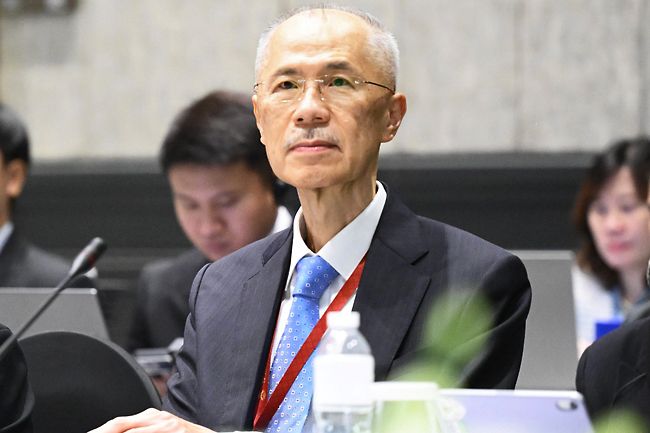
Brunei Darussalam has signalled its determination to deepen judicial collaboration across the Asean region while tackling a rapidly evolving legal landscape shaped by technological innovation and environmental concerns. Chief Justice Dato Seri Paduka Steven Chong made this commitment at the 13th Council of Asean Chief Justices meeting held in Bangkok from July 21 to 23, underscoring the judiciary's pivotal role in addressing transnational challenges that transcend traditional legal frameworks.
The timing of Chong's intervention reflects growing recognition among Southeast Asian judiciaries that technological disruption and climate change represent existential challenges to conventional legal systems. The emergence of artificial intelligence, digital assets and complex climate-related disputes has forced chief justices across the region to reimagine how courts operate and resolve cases. Rather than adopting isolated national approaches, Asean nations are choosing coordinated strategies that leverage shared expertise and comparative judicial experience, a development with significant implications for Malaysian legal practitioners and businesses operating regionally.
The CACJ has responded to these pressures through concrete institutional innovations. The expansion of the CACJ E-Learning Portal provides judges and court officials throughout the region with access to contemporary training materials and best practices, effectively democratising judicial knowledge across borders. Simultaneously, working groups dedicated to court technology and AI governance are developing frameworks that may eventually standardise judicial procedures for digital cases, reducing compliance costs and uncertainty for multinational enterprises conducting business across Asean.
Chong's emphasis on people-centred justice provides a crucial counterweight to the technological focus. The council's work in victim-sensitive adjudication, particularly in trafficking in persons cases, demonstrates that judicial reform cannot be purely technical. This holistic approach recognises that justice systems must simultaneously embrace innovation while maintaining compassion and fairness—a balance that developing economies in the region often struggle to achieve with limited resources. Brunei's contribution to this agenda, particularly through hosting the Second Asean Multilateral Judicial Knowledge Exchange earlier this year, positioned the nation as an active participant in regional capacity-building rather than a passive observer.
Climate justice emerged as a distinct priority area within the CACJ framework, signalling judicial awareness that environmental degradation poses unprecedented legal challenges. As Southeast Asian economies grapple with deforestation, pollution and resource depletion, courts face mounting disputes over environmental damage, carbon emissions and climate adaptation. The establishment of dedicated climate justice dialogue within the CACJ structure suggests that judiciaries are moving beyond reactive case management toward proactive engagement with environmental governance—an essential shift given the region's vulnerability to climate impacts.
The digital and virtual assets agenda carries particular relevance for Malaysian stakeholders navigating cryptocurrency regulation, blockchain applications and non-fungible token disputes. As these technologies proliferate across Asean, legal uncertainty has created friction in commerce and investment. The CACJ working group addressing the nature and status of digital assets is attempting to develop common understandings that could eventually facilitate judicial recognition and enforcement of digital property rights. Such harmonisation would benefit Malaysian tech entrepreneurs and financial institutions seeking clarity in cross-border digital transactions.
Insolvency and intellectual property working groups represent another dimension of the CACJ's work that directly impacts business communities throughout the region. Cross-border insolvency procedures and IP enforcement mechanisms have historically fragmented across Asean, creating complexity for multinational corporations managing assets and disputes spanning multiple jurisdictions. The presence of dedicated practitioners' meetings alongside judicial discussions suggests that courts and commercial actors are moving toward collaborative problem-solving rather than adversarial approaches. This represents a subtle but significant cultural shift in regional judicial thinking.
Chong's bilateral engagement with Singapore's Chief Justice Sundaresh Menon underscores the diplomatic dimension of judicial cooperation. While formal diplomatic channels handle interstate relations, judicial networks operate at a parallel level, building personal relationships and institutional trust among judges and court administrators. These informal bonds often prove more flexible and innovative than official government-to-government coordination, allowing judiciaries to experiment with cross-border procedures and share confidential experiences about emerging legal challenges. For Malaysia, participation in such networks creates opportunities to influence regional judicial norms and access expertise from more developed common law systems.
The signing of the Bangkok Declaration at the meeting's conclusion represents a collective commitment by Asean chief justices to continued cooperation, though the declaration's specific provisions remain undisclosed. Such documents typically outline aspirational principles rather than binding obligations, reflecting the consensus-based, non-binding nature of much Asean cooperation. Nevertheless, declarations carry symbolic weight, signalling to national governments, legal professions and business communities that judiciaries are serious about regional integration and modernisation.
For Malaysia specifically, Brunei's advocacy for strengthened judicial cooperation offers both opportunities and considerations. Malaysian judges and court administrators could benefit from enhanced access to comparative jurisprudence, particularly regarding emerging issues like cryptocurrency disputes and AI governance where local precedent remains limited. Simultaneously, greater judicial harmonisation could impose standardisation pressures that may not align with Malaysia's specific constitutional framework or legal traditions. The challenge lies in selective engagement—adopting innovations that genuinely improve access to justice while preserving institutional autonomy in matters requiring culturally sensitive judgment.
The CACJ's expanded portfolio of working groups indicates that Asean judiciaries recognise they cannot address contemporary challenges in isolation. Climate change does not respect borders; digital fraud operates across jurisdictions; human trafficking involves transnational criminal networks. By constructing frameworks for shared learning and coordinated response, the region's chief justices are demonstrating that functional integration occurs gradually through technical cooperation, not grand political agreements. This pragmatic approach may offer lessons for other areas of Asean integration that struggle with harmonisation.
Looking forward, the success of these judicial initiatives will depend on adequate resourcing and political support from individual governments. While international cooperation costs money and requires bureaucratic capacity that some Asean judiciaries lack, the alternative—fragmented legal systems incapable of managing transnational disputes—imposes greater economic costs on the region. Brunei's willingness to host specialised training programmes and participate actively in working groups demonstrates that smaller economies can punch above their weight in regional institutional development through strategic engagement and credible commitment to shared objectives.

