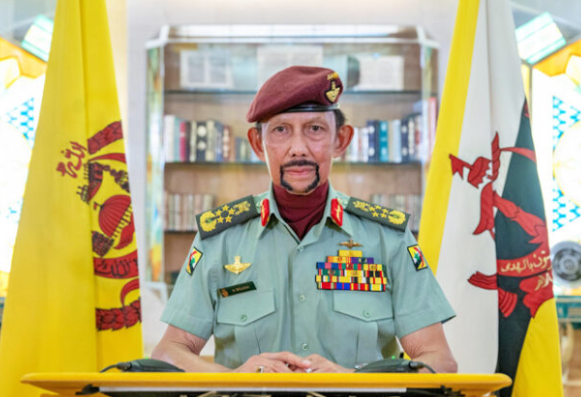
Brunei's Sultan Hassanal Bolkiah has seized the occasion of the Islamic New Year 1448 Hijrah to deliver a national address emphasizing the indivisible link between material prosperity and spiritual well-being, positioning both as essential pillars requiring sustained commitment from all sectors of society. The monarch's remarks underscored a crucial perspective often overlooked in development discourse: the arrival of a new calendar year represents not merely a symbolic turning point but a renewed opportunity to recommit to established values and objectives that shape national identity and direction.
The Sultan articulated a comprehensive vision of national progress that extends beyond conventional economic metrics. His framing distinguishes between two complementary spheres of advancement, with the material dimension encompassing the economy and physical infrastructure that support daily life, whilst the spiritual dimension encompasses knowledge systems, educational frameworks, and dakwah—the propagation of Islamic teachings. This conceptual framework reflects Southeast Asian governance philosophies that resist Western secular divisions between religious and public spheres, instead integrating faith-based principles into state-building processes.
By characterizing the new year as a platform for renewed resolve rather than as the moment when commitments should commence, the Sultan addressed a psychological tendency common to New Year observances across cultures: the tendency to defer meaningful change. His intervention against procrastination carries particular resonance for regional readers navigating complex development challenges and suggests that existing institutional and community mechanisms must be activated more effectively rather than replaced entirely.
The global context looming over Brunei's national moment cannot be understated. The Sultan acknowledged that international conflicts and wars continue to generate spillover effects that touch even relatively insulated nations through economic disruption, migration pressures, and ideological influences. His acknowledgment that suffering from conflict reaches all parties, regardless of alignment, reflected a measured geopolitical stance appropriate for a small nation navigating great power competition in Southeast Asia.
Brunei's relative insularity from such calamities—the Sultan attributed this to the nation's freedom from major natural disasters and international warfare—represents a considerable advantage that leaders in the region, particularly Malaysia and Indonesia experiencing their own security challenges, might regard with some envy. Yet this blessing carries an implicit caveat: maintaining peace requires constant vigilance and institutional attention, not complacency.
The Sultan's elevation of drug-related offences, theft, and general criminality to the level of national priority signals shifting security concerns within Brunei's policy agenda. These categories of crime, the monarch emphasized, damage not only individual victims and families but the nation's international reputation and standing. His characterization of such activities as religiously condemned positioned law enforcement within a theological framework that resonates across Muslim-majority Southeast Asia, where religious legitimacy strengthens state authority.
The delegation of responsibility for crime prevention to security agencies and religious institutions reflects a dual-track approach gaining traction across the region. Security forces address criminal behavior through enforcement mechanisms, whilst religious authorities address underlying motivations through educational and spiritual interventions. This bifurcated strategy acknowledges that purely punitive approaches prove insufficient without accompanying efforts to shift community attitudes and values—a lesson learned from drug prevention campaigns across Malaysia and Singapore.
The Sultan's specific emphasis on strengthening religious education and dakwah efforts as countermeasures against drug addiction and criminality represents a theological investment in prevention. By framing religious awareness as an antidote to criminal behavior, Brunei's leadership positions Islamic education not as separate from public safety concerns but as integral to them. This integration carries implications for how neighboring nations structure their own religious education policies and their relationship to law enforcement outcomes.
The invocation of collective prayer for national protection and the articulation of safeguarding the ummah—the global Islamic community—as a shared responsibility transcends mere ceremonial language. The Sultan's call for constant vigilance while avoiding negligence and complacency establishes a psychological posture toward governance characterized by alertness without paranoia, action without overreach. For regional analysts, this balance represents an instructive model amid debates about surveillance versus privacy in contemporary Southeast Asia.
The Sultan's closing remarks extending wishes to all citizens and residents emphasized inclusivity that acknowledged Brunei's multicultural composition, even as the speech remained grounded in Islamic frameworks. This rhetorical move reflects the governance challenge confronting small, resource-dependent nations in Southeast Asia: how to articulate national identity through majority-religion principles while maintaining social cohesion across diverse populations.
For Malaysian observers, Brunei's articulation of these themes offers both comparative perspective and cautionary lessons. Like Malaysia, Brunei must balance religious leadership with inclusive governance, address drug-related challenges whilst respecting civil liberties, and maintain national security in an uncertain regional environment. The Sultan's emphasis on institutional coordination between security and religious sectors parallels initiatives in Malaysia's own law enforcement and Islamic affairs frameworks.
The timing of this address at the Islamic New Year carries particular significance for understanding how regional leaders deploy religious calendars as governance moments. Rather than treating 1448 Hijrah as merely ceremonial, Sultan Hassanal Bolkiah mobilized it as a platform for policy emphasis and national mobilization. This utilization of Islamic temporal frameworks for advancing contemporary governance objectives remains a distinctive characteristic of Southeast Asian Islamic states.