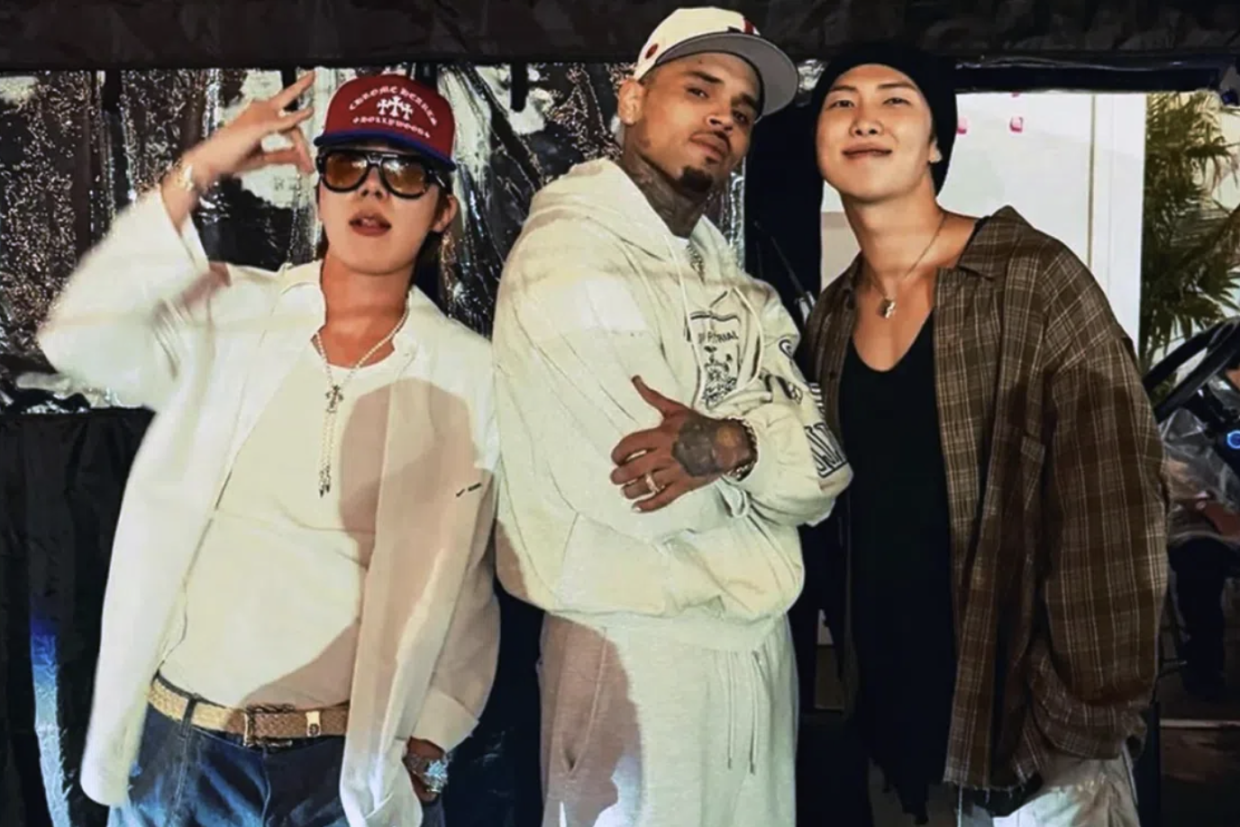
The K-pop phenomenon BTS found itself embroiled in controversy after members RM and J-Hope were photographed at a Chris Brown concert in Canada, an association that quickly drew fierce condemnation from sections of the fanbase. The American musician, whose public life has been marked by multiple allegations and convictions involving violence, was seen with the two BTS members in a photograph posted on August 13, igniting a conversation about celebrity accountability and the moral implications of supporting controversial figures.
Chris Brown's legal history extends across more than a decade and encompasses serious allegations that have defined much of his public reputation. His most prominent conviction came in 2009 when he pleaded guilty to assaulting then-girlfriend Rihanna, an incident that fundamentally altered his public standing globally. Since then, his troubles with the law have continued with regularity. In 2016, he faced arrest over threats made with a firearm at his Los Angeles residence, though he was subsequently released on bail. Two years later, he became entangled in an investigation concerning sexual assault allegations leveled by a woman at his home, though the case ultimately concluded following a settlement agreement between the parties.
The pattern of allegations intensified further when Brown was detained in Paris in 2019 following a rape accusation, charges that were later dismissed and led to his release. More recently, in 2022, a woman identified in court documents as Jane Doe alleged that Brown drugged and sexually assaulted her aboard a yacht in Miami, describing her fear for her personal safety during the incident. Beyond these criminal matters, Brown was found civilly liable in 2024 by a Los Angeles jury to pay US$12.9 million in damages to the sister of his housekeeper after his dog attacked her, further highlighting the pattern of controversies surrounding the musician.
The social media response to the concert attendance was swift and divided, revealing deep fissures within the fanbase regarding celebrity choices and moral principles. Some devoted followers, who identify themselves as Army, expressed dismay that members of a group they had supported were associated with someone convicted of domestic violence. One fan articulated the emotional weight of the discovery, noting that she had personally experienced sexual assault and felt betrayed that artists she admired would support someone with Brown's documented history of harming women. Her statement, "I am a woman before I am an Army," encapsulated the perspective of fans who felt their personal trauma was being invalidated by the members' actions.
Notably, a significant contingent of the fanbase attempted to defend the members against the mounting criticism, arguing that celebrities deserved the same freedoms as ordinary people to attend concerts and support artists of their choosing. This defence strategy essentially positioned the controversy as an overreaction by fans who were imposing unreasonable restrictions on personal autonomy. However, this argument encountered substantial pushback from other social media users who articulated the distinction between private citizens and public figures commanding massive global platforms. Critics emphasized that the responsibility to avoid normalizing abusers increases proportionally with one's influence and reach, and that BTS members' massive fanbase, particularly among younger demographics, amplified the implications of their choices.
The discourse that emerged pushed beyond the simple question of concert attendance to address broader issues of complicity and cultural responsibility. Multiple users highlighted how silence and passive support from prominent figures effectively enabled perpetrators to continue their careers and reputation management without facing consequences. Some pointed to the concept of performative non-misogyny—the idea that men who remain silent when others commit abuse while simultaneously claiming feminist credentials are, in essence, participating in systemic support for harmful behaviour. This framing suggested that neutrality in the face of documented abuse was itself a form of complicity, particularly for figures with the cultural weight of BTS members.
The magnitude of their platform became a central focus in discussions about celebrity responsibility. Users underscored that the global reach of BTS, with millions of devoted followers across continents, meant that their choices carried weight beyond personal preference. An example frequently cited involved Swedish singer Zara Larsson, who has previously collaborated with BTS. In a widely shared video clip, Larsson was asked which artists she would never support, and she responded by noting she had multiple abusers blocked on Spotify, specifically naming Chris Brown as an example of someone she had consciously chosen to boycott. This contrast highlighted alternative approaches that high-profile artists had taken toward similar ethical dilemmas.
The timing of the controversy coincided with another BTS initiative drawing scrutiny from their fanbase—a collaborative advertisement campaign with Google's artificial intelligence system Gemini. The joint project, which was designed to demonstrate "the new possibilities that technology and art can create" and was displayed on the Las Vegas Sphere, became a secondary flashpoint for fan criticism regarding environmental concerns surrounding artificial intelligence development and deployment. This convergence of controversies suggested a growing unease within sections of the fanbase about the group's alignment with various causes and figures.
The incident raises questions about how K-pop fandoms navigate the complexities of supporting artists whose personal choices may conflict with the values many fans hold dear. For Malaysian and Southeast Asian audiences, where K-pop enjoys substantial popularity particularly among younger demographics, the controversy underscores broader questions about celebrity influence and the expectations placed on public figures in an increasingly interconnected digital landscape. The debate revealed that for many fans, supporting an artist is not simply a transactional relationship but rather a values-based affiliation, making members' associations with controversial figures feel like personal betrayals rather than neutral personal choices.

