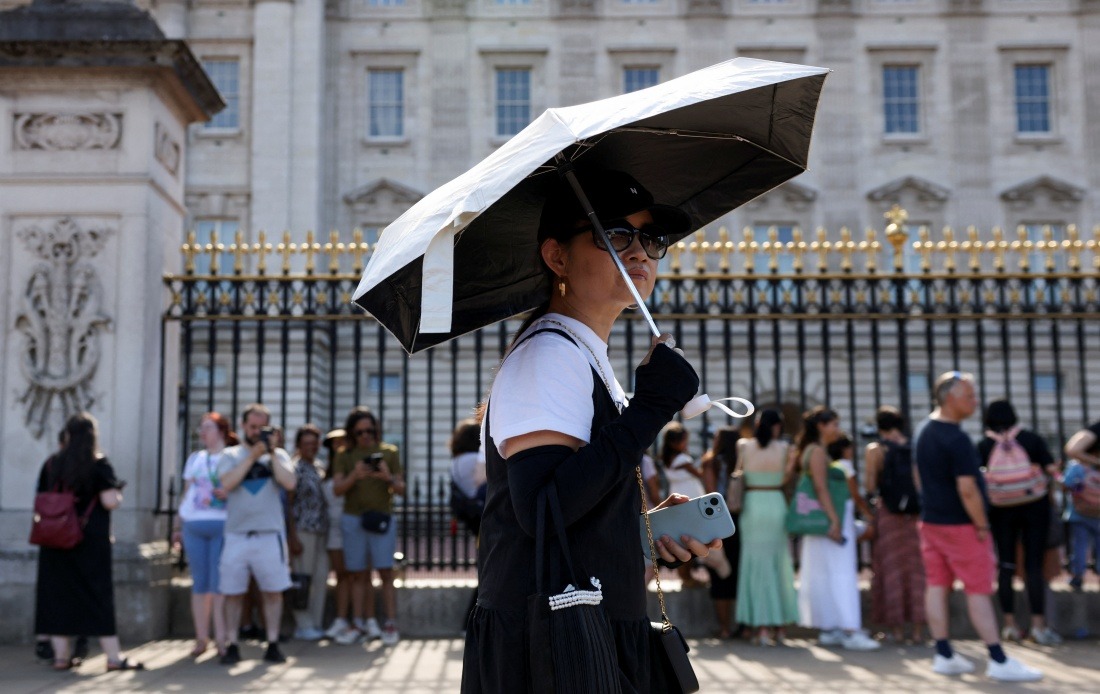
Britain's iconic ceremonial guard changes at Buckingham Palace and Windsor have been suspended this week as the United Kingdom grapples with an unprecedented early-summer heatwave that threatens public safety. The UK Household Division announced the cancellations on Tuesday following an emergency red weather warning issued by the nation's Met Office, indicating conditions severe enough to pose genuine risk to human health and wellbeing. The decision marks a rare disruption to one of London's most recognizable tourist attractions, underscoring the seriousness of the meteorological event.
The Met Office issued its highest-level warning—a red alert—for parts of the UK and Wales on Monday, anticipating that exceptional heat will shatter the previous June temperature record before week's end. Meteorologists are forecasting temperatures to climb to 39 degrees Celsius on Wednesday and Thursday, with some regions potentially experiencing even more extreme readings. This early-season intensity is particularly concerning given that the UK's infrastructure, building standards, and public institutions have historically been designed for more temperate conditions.
The Household Division's official statement emphasized that the welfare of its personnel and animals remained paramount in making the decision. Beyond the soldiers who typically perform the ceremonial duties, the statement specifically highlighted concerns for the military working horses that are integral to these events, which traditionally draw substantial crowds of spectators. Rotating guards frequently and positioning personnel in shaded areas during any necessary outdoor operations would become standard practice under these conditions, the military indicated.
While the Wednesday Royal Horse Guards' ceremony will not be entirely cancelled, it will proceed in heavily modified form, commencing earlier in the morning when temperatures remain relatively lower and omitting the elaborate ceremonial pageantry that normally characterizes the performance. This compromise reflects the balancing act authorities face between maintaining heritage traditions and ensuring the safety of both participants and onlookers who would otherwise congregate in direct sunlight during peak afternoon heat.
The ripple effects of this extreme weather event extend well beyond London's ceremonial institutions. Educational authorities across southern England have shuttered hundreds of schools, determining that maintaining classroom operations during dangerous heat poses unacceptable risks to students and staff. Somerset County Council announced that approximately 100 schools across the county would remain closed throughout the heat alert period. Buckinghamshire authorities reported a similar number of school closures, while Gloucestershire suspended classes in more than 80 educational institutions.
The geographic pattern of closures reflects the precise boundaries of the Met Office's red warning zone, which encompasses the counties most vulnerable to the extreme temperatures. London itself, as the nation's capital and one of the areas covered by the red alert, saw nearly 10 major schools cancel in-person teaching arrangements. The decision to close schools rather than maintain operations signals how seriously education officials and local authorities view the health hazards posed by extreme heat exposure, particularly for younger children and teenagers who may be more vulnerable to heat-related illness.
This heatwave arrives at a moment when climate scientists have documented a clear pattern of rising temperatures across Europe and the broader Northern Hemisphere. While such dramatic heat events have become more frequent in Mediterranean and continental regions, the UK has traditionally experienced relatively moderate summer conditions. The concentration of extreme heat this early in June suggests that the nation may be experiencing more volatile and unpredictable weather patterns, a concern with significant implications for long-term urban and infrastructure planning.
For Malaysian readers and Southeast Asian observers, the UK's response to this heatwave offers interesting comparative perspective. While tropical nations like Malaysia experience sustained high temperatures and humidity throughout much of the year, institutional and infrastructural responses differ markedly because buildings, transportation systems, and public facilities are engineered specifically to manage heat. The UK's willingness to suspend major public functions and close schools illustrates how societies with temperate climate histories must rapidly adapt when faced with heat episodes that challenge existing safety protocols and facility design standards.
The cancellations also underscore broader questions about climate adaptation and institutional flexibility in developed nations. Britain's decision to prioritize worker and public safety over ceremonial continuity reflects a risk-management approach that acknowledges the genuine dangers posed by extreme heat, including heat exhaustion, heat stroke, and cardiovascular stress. As global temperatures continue trending upward, similar disruptions to long-established public ceremonies and educational calendars may become recurring rather than exceptional occurrences across currently temperate regions.
Authorities have indicated that normal ceremonial operations will resume once temperatures return to safer levels, though the exact timeline depends on meteorological developments later in the week. The military and local government officials will continue monitoring forecasts closely to determine when conditions improve sufficiently to restore regular guard changes and reopen schools. This temporary suspension, while disruptive to visitors and residents alike, demonstrates institutional recognition that even cherished traditions must yield to legitimate public health imperatives during dangerous environmental conditions.