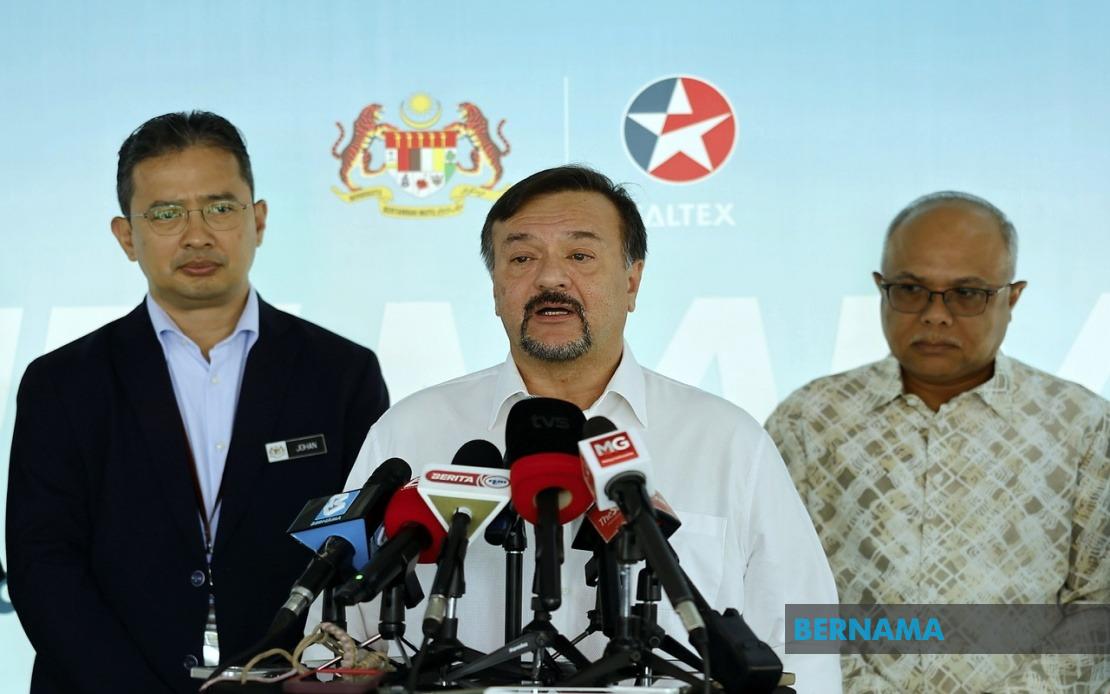
Malaysia has officially launched its engagement sessions for the 2027 Budget, with the Ministry of Finance coordinating an extensive consultation process across government bodies and regions throughout the country. Finance Minister II Datuk Seri Amir Hamzah Azizan disclosed the ongoing dialogue sessions while observing the BUDI Diesel programme at a petrol station in Putrajaya on Tuesday, indicating that the budgetary framework will incorporate perspectives from relevant ministries before formal presentation to Parliament in October this year.
The minister underscored the government's deliberate methodology in crafting the upcoming budget, emphasising that policymakers are maintaining consistency with the nation's established strategic direction. Rather than rushing towards hasty decisions, the administration is taking time to ensure the budget reflects a cohesive vision that supports Malaysia's development aspirations. This measured approach distinguishes the current budgetary cycle, as officials seek to balance multiple economic priorities while maintaining fiscal discipline.
At the philosophical heart of Budget 2027 lies the MADANI Economy framework, a governance model that the government has repeatedly championed as its blueprint for national prosperity. This conceptual foundation operates on a dual-track mechanism: lifting the economic "ceiling" by enhancing competitiveness and productivity among high-performing sectors and enterprises, whilst simultaneously raising the economic "floor" by expanding opportunities and improving living standards for lower-income Malaysians. This philosophy reflects an acknowledgment that sustainable growth requires both robust private-sector dynamism and inclusive social foundations.
The minister deliberately refrained from revealing specific budgetary allocations or policy announcements, maintaining the traditional practice of preserving the formal budget presentation as the principal platform for major announcements. However, he clarified that the budget would not exist in isolation but rather function as an implementation tool for several recently articulated national policies. The 13th Malaysia Plan, which outlines medium-term development priorities, alongside the National Semiconductor Strategy and National Energy Transition Roadmap, represent the broader policy ecosystem within which the budget operates.
These three recently launched initiatives carry particular significance for Malaysia's economic trajectory. The semiconductor strategy positions the country within the global technology supply chain, recognising the sector's importance for industrial growth and export revenues. The energy transition roadmap, meanwhile, addresses climate imperatives whilst managing Malaysia's hydrocarbon economy thoughtfully. Together with the 13th Malaysia Plan's emphasis on human capital and infrastructure, these policies create an integrated framework that the budget must support financially and operationally.
Amir Hamzah reiterated the government's commitment to achieving developed-nation status by 2030, a deadline that concentrates urgency into the budgetary decisions of the coming years. This target requires sustained investment in education, technology, infrastructure, and human capital development—areas that would inevitably feature prominently in budget deliberations. The compressed timeframe also necessitates efficiency in resource allocation, ensuring that government spending yields maximum developmental returns rather than incremental improvements.
For context, the previous budget cycle demonstrates the scale of fiscal operations. Budget 2026 commanded RM419.2 billion in total expenditure, comprising RM338.2 billion devoted to routine operating costs—salaries, maintenance, and ongoing government functions—and RM81 billion allocated to development projects that expand productive capacity and infrastructure. Beyond direct appropriations, the government mobilised an additional RM50.8 billion through government-linked investment companies, Federal statutory bodies, and public-private partnerships, indicating that the official budget figure understates the total resources the government deploys for development initiatives.
The involvement of statutory bodies and public-private partnerships reflects evolving budgetary practice in Malaysia. Rather than concentrating all public investment within the ministerial framework, the government increasingly leverages affiliated entities and private-sector partnerships to implement programmes, potentially improving efficiency and innovation. This structural approach allows the government to expand its effective investment capacity beyond the constraints of direct budgetary appropriations, though it simultaneously complicates public accountability and transparency regarding total fiscal commitments.
The nationwide engagement sessions represent an important departure from purely top-down budgeting. By systematically gathering input from multiple ministries and regions, the government acknowledges that optimal resource allocation requires understanding local conditions, sectoral needs, and implementation realities. Ministries responsible for healthcare, education, infrastructure, and other domains possess detailed knowledge about their programmes' requirements and bottlenecks, insights that can sharpen budgetary planning.
For Malaysian businesses and investors, the budget's anchoring in the MADANI Economy framework and broader policy documents provides strategic visibility regarding government priorities. Companies operating in semiconductors, renewable energy, and technology sectors can anticipate heightened policy attention and potential investment incentives, while traditional industries may experience moderating support as the government pursues structural economic transformation. This clarity, while not replacing the formal budget announcement, permits stakeholders to adjust strategic planning accordingly.
Regionally, Malaysia's approach to inclusive growth through the MADANI framework distinguishes it among Southeast Asian nations, many of whom grapple with similar tensions between competitive dynamism and equitable distribution. The 2027 Budget will likely contain lessons for other governments seeking to balance these objectives, particularly smaller economies dependent on external trade and investment flows.

