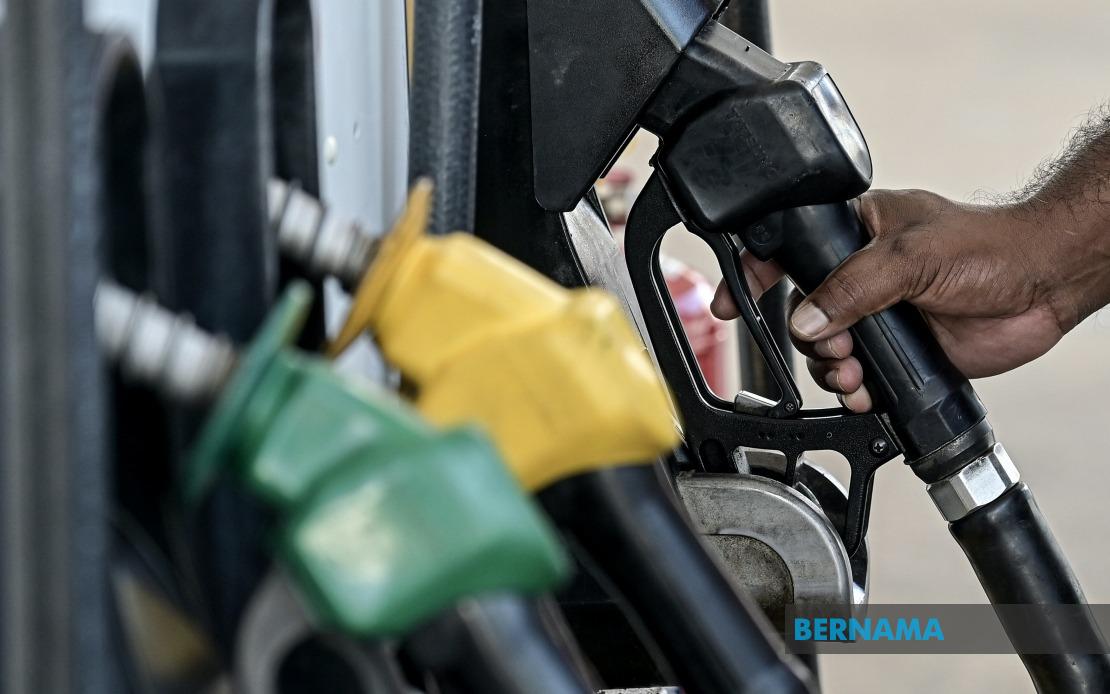
Malaysia's Ministry of Finance has unveiled a significantly broadened fuel subsidy scheme set to commence on July 1, marking a substantial shift in the government's approach to managing transportation costs for ordinary Malaysians. The BUDI MADANI Diesel initiative will extend subsidised diesel access to approximately 700,000 private vehicle owners across the country, nearly quadrupling the reach of its predecessor programme and reflecting the administration's commitment to alleviating cost-of-living pressures at the pump.
The expansion demonstrates a geographically inclusive approach, with the scheme designed to benefit 400,000 private diesel vehicle owners throughout Peninsular Malaysia while simultaneously extending coverage to 300,000 owners in Sabah, Sarawak, and the Federal Territory of Labuan. This represents a dramatic leap from the previous BUDI Diesel Individu scheme, which provided monthly cash assistance to only 180,000 recipients in Peninsular Malaysia. By shifting from direct cash transfers to point-of-sale subsidies at petrol stations, the government aims to deliver more immediate and tangible relief to affected motorists.
Beyond private passenger vehicles, the government has extended support to commercial transport operators through an expanded iteration of its Subsidised Diesel Control System. Approximately 70,000 commercial and goods transport vehicles operating in the eastern Malaysian states and the federal territory will now access subsidised diesel at RM2.15 per litre, a provision aimed at protecting logistics and freight sectors that form the backbone of regional commerce. The inclusion of company-registered pickup trucks and jeeps under modified eligibility terms signals an attempt to capture a broader spectrum of transport users who depend on fuel costs for their livelihoods.
Early implementation data provides encouraging signs regarding operational readiness. Since the scheme's limited rollout in Peninsular Malaysia commenced on June 27, the system has processed approximately 80,000 transactions by midday on June 30, representing roughly 3.2 million litres of subsidised diesel valued at nearly RM7 million. The smooth functioning of MyKad verification infrastructure at retail fuel outlets, with no significant technical disruptions or consumer complaints reported, suggests the underlying technology can scale effectively to accommodate the anticipated transaction volume across the nation.
The subsidy structure also introduces flexibility mechanisms recognising that vehicle ownership within Malaysian families does not always align with actual usage patterns. Under new provisions, spouses, parents, children, and siblings of original BUDI Diesel recipients can transfer subsidy eligibility through the BUDI MADANI portal, subject to official verification procedures. This one-off transfer mechanism addresses practical household dynamics while maintaining safeguards against fraud. By June 30, nearly 1,000 transfer applications had already been submitted, indicating genuine demand for this accommodation and suggesting many families will benefit from operational flexibility.
Additional policy innovations accompany the core subsidy rollout to reduce administrative and financial barriers for diesel vehicle owners. The government has introduced a three-month waiver eliminating ownership transfer fees for diesel vehicles, benefiting individuals whose vehicles remain registered to family members rather than themselves. Road Transport Department offices will operate weekend hours from July 4 through July 26 to facilitate paperwork processing, acknowledging that many working Malaysians cannot easily access government services during standard business days. This logistical accommodation demonstrates awareness of real-world constraints affecting implementation.
The subsidy regime also incorporates flexibility for pickup and jeep owners, who can apply for an additional 100 litres of diesel monthly through the BUDI MADANI portal beyond standard quotas. More than 22,000 such applications were submitted within hours of portal opening, underscoring substantial pent-up demand among small business operators and tradespeople who rely on these vehicles for commercial activities. The Ministry has framed this additional allocation as supporting businesses dependent on transportation, acknowledging the spillover effects of fuel costs throughout the broader economy.
For Malaysian drivers and transport operators, the implications extend beyond simple price relief. By maintaining diesel at RM2.10 per litre for private vehicles and RM2.15 for commercial operators, the government shields eligible users from market volatility that has periodically sent fuel costs soaring. This stability enables better financial planning for households and businesses alike, particularly important for transport-dependent sectors including delivery services, agriculture, and small manufacturing operations. The scheme's reach to East Malaysia addresses longstanding regional disparities in subsidy access, signalling a commitment to more equitable fuel pricing across the federation.
The timing and scope of the programme reflect broader economic calculations about balancing fiscal sustainability with social stability. By restricting subsidies to registered vehicle owners and implementing quota mechanisms, the government attempts to control costs while ensuring accessibility for core constituencies. The verification systems in place, relying on MyKad matching and quota tracking, represent attempts to prevent abuse while maintaining administrative simplicity that encourages compliance.
Regional comparisons provide context for understanding Malaysia's approach. Neighbouring countries have pursued varying subsidy strategies, with some maintaining universal fuel price controls while others have adopted targeted mechanisms similar to BUDI Diesel. Malaysia's tiered approach—different rates for private and commercial vehicles, geographic variations, and eligibility transfers—demonstrates sophisticated policy design attempting to balance multiple competing objectives simultaneously.
Longer-term considerations around fiscal impact and sustainability remain relevant as the scheme expands. The cost of subsidising diesel for 700,000 additional vehicle owners must be weighed against inflation control, electoral considerations, and broader budgetary constraints. International experiences suggest that fuel subsidies, while politically popular in the short term, can create long-term distortions and fiscal burdens if not carefully managed alongside other economic policies.
Private diesel vehicle owners can monitor their eligibility status and monthly subsidy quotas through the BUDI MADANI portal, ensuring transparency in allocation and allowing beneficiaries to plan fuel purchases accordingly. The availability of online tracking reduces administrative queues and friction, facilitating smoother programme operation across the country's diverse geography and population.
As the expanded scheme commences tomorrow, implementation performance will determine whether the programme delivers intended relief to 700,000 households and commercial operators. The successful early rollout phase suggests the necessary institutional machinery is functioning adequately, though scaling to full national coverage will present fresh operational challenges. For Malaysian motorists facing persistent cost-of-living pressures, this expansion represents the government's most substantial direct intervention in fuel markets in recent years.

