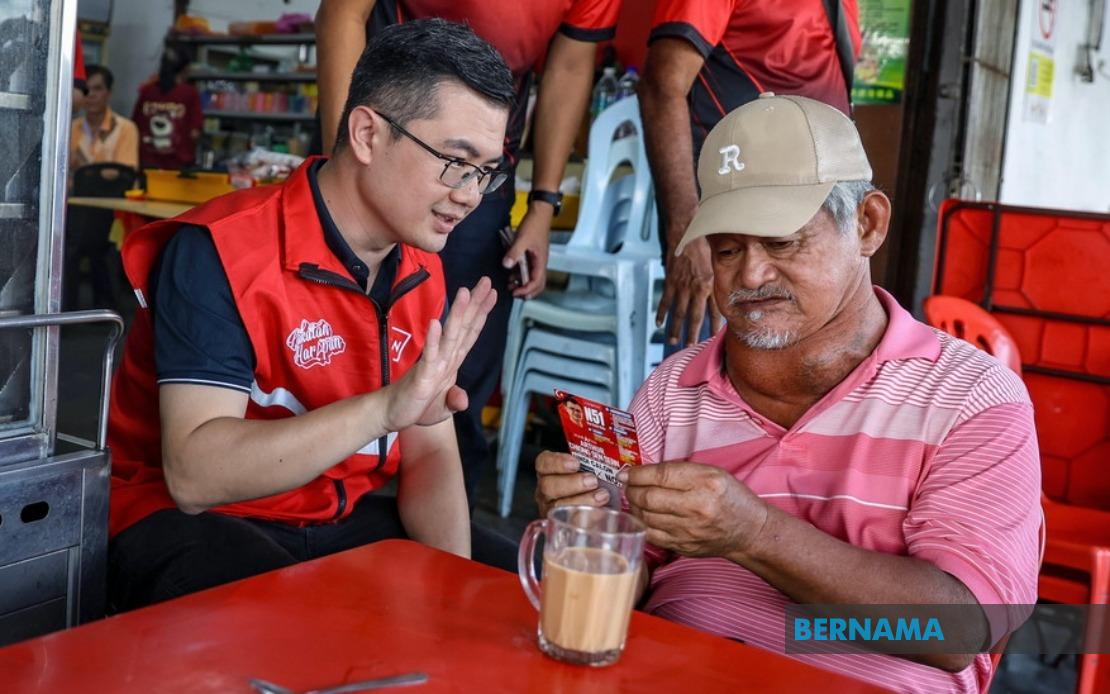
As Johor's state election campaign intensifies ahead of polling day on July 11, tensions are surfacing on the ground. Arthur Chiong Sen Sern, the Pakatan Harapan candidate contesting the Bukit Batu state seat, has lodged a formal police report after his campaign materials were deliberately destroyed in what he characterised as sabotage by unknown parties. The incidents, which occurred in Kampung Sri Paya and Taman Putri, have cast a shadow over campaigning practices in the constituency just days before voters head to the polls.
During a press conference held at the Main Operations Room N.51 Bukit Batu, Chiong detailed the damage sustained by his campaign apparatus. A party flag was discarded into a drainage canal, while multiple campaign billboards were torn down across two different locations within the constituency. The deliberate nature of these actions prompted him to seek official intervention through the Air Bemban police station, where he filed a report to enable law enforcement to investigate and identify those responsible. Chiong acknowledged that similar incidents have plagued his campaign elsewhere, though he expressed frustration at the lack of information about who orchestrated the destruction.
The incidents underscore broader concerns about campaign conduct during Johor's electoral cycle. While Chiong expressed regret at what he termed treacherous and irresponsible behaviour by unidentified actors, he stopped short of publicly attributing the sabotage to any specific rival camp or political faction. This restraint reflects the delicate political dynamics within the constituency, where multiple candidates from competing coalitions are vying for voter support. The five-cornered race in Bukit Batu includes formidable competition from various quarters, making the contest particularly competitive.
Despite the provocation and disruption to his campaign machinery, Chiong signalled his determination to press ahead with his bid to retain or capture the seat. He emphasised that such acts of vandalism would not deter his efforts to engage with constituents and present his political platform. His resilience in the face of these obstacles may resonate with voters who value candidates willing to persist despite intimidation or obstruction. The incident also raises questions about campaign security and whether candidates across different parties are experiencing similar disruptions.
Chiong used the opportunity to call upon all political competitors to elevate the standard of electoral engagement in Johor. He explicitly urged all parties to embrace mature political conduct and ensure that campaigning remains civilised, constructive, and free from hostile or treacherous elements. This appeal reflects growing awareness within the political establishment that campaign violence or sabotage can undermine public confidence in democratic processes and damage the legitimacy of electoral outcomes. By framing the issue as a matter of collective responsibility, Chiong positioned himself as a candidate interested in preserving the integrity of the democratic process itself.
The Bukit Batu contest represents one of 56 state assembly seats up for grabs in the Johor state election, which will see 172 candidates in total competing across various constituencies. Beyond Chiong and the PH-PKR alliance he represents, voters will choose among R. Kumaran fielded by the BN-MIC coalition, M. Premanand representing MUDA, G. Tamili standing for Bersama, and independent candidate Kamaruzaman Ali. This diverse field reflects the fragmented political landscape in the state, where traditional coalitions compete alongside newer political movements and independent candidates seeking to break through.
The timing of Chiong's complaint, made just days before early voting on July 7 and the main polling day on July 11, amplifies its political significance. Election campaigns in their final stages often witness heightened tensions as candidates and their supporters make last-ditch efforts to mobilise voters. The sabotage incidents may reflect the intensity of competition in what appears to be a closely contested race, or they could indicate broader struggles for control of the Johor state legislature itself. For the PH-PKR alliance, demonstrating that its candidates face obstruction may also serve to rally sympathetic voters and underscore narratives about political opposition to their campaign.
From a broader perspective, the incidents highlight challenges facing election administration and campaign oversight in Malaysian state polls. While police reports provide a formal mechanism for documenting such incidents, questions remain about how effectively authorities can investigate and prevent campaign disruptions during the compressed timeframe of election periods. The lack of clarity about perpetrators suggests that attribution and accountability remain difficult, potentially emboldening further incidents if such behaviour goes unpunished. For voters and observers, such disruptions raise concerns about whether campaigns are conducted fairly and whether all candidates receive equal opportunity to present their positions.
Chiong's approach—filing a report while avoiding inflammatory accusations against specific rivals—reflects political pragmatism common in Malaysia's electoral environment. By keeping the focus on the principle of fair play rather than making partisan attacks, he maintains moral authority while avoiding escalation that could backfire against his campaign. This measured response contrasts with the reckless nature of the sabotage itself, potentially positioning PH as the mature party willing to follow proper channels while others resort to vandalism. Whether voters reward such restraint or remain primarily concerned with policy platforms will become clear once ballots are counted.
The Johor state election will serve as a significant test of political momentum heading into what is expected to be a crucial period for coalition politics in Malaysia. The conduct of campaigns, including incidents like the sabotage reported by Chiong, will form part of the narrative that voters absorb before casting their votes. If such incidents become widespread across multiple constituencies, they could dominate post-election discussions about the fairness and health of the electoral process itself. For now, authorities have been notified, and the campaign continues toward the July 11 polling day.

