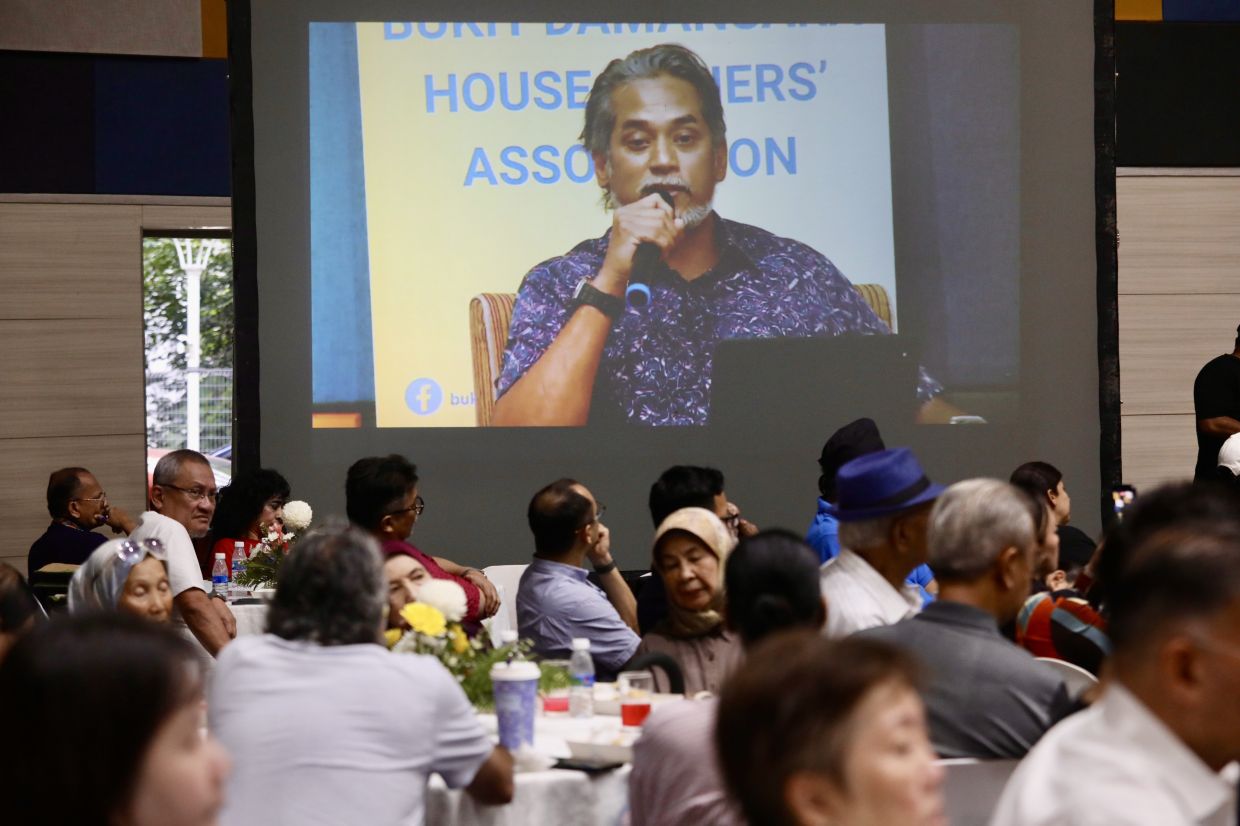
Approximately 400 residents of Bukit Damansara turned out for a three-hour town hall dialogue to challenge Kuala Lumpur City Hall's approval of a major renovation project that would transform a two-storey semi-detached residence into a three-storey structure. The community gathering, held at Pusat Komuniti Bukit Damansara under the theme "Your Voice Matters," marked the first official town hall since Khairy Jamaluddin assumed the presidency of the Bukit Damansara Home Owners' Association in early August. The event underscores growing tensions within the affluent neighbourhood over development decisions and the extent of public consultation in planning approvals.
At the heart of residents' objections is the contention that neighbouring property owners were not meaningfully involved in the decision-making process before City Hall issued the construction permit. A neighbourhood signature campaign opposing the works has garnered the backing of 19 adjacent residents, according to resident A. Zakki, who spearheaded the community push to reverse the approval. The construction itself has already progressed approximately 10 percent into its timeline, with structural pillars now visible on the property, raising concerns among homeowners that reversing the permit at this stage may prove more complicated.
The renovation project has followed an unusually contentious approval trajectory. City Hall initially granted construction permission in December 2025, authorising the owner to add an extra floor to the existing double-storey dwelling. Following sustained community objections, local authorities issued a stop-work order in January 2026 to halt operations while concerns were assessed. However, approximately two months prior to the town hall in June 2026, the permit was reapproved without apparent resolution of the neighbourhood's underlying grievances, prompting residents to escalate their campaign through formal community channels.
Beyond procedural concerns, residents have raised substantive arguments about the aesthetic and structural implications of the expansion. Zakki emphasised that the original two-storey architecture formed part of a harmonious design vocabulary across the row of semi-detached properties, creating a cohesive visual identity within the neighbourhood. Converting a single dwelling into a three-storey structure, he argued, disrupts this established streetscape character. More pressingly, the ongoing construction has allegedly caused visible structural damage to neighbouring homes, with cracks appearing in adjacent properties—a concern that carries implications for long-term property values and residential safety within the close-quartered development.
Khairy, who moderated the town hall proceedings, emphasised the value of such forums in creating direct communication pathways between residents and municipal decision-makers. He committed to following up on the issues raised and attempting to accelerate resolution of community concerns through coordination with relevant authorities. His involvement signals that the matter has acquired sufficient political prominence to warrant attention from the Home Owners' Association leadership, suggesting broader discontent within the neighbourhood that extends beyond the immediate properties affected by the renovation.
City Hall's Planning Department sent town planner executive director Rosli Nordin to the dialogue to represent municipal interests and field resident questions. Rosli acknowledged that the department would take note of the problems that the renovation works have created for the surrounding community, without explicitly committing to reconsidering the permit or imposing further restrictions on the construction timeline. This measured response reflects the municipal authority's position that the approval process has been completed and that reversing a decision already partially implemented presents administrative complications.
The town hall also surfaced secondary infrastructure concerns affecting the broader neighbourhood. Residents raised the issue of traffic congestion clustering around two local schools—SK Bukit Damansara and Stella Maris International School Damansara—during morning arrival times between 7am and 7.30am and afternoon pickup periods from 2pm to 4pm. Brickfields deputy police chief Supt Ahmad Firdaus Mustafia Kamal indicated that traffic management in these peak periods is being addressed through existing protocols, though the level of police presence appears inconsistent. The Parent-Teacher Association chairman revealed that the school community has considered engaging Rela volunteers for traffic management but lacks dedicated funding, and has appealed to traffic police for more frequent daily monitoring rather than sporadic enforcement.
Water infrastructure maintenance also featured prominently in resident concerns. Multiple households have experienced pipe burst incidents, leading the community to petition Air Selangor for comprehensive inspections of the ageing pipeline network serving Bukit Damansara. An Air Selangor representative acknowledged awareness of the burst incidents and confirmed that the utility company has initiated planning to replace outdated sections of the local distribution system, though no specific timeline was provided for the upgrade work.
The town hall illustrates the complex relationship between municipal authorities, resident associations, and development in established affluent neighbourhoods of Kuala Lumpur. While City Hall's Planning Department operates within a regulatory framework that grants permits based on technical compliance with building codes and zoning requirements, this procedural approach does not necessarily account for cumulative neighbourhood impacts or community preferences regarding aesthetic consistency and property preservation. The Bukit Damansara case reflects a broader tension in Malaysian urban governance where formal consultation mechanisms remain limited and community input is often sought only after decisions have been made rather than during the formulation of planning applications.
For Malaysian property owners in similar residential enclaves, the episode raises questions about the practical recourse available when neighbouring development proceeds despite community opposition. The renovation's progression from initial approval to halt order to reapproval suggests that unless legal challenges are mounted or political intervention occurs, permit reversals become increasingly unlikely once construction has commenced. This dynamic may embolden developers and property owners to proceed with contentious projects while formal objections are still being processed, creating a de facto advantage for project proponents who can move quickly through construction phases.
Khairy's role in leading the town hall and his public commitment to expedite problem resolution may carry political implications as well. As a prominent national political figure, his engagement with Bukit Damansara matters signals that such grassroots concerns can attract higher-level attention when organised effectively through resident associations. However, whether this translates into substantive outcomes—such as permit withdrawal or meaningful consultation reforms—remains uncertain. The next phase will likely involve behind-the-scenes engagement between the Home Owners' Association and City Hall to determine whether the municipality will reconsider its approval or whether residents will pursue alternative remedies through legal channels or escalated political pressure.

