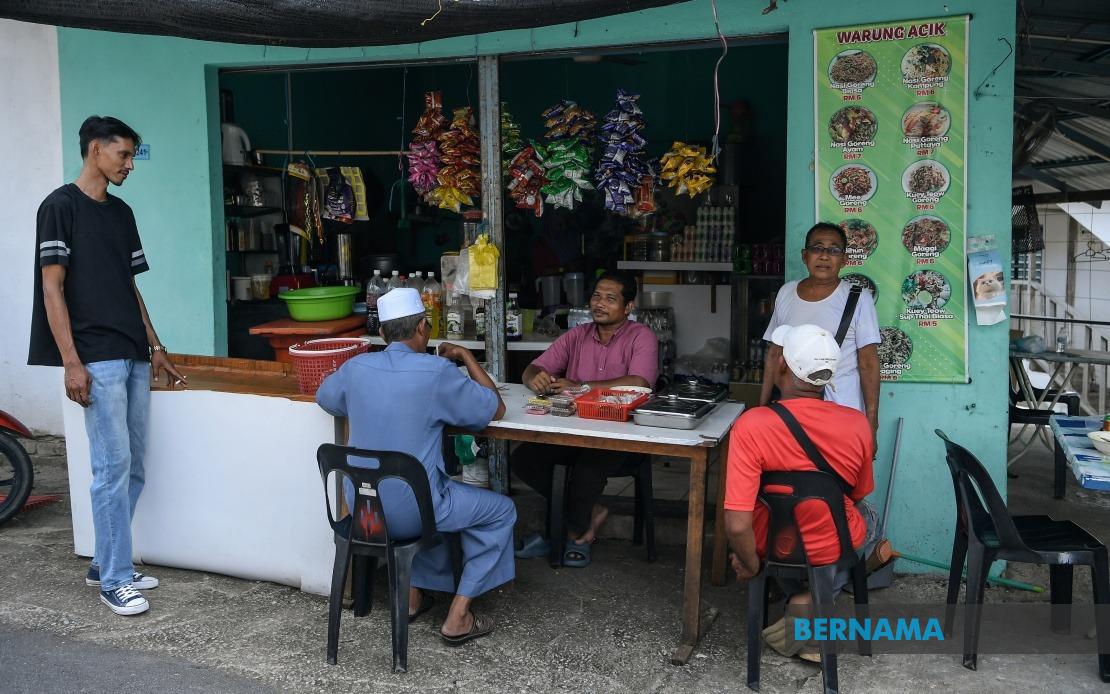
The waterfront community of Bukit Malut in Langkawi is fighting a battle against perception that its leadership argues bears no resemblance to reality. For years, residents have contended with the stigma of being associated with illegal immigrant landings and refugee settlements, a reputation they say has taken a toll on their social standing and their children's well-being. Now, community leaders and long-time residents are making a public stand to reclaim their neighbourhood's image and demand recognition as law-abiding Malaysian citizens.
Mohamad Fadzli Abdullah, who chairs the Bukit Malut Neighbourhood Watch, articulated the frustration that has accumulated among residents who find themselves repeatedly blamed whenever migration-related incidents occur across Langkawi. The pattern, he explained, is both predictable and unfair: whenever reports surface of boat arrivals or undocumented persons in the island district, suspicion immediately falls on Bukit Malut without substantive evidence. This reflexive targeting, he argues, has created a distorted public perception that bears little resemblance to the actual composition and character of the settlement.
One of the most compelling facts undercutting the refugee settlement narrative, according to Mohamad Fadzli, is the settlement's geographical position. Bukit Malut sits in close proximity to multiple security and enforcement installations, including bases operated by the Malaysian Maritime Enforcement Agency, the Royal Malaysian Customs Department, and the Royal Malaysian Navy. The presence of these institutions, with their surveillance capabilities and regular patrols of surrounding waters, would make sustained clandestine refugee operations extraordinarily difficult to conceal. This proximity to security infrastructure directly contradicts claims that the area functions as a covert landing point.
The community leadership has also sought to dispel misconceptions about access and security. Contrary to rumours that circulation in the settlement is restricted or that the area is dangerous, Mohamad Fadzli emphasised that there are no barriers to entry and that authorities maintain continuous security oversight. The negative perceptions, he suggested, stem not from observable reality but from misinformation that circulates unchecked, particularly through social media channels where claims are often made without verification or context.
The demographic reality of Bukit Malut further contradicts the refugee narrative. Approximately eighty-five per cent of the settlement's population consists of fishermen, whose livelihoods depend on maritime activities and who maintain regular contact with maritime authorities. The remaining residents comprise traders, car rental operators, government servants, uniformed personnel, and educated professionals working across various sectors. This occupational diversity points to an established, integrated community rather than a transient or illegally constituted population.
Hashanah Zakaria, a forty-two-year-old resident with more than two decades of residence in Bukit Malut, offered a personal perspective on how the stigma extends beyond abstract reputation to affect real lives. Her child, who attends boarding school in Langkawi, has absorbed the negative characterisations circulating about the community. Rather than accept the allegations, Hashanah has consciously worked to build resilience in her child, encouraging her to look past social prejudice and concentrate on academic achievement. This intergenerational toll illustrates how reputational damage compounds when young people internalise negative stereotypes about their own communities.
Hashanah's invitation for outsiders to visit and observe Bukit Malut directly reflects a broader frustration with narrative formation driven by rumour rather than experience. She contended that the settlement functions much like any other village community, with normal social structures and no elevated crime rates that would justify public anxiety. The disconnect between external perception and internal reality, she suggested, can only be bridged through direct observation rather than reliance on second-hand accounts or social media amplification.
Abas Salam, aged sixty-two and among the earliest settlers of Kampung Tanjung Lembung within Bukit Malut, brought historical perspective to the discussion. Over more than thirty years of continuous residence, he has never witnessed evidence of Myanmar refugees or undocumented persons establishing themselves in the area. As one of the settlement's pioneers, Abas participated directly in its physical construction, working alongside fellow residents to build homes, mosques, and religious schools with minimal external support. This pioneering history underscores the community's deep roots and established status within Malaysia.
Abas's assertion of identity as a Kedah Malay-Muslim and legitimate Malaysian citizen carried particular weight, directly countering insinuations that have occasionally circulated suggesting residents might harbour connections to Rohingya populations. The specificity of his claim—rooted in generational residency, participation in community institution-building, and documented Malaysian citizenship—stands in stark contrast to vague allegations that lack evidentiary foundation. His statement reflects broader frustration within the community that their legal status and national belonging have been questioned without cause.
The narrative Abas presented of the settlement's development trajectory emphasises self-reliance and gradual improvement. From its inception as a community that constructed essential institutions independently, Bukit Malut has evolved into a place where children and grandchildren now access formal education and broader economic opportunities. This progression contradicts depictions of the settlement as a marginalised or lawless space; instead, it suggests a community that has invested in its own institutional and human development over decades.
The broader context for this community advocacy reflects persistent challenges across Southeast Asia regarding how migration issues interact with place-based stigmatisation. Coastal and maritime communities, particularly in nations like Malaysia that face genuine humanitarian pressures from cross-border refugee movements, often find themselves bearing disproportionate reputational burdens. When specific communities are repeatedly associated with immigration controversies, the cumulative effect can fundamentally distort public understanding and policy discourse.
For policymakers and media observers across the region, the Bukit Malut case offers instructive lessons about the importance of distinguishing between verifiable facts and circulating narratives. The residents' willingness to openly invite scrutiny and stake their reputation on observable reality suggests confidence in the falsity of allegations against them. Whether such invitations will effectively counter entrenched perceptions remains uncertain, but the community's determination to reclaim their image demonstrates the human and social costs of allowing unverified claims to harden into accepted wisdom.

