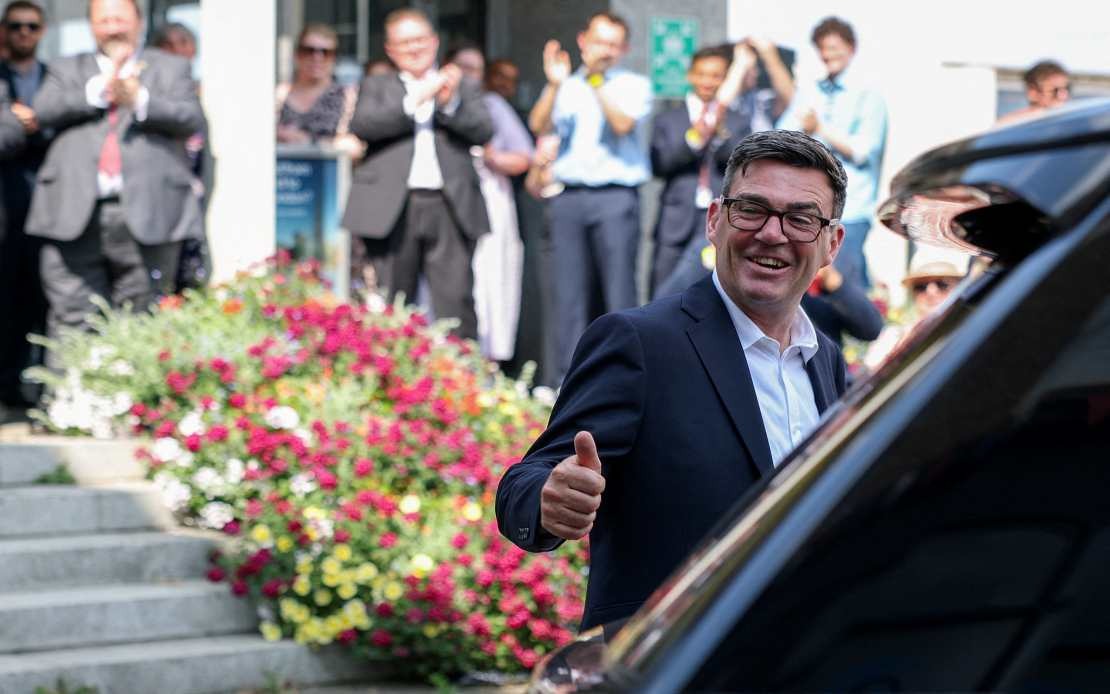
Andy Burnham will assume office as Britain's prime minister on Monday with an agenda centred on restoring public faith in governance and delivering what he describes as "breathing room" on household finances. The former Greater Manchester mayor, who ascended to Labour's leadership without a contested election merely weeks after returning to Parliament, inherits a nation weary of constant political upheaval. His initial address from Downing Street, following his formal audience with King Charles III, will emphasise the contrast between his promised steady leadership and the fractious decade preceding his tenure.
The stark reality of Britain's political instability forms a cornerstone of Burnham's pitch to the electorate and Parliament alike. Seven prime ministers in ten years represents an extraordinary level of executive turnover, undermining institutional confidence and complicating long-term policy implementation. Burnham intends to emphasise that his administration represents a departure from this pattern of perpetual crisis, framing his premiership as an opportunity for sustained, deliberate governance. This positioning carries particular weight in Southeast Asia, where British political reliability remains a factor in bilateral relations and investment decisions.
Burnham's domestic agenda prioritises devolving power away from Westminster's centralised control, reflecting his background managing the devolved governance structures in Greater Manchester. This commitment to regional autonomy could reshape how the UK government approaches policy implementation and public service delivery. Such decentralisation aligns with contemporary governance trends observed across Asia-Pacific nations, where metropolitan authorities increasingly wield significant administrative responsibility. For Malaysian observers, Burnham's devolution emphasis parallels ongoing discussions about federalism and state-level autonomy within Malaysia's own constitutional framework.
Energy policy will command immediate attention in Burnham's opening days, with reported plans to accelerate North Sea oil and gas extraction to address ballooning household energy costs. This approach, however, directly contradicts Labour's 2024 election manifesto, which explicitly pledged to reject new drilling licences. Environmental organisations have mounted vocal opposition, contending that expanded fossil fuel production offers no meaningful reduction in consumer bills while accelerating climate commitments. The energy dilemma encapsulates the fundamental tension between short-term cost-of-living pressures and long-term environmental objectives that developing economies throughout Southeast Asia navigate daily.
Thames Water's financial catastrophe presents another immediate test of Burnham's governing philosophy. The utility company's £20 billion debt burden has prompted serious discussion of temporary nationalisation, a prospect that would represent significant state intervention in essential services. Burnham has previously signalled openness to greater public ownership of critical infrastructure, distinguishing his position from his predecessor's market-oriented approach. Major creditors have indicated willingness to engage with Burnham's administration on potential rescue arrangements, suggesting a potential pathway between complete market failure and full state control. This scenario resonates with Malaysian discussions about government involvement in struggling infrastructure providers.
The formation of Burnham's Cabinet will reveal his strategic priorities and signal which senior figures command his confidence. Particular focus attaches to the chancellorship, with speculation centring on Energy Secretary Ed Miliband or Home Secretary Shabana Mahmood. These two contenders represent different governing philosophies: Miliband brings energy sector expertise and progressive credentials, while Mahmood offers broader domestic policy experience. The chancellor's identity will substantially shape fiscal policy direction and the government's approach to inflation, interest rates, and public expenditure. For international observers including Malaysian policymakers and investors, the treasury appointment signals how seriously the new administration treats economic management.
Burnham's ascent to the premiership without a leadership election deserves scrutiny, as it bypassed the democratic processes normally associated with party transitions. Returning to Parliament barely one month before assuming the party leadership, he lacked the public profile and policy articulation typically expected of prime ministerial candidates. This compressed timeline means much of his agenda remains deliberately vague, allowing him to define priorities through early policy announcements rather than pre-election manifestos. The strategy carries risks, as opposition parties and media scrutiny will intensify once specific proposals emerge.
The cost-of-living crisis that animated much of Burnham's campaign messaging reflects economic pressures felt acutely across Southeast Asia, where inflation and currency volatility have constrained household purchasing power. British households have endured sustained increases in energy, food, and transport costs, eroding confidence in economic management. Burnham's repeated emphasis on delivering tangible relief suggests his government will prioritise visible, immediate interventions over longer-term structural reforms. Whether such initiatives—potentially including energy price regulation, welfare adjustments, or infrastructure investment—can meaningfully address underlying cost pressures remains uncertain.
The scrapping of Keir Starmer's digital identity programme signals Burnham's willingness to overturn predecessor initiatives perceived as low-priority or politically contentious. The decision to redirect resources toward cost-of-living measures reflects a calculated judgement about public priorities and available fiscal space. Digital ID systems remain contentious globally, with civil liberties advocates opposing comprehensive identification databases while governments emphasise security and service-delivery benefits. Burnham's reversal suggests caution about ambitious technological initiatives that lack strong popular support, potentially influencing how his administration approaches digital governance more broadly.
Britain's international standing and regional relationships will require careful attention during Burnham's transition period. Neighbouring European nations, significant trading partners, and Commonwealth allies will scrutinise whether the new administration adjusts approach to post-Brexit relations, defence commitments, or trade negotiations. For Malaysia and other ASEAN nations, questions about Britain's role in Indo-Pacific security arrangements—including the AUKUS alliance and FPDA commitments—may prompt clarification during early diplomatic engagement. The prime minister's letters of introduction to regional leaders will establish tone and priority for bilateral relationships.
Burnham inherits institutional challenges that transcend individual leadership temperament or policy preference. The civil service faces recruitment and retention difficulties, the National Health Service confronts severe capacity constraints, and local government bodies struggle with inadequate funding. These systemic pressures limit how rapidly any new administration can deliver improvements, regardless of political will or available resources. Early Cabinet appointments and policy announcements will indicate whether Burnham's government intends comprehensive structural reform or more incremental adjustments to existing frameworks. The resolution of these fundamental governance challenges will ultimately determine whether his tenure fulfils the promise of renewed stability and public confidence.

