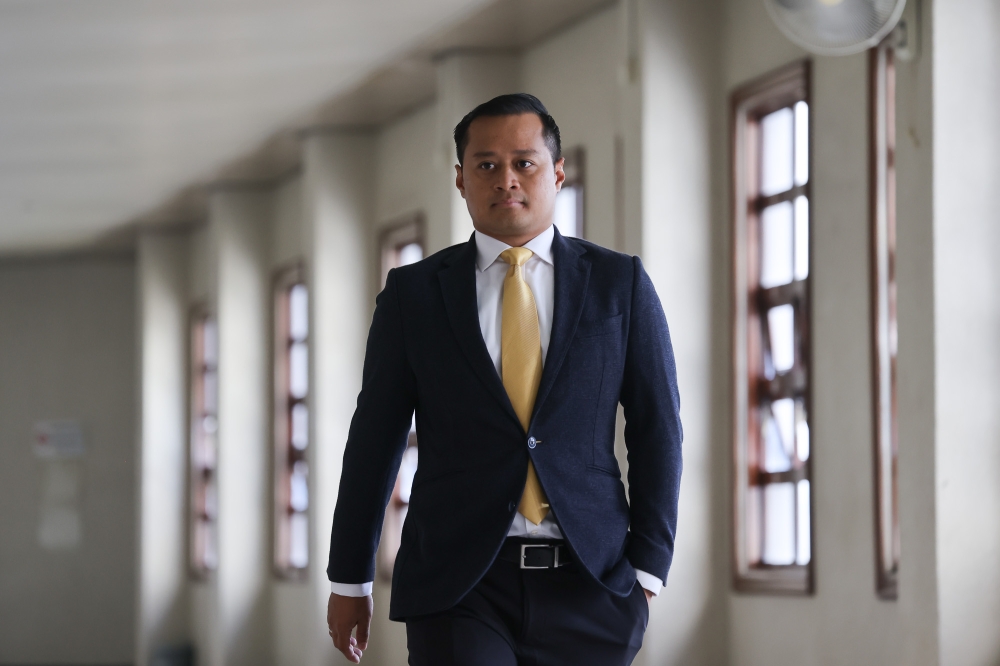
The High Court heard on Monday that a businessman only became aware his elder brother had donated a portion of their company's substantial RM13.7 million to Bersatu—the political party formerly led by Muhyiddin Yassin—after the transfer had already taken place. This revelation surfaced during proceedings in Muhyiddin's ongoing trial, adding a layer of complexity to questions surrounding the origins and authorisation of political donations in Malaysia.
Shahrin Shamsuddin testified about discovering the transfer long after it occurred, creating a narrative of corporate funds moving without proper family or shareholder oversight. The timing and nature of the disclosure underscore growing scrutiny around how Malaysian companies channel resources toward political entities, particularly regarding the transparency and legitimacy of such arrangements. The case spotlights potential vulnerabilities in domestic systems that govern corporate donations to political parties.
For Malaysian readers and observers, the testimony illustrates the ongoing challenges facing the country's political financing landscape. Malaysia has historically struggled with establishing clear, enforceable standards for corporate contributions to political movements. Unlike several developed democracies, Malaysia lacks comprehensive legislation mandating full disclosure of political funding sources, leaving room for informal arrangements and ad hoc transfers between connected parties.
The circumstances described in court—where family members within a shared business could undertake significant financial commitments without consensus—raise practical questions about corporate governance frameworks. While Malaysian company law requires board decisions for substantial transactions, the mechanisms for enforcement and oversight remain inconsistent across sectors. Such gaps can inadvertently facilitate political donations that operate in grey areas between legitimacy and impropriety.
Bersatu, the Malaysian United Indigenous Party, has occupied a central position in Malaysian politics since its formation in 2016. As a younger political entity compared to UMNO or DAP, Bersatu faced the challenge of establishing its organisational and financial infrastructure rapidly. The party's financing mechanisms, particularly during its early years and periods of coalition flux, have occasionally drawn public attention. Muhyiddin served as the party's chairman and later as Prime Minister, roles that would naturally involve navigation of complex political funding arrangements.
The trial itself addresses serious allegations that have transfixed Malaysia's political establishment. Muhyiddin's legal proceedings represent one of several high-profile cases involving former senior political figures, reflecting broader accountability pressures within Malaysian politics. These cases collectively shape public perception of whether the country's institutions can credibly investigate and adjudicate matters involving powerful political actors.
From a Southeast Asian perspective, Malaysia's handling of political financing issues carries implications beyond its borders. The region encompasses multiple democracies grappling with similar challenges—how to balance political freedom with financial transparency, how to prevent illicit flows while respecting privacy, and how to construct regulatory frameworks that adapt to evolving political structures. Malaysia's approach, including its courts' treatment of such cases, offers instructive lessons for neighbouring jurisdictions.
The role of the judiciary in examining these matters becomes particularly significant given Malaysia's constitutional structure. High Court proceedings like Muhyiddin's trial represent opportunities for the legal system to establish or clarify standards around political financing, corporate governance, and individual accountability. The calibre and credibility of judicial reasoning in such cases influences public confidence in institutions beyond the courtroom.
For Malaysian companies and business leaders, the testimony carries practical implications. Transactions involving political donations, even those perceived as strategically advantageous, require clearer internal protocols and documentation. Family businesses, which constitute a substantial portion of Malaysia's corporate landscape, face particular vulnerabilities if governance structures remain informal or subject to individual discretion without proper authorisation mechanisms.
The donor company's profile and its relationship with Bersatu remain central to understanding the broader context. Determining whether the donation reflected a commercial decision, a personal political commitment by the donating brother, or some hybrid arrangement matters significantly for interpreting what the transfer represented. Such distinctions affect how observers assess whether existing regulations were violated or merely strained by creative interpretation.
Moving forward, Malaysia's political financing challenges may prompt legislative consideration. Policymakers have periodically discussed more stringent disclosure requirements and clearer rules governing corporate contributions. The publicity surrounding high-profile trials like Muhyiddin's potentially strengthens the case for reform, as public awareness of gaps in oversight may generate political will for regulatory improvement.
The testimony ultimately serves as a reminder that Malaysia's transition toward more transparent political financing requires coordinated effort across multiple fronts—legislative reform, corporate governance standards, institutional capacity-building, and cultural shifts toward accepting external accountability. Individual court cases expose vulnerabilities but do not themselves resolve systemic issues; substantive progress depends on sustained commitment to structural change.

