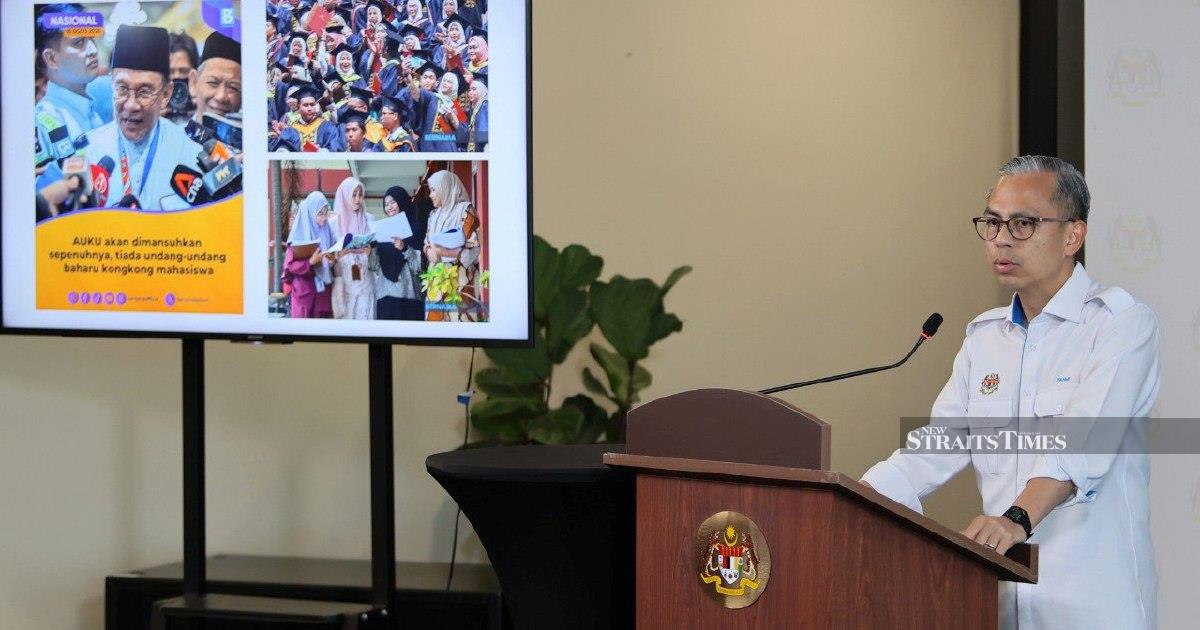
Prime Minister Datuk Seri Anwar Ibrahim's recent comments regarding Taiwan did not become the subject of cabinet discussion, according to government spokesman Datuk Seri Fahmi Fadzil, offering a significant window into how Malaysia's leadership handles sensitive geopolitical matters within its highest decision-making body.
The omission of the topic from the cabinet agenda underscores the delicate nature of cross-strait relations and the complexities surrounding Malaysia's diplomatic positioning in one of Asia's most contested spheres of influence. By remaining silent at the cabinet level, the administration appears to have opted for a measured approach rather than a full-throated institutional endorsement or clarification of the premier's position.
Anwar's remarks had generated considerable diplomatic friction, prompting a notably forceful objection from Taipei. Such responses from Taiwan typically indicate perceived statements at odds with the island's political messaging or Malaysia's historical positions on cross-strait matters. The strength of Taiwan's reaction suggests the comments touched on fundamental sovereignty or representation issues that remain particularly sensitive in current geopolitical contexts.
Malaysia has traditionally navigated the Taiwan question with considerable caution, balancing economic interests, diplomatic relationships with Beijing, and strategic considerations in the Indo-Pacific region. The prime minister's remarks, whatever their specific content, apparently struck observers in Taipei as departing from expected diplomatic language or previous Malaysian stances on the matter. The absence of cabinet discussion may reflect attempts to contain the diplomatic fallout without elevating internal disagreement.
The decision not to convene a cabinet discussion has several possible implications for Malaysian governance. It could suggest confidence that the matter required no institutional response, indicate strategic silence as a diplomatic tool, or reflect a desire to avoid public display of any potential cabinet divisions on foreign policy. Alternatively, it may simply indicate that the government viewed the remarks as personal statements by the prime minister rather than positions requiring cabinet-level consensus or formal government endorsement.
For regional observers and business interests, the handling of such matters carries practical significance. Malaysia's approach to contentious geopolitical questions can affect trade relationships, technology partnerships, and investment flows from multiple powers with stakes in Indo-Pacific stability. Taiwan maintains substantial economic ties with Malaysia across semiconductors, manufacturing, and other sectors, making diplomatic smoothness a commercial as well as political consideration.
The incident also illuminates how Malaysian governance operates during diplomatically sensitive periods. While cabinet silence can sometimes protect state interests by avoiding public controversy, it may equally create ambiguity about the government's actual position on critical regional matters. This ambiguity, though sometimes useful diplomatically, can complicate Malaysia's relationships with partners seeking clarity on where the country stands on major geopolitical questions.
Fahmi's confirmation that no cabinet discussion occurred came directly from Malaysia's official communications apparatus, suggesting this was a deliberate statement rather than incidental information. Government spokespeople typically field questions about cabinet proceedings carefully, particularly on matters affecting international relations. The directness of the denial indicates the issue had drawn sufficient attention to warrant explicit clarification from the government's communications team.
Anwar's remarks have broader implications for how Malaysia positions itself on the Taiwan issue moving forward, particularly as regional powers increasingly seek clearer commitments and statements from countries with significant economic and strategic importance. The tension between maintaining strategic ambiguity and satisfying external pressure for explicit positioning represents an ongoing challenge for Malaysian diplomacy in the 2020s.
For Malaysian observers concerned with foreign policy consistency and institutional coordination, the absence of cabinet discussion raises questions about how the government ensures alignment between the prime minister's public statements and formal government policy. While the cabinet is not the only mechanism through which such coordination occurs—bilateral discussions, diplomatic channels, and inter-ministerial consultation also play roles—public cabinet deliberation typically signals institutional consideration of major foreign policy matters.
The incident reflects the singular pressures facing a prime minister in a multipolar region where statements on sensitive topics can quickly escalate diplomatic tensions. Anwar faces constituencies simultaneously demanding clarity on Malaysia's geopolitical commitments while recognizing the nation's economic dependence on relationships across the Indo-Pacific. Managing these competing demands without triggering reactions that complicate bilateral relationships remains an enduring challenge for Malaysian leadership.
Moving forward, the episode may prompt internal review of communication protocols for statements on sensitive regional issues, even if such reviews remain invisible to the public. As Malaysia navigates deepening geostrategic competition in Southeast Asia and the broader Indo-Pacific, questions of how the government coordinates on foreign policy matters—whether through formal cabinet discussion or other channels—will likely become increasingly consequential for the nation's diplomatic positioning and economic interests.

