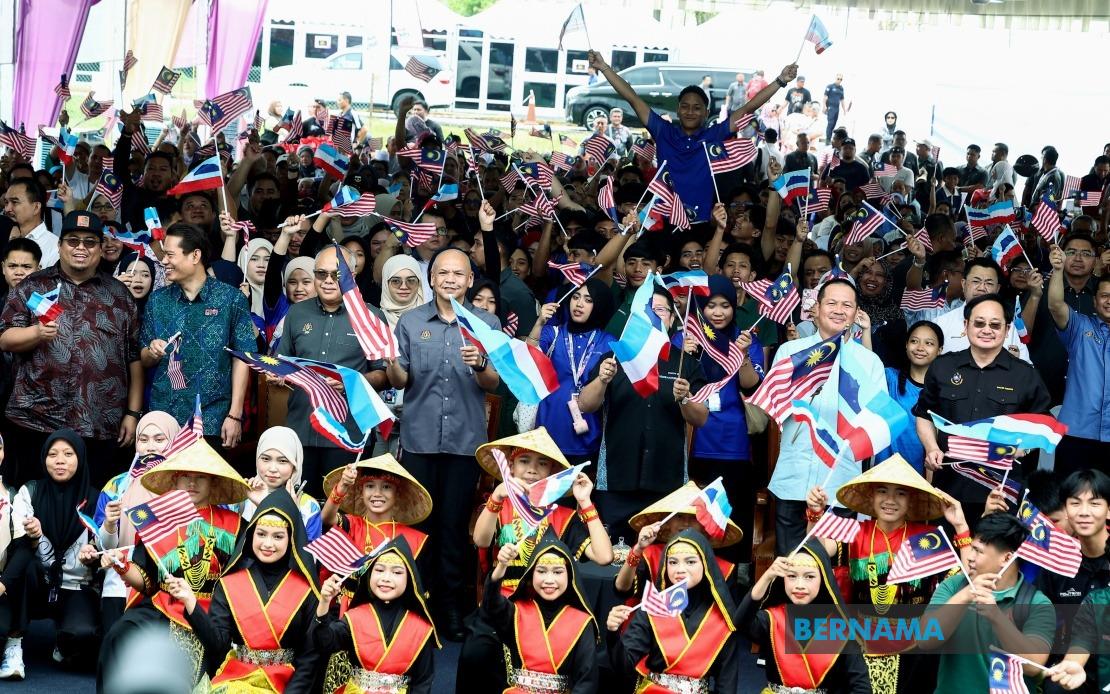
Malaysia is taking a more coordinated approach to promoting locally manufactured goods with the Cabinet's approval of a dedicated committee designed to amplify the nation's domestic products agenda across government and markets. Domestic Trade and Cost of Living Minister Datuk Armizan Mohd Ali unveiled the decision during the Jom Malaysia Festival in Sandakan on July 25, positioning the initiative as a critical step toward building economic resilience through greater consumption of home-grown products and reduced dependency on foreign imports.
The newly sanctioned Cabinet Committee will operate under the leadership of Deputy Prime Minister and Minister of Energy Transition and Water Transformation Datuk Seri Fadillah Yusof, with the Ministry of Domestic Trade and Cost of Living serving as the administrative hub. This arrangement reflects the government's intent to elevate what was previously a ministry-driven initiative into a whole-of-cabinet priority requiring strategic coordination across multiple departments and public agencies. The approval, granted during a Cabinet meeting on July 15, signals recognition that strengthening Malaysia's local product ecosystem demands far greater interagency cohesion than existing structures had provided.
Armizan emphasized that the committee's mandate extends beyond symbolic promotion to encompassing substantive policy direction and strategic alignment. The body will function to consolidate and harmonise approaches across government, establishing unified pathways for advancing both domestic consumption and international export competitiveness of Malaysian goods. By formalising this coordination mechanism, the administration aims to eliminate duplicative efforts and policy gaps that may have previously hindered the effectiveness of local product initiatives. The Ministry of Domestic Trade and Cost of Living has already begun preparing the committee's terms of reference and scheduling preliminary sessions to operationalise the framework.
The composition of the committee demonstrates the breadth of Malaysia's local product ecosystem and the cross-sectoral nature of any serious effort to enhance it. Representation will span the Ministry of Agriculture and Food Security, the Ministry of Entrepreneur Development and Cooperatives, the Ministry of Plantation and Commodities, and the Ministry of Economy—the latter designated as the central economic policy-setting institution. This multi-ministry configuration recognises that homegrown products span agricultural commodities, manufactured goods, processed foods, and value-added services, each requiring distinct expertise and support mechanisms. The inclusive membership structure is intended to ensure that policy recommendations reflect ground realities across diverse production sectors and that implementation strategies account for varied stakeholder needs.
This Cabinet-level intervention arrives as Malaysia's Jom Malaysia initiative seeks to deepen its market penetration and cultural resonance. Launched earlier to galvanise national sentiment around homegrown brands and products, the movement rests on four pillars: establishing it as a genuine national movement capable of mobilising public participation, adopting a whole-of-nation approach that engages private sector and civil society alongside government, ensuring product inclusivity that represents the full spectrum of Malaysian manufacturing and agriculture, and pursuing market expansion into both domestic consumer bases and international export channels. The Cabinet Committee essentially provides the institutional architecture necessary to sustain and scale these ambitions beyond festival events and promotional campaigns.
The three-day Jom Malaysia Festival showcased the tangible scope of local enterprise that the government seeks to amplify. The Sandakan event assembled more than one hundred entrepreneurs and industry players, creating a concentrated marketplace for product discovery, buyer-seller networking, and direct consumer engagement. Such festivals serve multiple functions: they demonstrate the diversity and quality of Malaysian products to domestic audiences, create business development opportunities for participating enterprises, and generate consumer awareness about locally available alternatives to imported goods. By hosting these events across different regions, the government builds grassroots momentum for the broader economic objective of import substitution and local value-creation.
For Malaysian businesses, the Cabinet Committee's establishment carries significant implications regarding access to policy advocacy and coordinated government support. Rather than lobbying multiple uncoordinated ministries, entrepreneurs in various sectors now have a clearly defined senior governance body responsible for translating sectoral concerns into coherent national strategy. This institutional clarity should theoretically accelerate policy implementation, reduce bureaucratic fragmentation, and enable faster response to emerging market opportunities or sector-specific challenges. The framework also signals government commitment to treating local product promotion as a sustained strategic priority rather than a periodic initiative, offering businesses greater confidence in planning long-term investment and market expansion.
The import reduction objective underlying this initiative reflects broader economic considerations beyond mere sentiment for homegrown goods. Malaysia's import bill and associated foreign exchange pressures represent ongoing macroeconomic challenges; policies that successfully shift domestic consumption toward locally produced alternatives potentially generate multiplier effects through domestic employment, skills development, and retained economic value. For regional observers, Malaysia's structured approach to local product promotion offers a model of how governments can coordinate multiple economic levers—tax policy, public procurement, regulatory frameworks, trade promotion—through unified cabinet-level oversight rather than fragmented ministry initiatives.
The committee's work will unfold against a backdrop of evolving consumer preferences and supply chain recalibration across Southeast Asia. Global uncertainties have prompted businesses and governments throughout the region to reassess import dependencies and consider regional sourcing alternatives. Malaysia's initiative positions the nation to capture potential market share from consumers and institutional buyers increasingly receptive to local or regional product sourcing. However, success demands not only government coordination but also genuine improvements in product quality, pricing competitiveness, and supply reliability—areas where the committee's role in streamlining policies and reducing regulatory barriers becomes crucial.
Armizan's confidence that the Cabinet Committee will invigorate the Jom Malaysia movement reflects an understanding that sustained consumer behavioural change requires both supply-side improvements and demand-side mobilisation. Government procurement policies, trade facilitation measures, marketing support, and regulatory harmonisation all fall within the committee's potential remit. The secretariat role assigned to the Ministry of Domestic Trade and Cost of Living positions that ministry as the principal implementer of Cabinet decisions, requiring it to coordinate upward to the Deputy Prime Minister and outward to fellow ministries. This hierarchical clarity should theoretically prevent the initiative from losing momentum through bureaucratic diffusion.
Looking ahead, the committee's effectiveness will be measured not merely by formation and meeting frequency but by tangible outcomes: measurable shifts in local product consumption patterns, expanded export opportunities for Malaysian goods, quantifiable reduction in import dependence for particular product categories, and sustained business participation in the Jom Malaysia ecosystem. The framework's success will also depend on the committee translating broad mandates into specific policy initiatives with clear timelines and accountability mechanisms. Whether departmental stakeholders subordinate parochial interests to collective objectives remains an open question, as does the political sustainability of such initiatives across electoral cycles.

