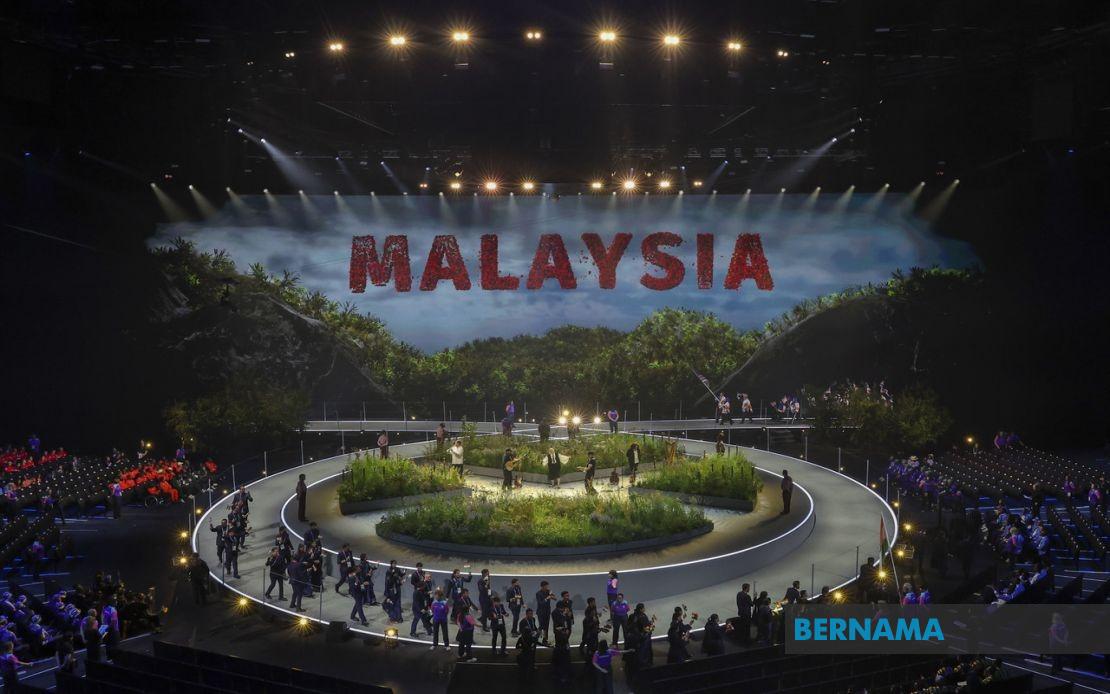
Malaysia's showing at the Glasgow 2026 Commonwealth Games has drawn official commendation from the federal Cabinet, with government spokesman Datuk Seri Fahmi Fadzil lauding the national contingent's results as a source of national pride. Speaking at a post-Cabinet media briefing in Putrajaya on August 5, Fahmi, who doubles as Communications Minister under the MADANI administration, acknowledged that the achievement represents a significant milestone for the country's sporting prowess on the global stage.
The Malaysian contingent claimed a total of 16 medals at the Glasgow Games, comprising eight gold, three silver and five bronze awards. This haul substantially exceeded the government's pre-Games target of five gold medals, marking a decisive performance improvement that has galvanised official recognition at the highest levels of the executive branch. The medal tally reflects the quality of preparation and commitment demonstrated by Malaysia's athletes across the various Commonwealth sports disciplines contested in Scotland.
What makes this achievement particularly noteworthy is its positioning within Malaysia's modern Commonwealth Games history. The last occasion on which the country achieved such strong results came at the New Delhi 2010 edition, when Malaysian athletes secured 12 gold medals. The Glasgow 2026 performance, whilst delivering fewer golds in absolute terms, demonstrates a more balanced medal distribution and validates the investment made in athlete development and sports infrastructure over the intervening years.
The Cabinet's formal recognition of this success carries significance beyond ceremonial acknowledgment. Government ministers view the athletes' accomplishments as a rallying point for national sporting ambitions, and Fahmi explicitly framed the results as motivational for future competitors. By connecting individual achievement to broader national aspirations, the government seeks to reinforce the cultural value of sporting excellence whilst encouraging emerging talent to pursue international competition with renewed vigour.
Financial recognition of the athletes' efforts came through the Sports Victory Incentive Scheme, locally known as SHAKAM, through which the government allocated RM1.1 million in reward payments. This financial commitment reflects established government policy regarding incentivisation of medal-winning performances at major international sporting events. The scheme operates as a mechanism to acknowledge exceptional achievement whilst providing material support to athletes whose dedication has translated into measurable competitive success on the world stage.
The distribution of medals across three categories suggests a healthily competitive Malaysian presence across multiple sporting disciplines at Glasgow. Eight gold medals indicate dominance in certain sports, while the presence of silvers and bronzes demonstrates broader competitive capability. This diversification reduces reliance on performance in any single discipline and suggests systemic improvements in sports talent identification and coaching quality across different sports bodies.
Malaysia's performance at Commonwealth Games must be contextualised within the evolving competitive landscape of regional and international sport. Southeast Asian nations have progressively invested in sports development programmes, creating increased competition for medals and rankings. Against this backdrop, Malaysia's ability to exceed pre-set targets indicates effective resource allocation and strategic focus within the national sports establishment.
The Glasgow 2026 Commonwealth Games provided Malaysian athletes with representation across multiple venues and disciplines, each contributing to the overall medal count. Success in this environment requires not merely exceptional individual talent but also robust support systems encompassing coaching, sports science, nutrition and mental conditioning. The Cabinet's acknowledgment implicitly recognises the infrastructure and administrative apparatus that enabled these performances.
Looking forward, the government's public endorsement of the Glasgow results and the associated financial rewards through SHAKAM signal official commitment to sustaining sports excellence. By celebrating tangible achievements and providing material incentives, the administration seeks to create a virtuous cycle wherein recognition motivates continued investment by athletes in their competitive development, whilst attracting emerging talent into formal sports development pathways.
The implications for Malaysia's sporting trajectory extend beyond the immediate Commonwealth Games cycle. Success at such major events enhances the nation's international standing within Olympic and sporting governance structures whilst generating domestic enthusiasm for athletic pursuits. The Cabinet's prominent engagement with these results demonstrates recognition that sporting achievement constitutes a legitimate dimension of national pride and soft power projection, particularly within the Commonwealth family of nations where Malaysia maintains established relationships and shared sporting traditions.
For Malaysian sports administrators and coaches, the Glasgow 2026 outcome provides empirical validation of their strategic planning and implementation approaches. Exceeding pre-competition targets despite the competitive intensity of modern Commonwealth Games suggests that investments in talent identification, athlete welfare and coaching development are yielding measurable returns. This success creates a foundation upon which longer-term sporting ambitions, including preparation for future Olympic cycles and regional championships, may be constructed.

