The Malaysian Cabinet has escalated pressure on its security and transport agencies to overhaul airport security protocols, setting a two-week deadline for a detailed action plan. Home Minister Datuk Seri Saifuddin Nasution Ismail made the announcement in Sandakan on Thursday, emphasizing that recent breaches have raised serious questions about the effectiveness of current screening measures and damaged Malaysia's international standing.
Cabinet concerns centre on a series of recent incidents that have collectively exposed potential gaps in airport security operations. The most notable case involved a Malaysian airline pilot arrested last week after approximately 25 kilograms of MDMA drugs were discovered at Indonesia's Soekarno-Hatta Airport. These occurrences have prompted high-level government scrutiny and signalled to neighbouring countries and international partners that Malaysia's airport protocols may require significant strengthening.
The decision underscores how security vulnerabilities at aviation checkpoints carry broader diplomatic implications beyond mere law enforcement. When drugs or dangerous materials slip through Malaysian airport security, the incidents reverberate through international media and influence how foreign governments assess travel safety. Saifuddin acknowledged this reality, stating that the Cabinet views the breaches as having created a negative impression of Malaysia's security infrastructure and generated concerns among travellers and diplomatic communities worldwide.
The Ministry of Home Affairs and Ministry of Transport now face the challenge of coordinating across multiple agencies to devise a credible, implementable security framework. The two-week timeline is notably compressed, suggesting the government views the situation as requiring rapid remedial action. This accelerated schedule will test the ability of Malaysia's security and transport bureaucracies to prioritize airport security enhancement over competing departmental priorities.
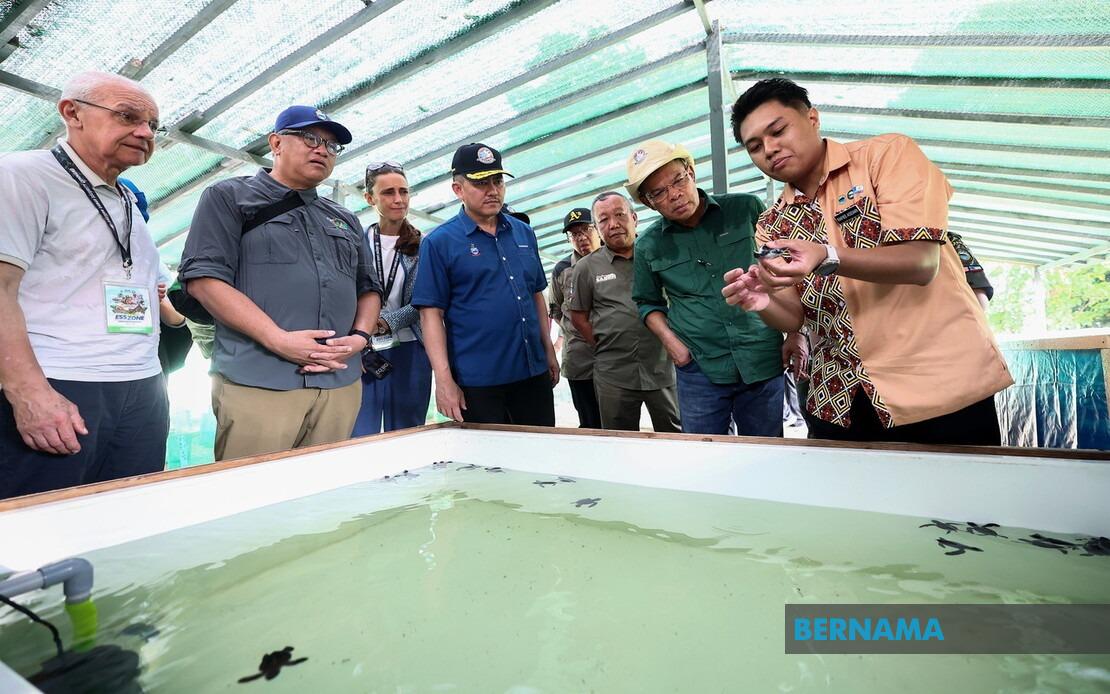
Parallel to the security-hardening initiative, Saifuddin has been working to rehabilitate Malaysia's image internationally, particularly regarding the Eastern Sabah Security Zone, which has long been associated with maritime threats and kidnapping risks. During his Sandakan visit, he led 14 foreign diplomats through strategic locations and tourist destinations in the ESS Zone, demonstrating that security improvements have made the region more stable and investment-friendly. This confidence-building exercise reflects recognition that economic recovery in Sabah depends partly on convincing international travelers and investors that the area is safe.
The diplomatic outreach is yielding results. Japan and Switzerland have already revised their travel advisories for Sabah's east coast, signalling that consistent government communication about security improvements can move international opinion. These revisions matter significantly for Malaysia's tourism sector and Sabah's regional development ambitions, as restrictive travel advisories deter both leisure and business visitors. By guiding diplomats through the ESS Zone firsthand, Saifuddin aims to ensure foreign governments receive accurate assessments rather than relying on outdated threat perceptions.
SESSCOM's operational statistics provide quantifiable evidence of enhanced security enforcement. Between January and June 30 this year, the multiagency task force conducted nearly 900,000 inspections and made 307 arrests. Seizures worth RM23.37 million underline the intensity of contraband interdiction efforts across land borders and state waters. These figures demonstrate substantial resource commitment and operational intensity, though they also highlight the sheer volume of cross-border movement that security personnel must monitor continuously.
The federal government's financial commitment to the ESS Zone reinforces the political weight attached to maintaining order in eastern Sabah. Over ESSCOM's thirteen years of existence, the government has allocated RM723 million for asset acquisition, operational costs, and logistics. This sustained investment reflects long-term strategic recognition that maritime security in this region directly affects national sovereignty and regional stability. The funds have enabled ESSCOM to maintain persistent surveillance capabilities and rapid-response capacity, though financing security operations indefinitely raises questions about cost efficiency and whether sustainable development can reduce security dependencies over time.
The airport security initiative must address both procedural and technological dimensions. Current screening systems may require upgraded equipment, additional personnel training, and revised inspection protocols. However, technological enhancements alone cannot compensate for human lapses or coordination failures between airport authorities and enforcement agencies. The comprehensive plan ordered by Cabinet will likely need to examine staffing adequacy, inter-agency communication channels, and whether screening procedures keep pace with evolving smuggling methods.
For Malaysian readers, the implications extend beyond Sabah. Airport security affects all travellers using Kuala Lumpur International Airport, Kuching International Airport, and other major aviation hubs. Incidents that allow contraband or dangerous materials to pass through screening erode confidence in the entire aviation system and can result in longer queues, more intensive personal screening, and travel delays. International carriers may also impose surcharges or operational restrictions in response to perceived security weaknesses.
The two-week deadline also signals potential frustration within the Cabinet regarding the pace of institutional responses to security challenges. When senior ministers impose such compressed timelines, they are often signalling that existing departmental processes are viewed as insufficiently urgent. This creates pressure on the Ministry of Home Affairs and Ministry of Transport to deliver substantive proposals rather than incremental adjustments to existing procedures.
Looking ahead, the success of this initiative will depend on whether the comprehensive plan translates into sustained operational improvements or becomes another policy document without persistent implementation. History suggests that security reviews often recommend significant changes that face obstacles during execution, whether due to budgetary constraints, institutional resistance, or competing priorities. The Cabinet's direct involvement and the two-week deadline may accelerate initial planning, but maintaining momentum through implementation will require ongoing political pressure and resource allocation.

