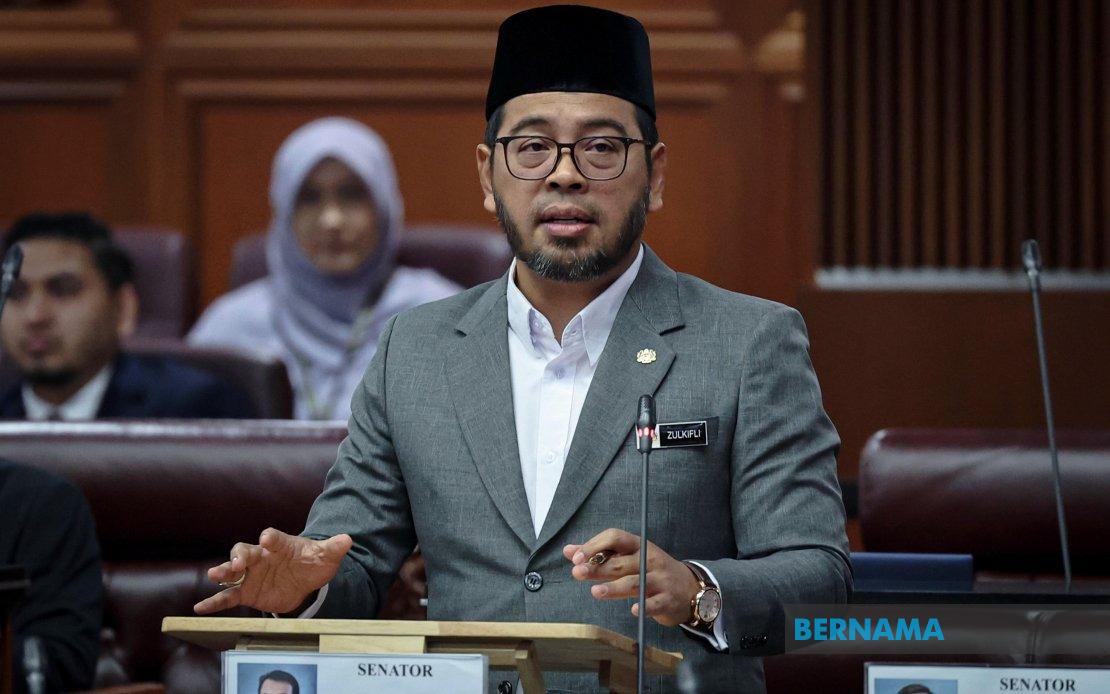
The Malaysian Cabinet is expected to examine whether the final report from the Royal Commission of Inquiry into Tabung Haji should be made available to the public, according to Minister in the Prime Minister's Department (Religious Affairs) Dr Zulkifli Hasan. The decision comes as the government seeks to address growing public confusion and speculation surrounding the controversial handling of the Islamic pilgrimage fund's financial crisis in the years following 2018.
Dr Zulkifli moved to directly counter persistent allegations that a former Treasury secretary-general had improperly sold off the institution's strategic assets. He emphasised that these claims were fundamentally inaccurate, reframing the narrative around what actually constituted an emergency stabilisation operation designed to prevent the collapse of a major financial institution serving Malaysia's Muslim community. This distinction carries significant weight, as it repositions the transaction from potentially corrupt asset stripping to legitimate crisis management within the bounds of government authority.
The underlying crisis that prompted the intervention was severe. Official reports from the Auditor-General and Bank Negara Malaysia had identified catastrophic financial deterioration within Tabung Haji, with the asset-liability deficit reaching RM10.9 billion by 2018. The situation deteriorated rapidly when depositors, sensing institutional instability, withdrew approximately RM6 billion within a compressed timeframe, creating a compounding liquidity crisis that threatened to trigger wholesale collapse. Simultaneously, attempts to secure a standby loan from international financial markets had failed, leaving the government with limited options.
Under these circumstances, the Cabinet took the collective decision in 2018 to transfer underperforming and problematic Tabung Haji assets to Urusharta Jamaah Sdn Bhd, a government-owned special purpose vehicle created specifically for this purpose. Dr Zulkifli stressed that this was not an individual action by any Treasury official but a coordinated policy response approved at the highest governmental level. The alternative—allowing Tabung Haji to fail—would have exposed the government to potentially crushing liabilities.
The financial exposure calculations were stark. Had Tabung Haji collapsed, the government faced absorbing approximately RM74.5 billion in liabilities, as deposits were fully guaranteed by the state. This figure dwarfed the scale of the asset transfer itself, making the rescue operation a rational exercise in risk management and fiduciary responsibility. The decision, though controversial in hindsight, represented the lesser of available evils from a fiscal perspective.
Since the intervention, the outcomes have validated the government's approach, at least according to official metrics. Tabung Haji's deposit base has expanded substantially, climbing from approximately RM69.4 billion in 2019 to more than RM95.1 billion as of mid-2024, representing a recovery of public confidence in the institution. This restoration of depositor trust is particularly significant given that confidence erosion was a primary driver of the original crisis.
Operational performance indicators have similarly improved. The profit distribution rate rose markedly from 1.25 per cent in 2018 to 3.5 per cent in 2025, marking the highest payout rate achieved over an eight-year period. For pilgrims planning their hajj journey, a tangible benefit has been the stabilisation of costs, with government-subsidised pilgrimage expenses remaining frozen at 2024 levels throughout 2024, 2025, and into 2026, despite ongoing inflationary pressures elsewhere in the economy.
The decision to potentially release the RCI report reflects mounting public pressure for transparency regarding the fund's turbulent recent history. The proposal acknowledges that ongoing allegations and confusion undermine public trust, despite the intervention's apparent success in stabilising the institution. Making the report public could serve to either vindicate the government's decision-making or expose problematic elements that have remained hidden, depending on the commission's findings and recommendations.
For Malaysian readers, the significance of this matter extends beyond Tabung Haji itself. The case illustrates broader governance questions about how government handles institutional crises, whether adequate transparency accompanies emergency interventions, and how competing interests between fiscal responsibility and public accountability are balanced. The fund directly affects millions of Malaysian Muslims saving for or planning hajj pilgrimages, making it a matter of considerable personal and communal importance.
From a Southeast Asian perspective, Malaysia's handling of the Tabung Haji crisis offers lessons relevant to other nations managing large institutional failures or financial stability threats. The establishment of a special purpose vehicle to isolate problematic assets is a technique increasingly deployed across the region, and the outcomes of Malaysia's approach may inform policy decisions elsewhere in the region facing similar financial institution challenges.
The impending Cabinet discussion represents a critical juncture in how the government manages the narrative around financial crisis response. Release of the RCI report could provide definitive answers to lingering questions about decision-making quality and adherence to procedural standards, or it could reignite controversy if the commission identified significant departures from best practice. Either outcome would carry implications for how Malaysians view institutional safeguards and governmental accountability in managing public financial assets.

