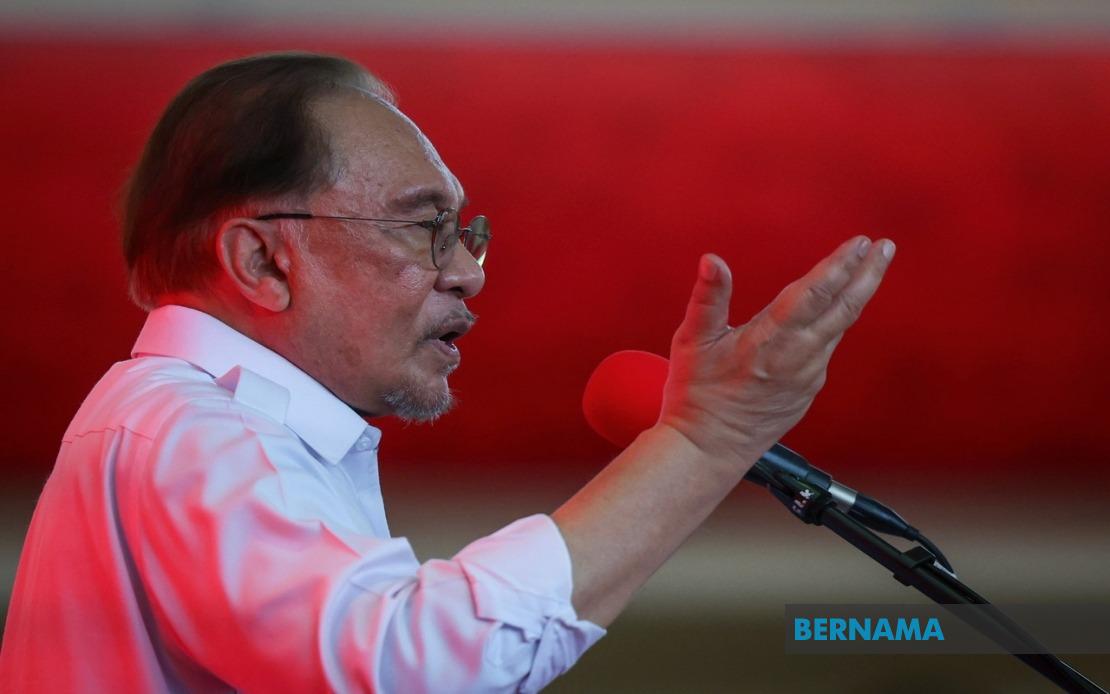
The Cabinet is set to make a crucial decision this Wednesday on whether to release the Royal Commission of Inquiry report into Lembaga Tabung Haji, Prime Minister Datuk Seri Anwar Ibrahim disclosed during an event in Tampin on July 27. The announcement comes as mounting pressure builds on the government to shed light on findings concerning the controversial sale of TH's strategic assets and related allegations that have sparked considerable public debate and scrutiny over recent months.
Anwar indicated that the matter would feature prominently on the agenda during the Cabinet's regular weekly gathering, where ministers will deliberate the appropriate course of action regarding the report's disclosure. His comments reflect a shift towards greater transparency on an issue that has generated significant controversy within the Malaysian public sphere and among stakeholders with direct connections to the pilgrim fund.
The Prime Minister articulated a principled stance on governance and institutional accountability, emphasising that the executive should remain separate from investigative and prosecutorial functions. Anwar stressed that if investigations uncover wrongdoing, those responsible must face legal consequences through established channels—investigations by relevant authorities, prosecution by the Attorney General's office, and judgment by the courts. This delineation of roles underscores his administration's commitment to constitutional processes and the rule of law, distinguishing between political responsibility and judicial accountability.
Anwar's remarks also addressed concerns about potential political interference in the matter. By asserting that the outcome of investigations and prosecutions bears no reflection on his own standing or that of the government collectively, he sought to establish that any disciplinary actions resulting from the RCI findings would flow from impartial legal processes rather than political considerations. This framing is significant in a Malaysian context where questions about institutional independence and political neutrality have historically attracted public concern.
The Tabung Haji inquiry has centred on allegations related to the sale of the pilgrim fund's valuable assets, transactions that came under intense scrutiny and prompted calls for comprehensive investigation. The establishment of the Royal Commission of Inquiry represented the government's acknowledgment of public concern and the need for a formal, authoritative examination of the circumstances surrounding these transactions. The upcoming Cabinet decision on disclosing the report's contents will effectively determine whether the Malaysian public gains direct access to the commission's findings and recommendations.
Anwar's earlier statement, made the previous Thursday, had already signalled government willingness to release the final RCI report in the near term. At that time, he indicated he would coordinate with the Chief Secretary to the Government regarding procedural requirements, specifically whether Cabinet approval was prerequisite to public release. The progression from that preliminary commitment to Wednesday's formal Cabinet decision represents a structured approach to handling a sensitive matter of public interest.
The attendance of senior government figures at the Tampin event—including Chief Secretary to the Government Tan Sri Shamsul Azri Abu Bakar, Deputy Defence Minister Adly Zahari, Armed Forces Chief General Tan Sri Malek Razak Sulaiman, and Army Chief General Tan Sri Azhan Md Othman—underscores the institutional weight being placed on governance and accountability matters within the current administration. These officials' presence reflected broader government commitment to demonstrating competence and integrity in public administration.
For Malaysian stakeholders and the general public, the impending Cabinet decision represents a potential watershed moment in government transparency. Tabung Haji holds profound significance as the principal institution facilitating pilgrimage to Mecca for Malaysian Muslims, and questions about its management directly affect hundreds of thousands of contributing members and their families. The integrity of the fund's operations and asset management carries both practical and symbolic importance within Malaysian society.
The timing of the decision carries additional resonance given ongoing debates about institutional reform and governance standards in the country. Public disclosure of the RCI report would provide empirical evidence regarding alleged irregularities and offer detailed findings that could inform future policy adjustments and regulatory enhancements affecting the fund's operations. Such transparency could also serve broader institutional purposes by demonstrating government commitment to accountability mechanisms and public disclosure standards.
Anwar's emphasis on constitutional propriety and institutional separation of powers reflects his administration's broader governance philosophy. By explicitly rejecting any notion of executive intervention in investigative or prosecutorial matters, he positioned the government as committed to democratic norms and rule-of-law principles. This stance becomes particularly relevant in Southeast Asian contexts where concerns about executive overreach and institutional independence remain significant public issues.
The Cabinet's Wednesday deliberation will likely consider multiple factors: the completeness and sensitivity of the report's contents, potential implications for ongoing investigations or legal proceedings, and broader strategic considerations regarding government transparency and public confidence. Officials will need to balance the legitimate public interest in understanding TH's governance challenges against any legitimate concerns about prejudicing legal processes or protecting sensitive operational details requiring protection.

