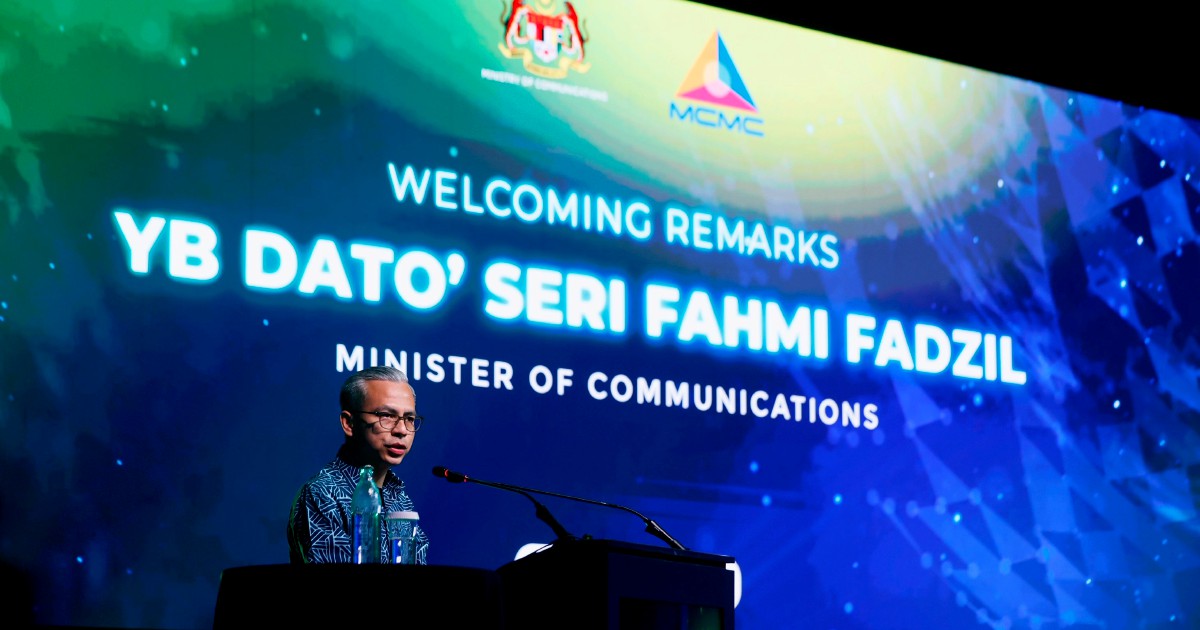
Cabinet cohesion remains strong and intact, Communications Minister Datuk Seri Fahmi Fadzil said in Kuala Pilah, rejecting any notion that recent public disagreements signal deeper rifts within the government. The minister's remarks come at a time when Malaysian political observers have scrutinised ministerial conduct and statements made during the Negri Sembilan state election campaign, with some observers suggesting potential internal tensions within the ruling coalition.
Fahmi's rebuttal reflects a broader pattern in contemporary Malaysian politics where ministers and government officials feel compelled to publicly affirm unity following media coverage of disagreements. Such statements typically serve as damage control when political differences surface, though they also underscore the sensitivity surrounding Cabinet cohesion in a coalition government. The minister's location choice—Kuala Pilah, a key constituency in Negri Sembilan—itself signals an attempt to recalibrate the government's messaging in a state where electoral dynamics remain significant.
Recent weeks have witnessed public exchanges among senior government figures over the appropriate conduct expected of ministers during state-level electoral contests. These discussions, aired in media reports and public statements, reflected divergent views on how government resources and ministerial platforms should be utilised during campaigns. Such disagreements, while conceptually routine in coalition governance, became noteworthy because of their public visibility, prompting analysts to question whether they indicated deeper fissures.
Fahmi's characterisation of ministerial relations as harmonious, demonstrated through casual references to recent informal gatherings, attempts to reframe the narrative around Cabinet dynamics. By invoking images of routine social interaction among ministers, he implicitly argues that disagreements on procedural or campaign matters do not translate into governance dysfunction or coalition instability. This rhetorical approach recognises that public perception of governmental unity directly impacts investor confidence, policy implementation effectiveness, and political credibility.
The backdrop of the Negri Sembilan state election campaign proved particularly sensitive because state elections often serve as barometers for federal government performance. Ministers' involvement in campaigns, while standard practice, generates scrutiny regarding whether government machinery and public resources are being appropriately deployed. The tension between campaign activities and ministerial impartiality represents an ongoing challenge in Malaysian politics, where the boundary between party politics and governmental responsibility occasionally blurs.
For Malaysian readers, Cabinet stability directly affects the pace and consistency of policy implementation across critical sectors including infrastructure, healthcare, and education. When questions arise about governmental unity, investors and business communities frequently adopt cautious positions regarding new initiatives or long-term commitments. Fahmi's proactive messaging thus serves a practical purpose beyond mere public relations, attempting to provide assurance regarding the continuity of government operations and policy direction.
The Communications Ministry's role in shaping this narrative carries particular significance, as Fahmi oversees media relations and government communications strategy. His intervention signals a deliberate attempt to control the story's trajectory and prevent speculation from escalating into broader questions about Cabinet stability or coalition viability. In an era of rapid information dissemination through social media and digital platforms, early intervention by high-ranking officials has become essential to prevent narratives from taking root among the broader public.
Regional observers have increasingly noted that Southeast Asian coalition governments face recurring tests of internal cohesion, particularly during electoral cycles. Malaysia's multiparty coalition structure, while providing representational breadth, necessarily involves managing diverse political interests and policy preferences. The government's ability to present a unified front while accommodating legitimate disagreements on operational matters becomes crucial for maintaining public confidence and policy momentum.
Looking forward, the underlying question regarding ministerial discipline during campaigns will likely resurface in future state elections and the eventual federal ballot. Whether through formalised protocols, clearer guidelines, or enhanced intra-coalition communication mechanisms, the government appears poised to address the procedural concerns that generated recent public discussion. Fahmi's measured response, rather than dismissing legitimate questions outright, suggests that officials recognise the validity of ensuring consistent standards for ministerial conduct across different electoral contexts.
The minister's comments ultimately reflect a delicate balancing act inherent to coalition governance in Malaysia. Acknowledging that individual incidents or disagreements occurred while simultaneously asserting overall unity requires careful calibration. For the Malaysian electorate and international observers monitoring political stability, such statements provide reassurance even as they acknowledge that perfectly harmonious governance remains an unattainable ideal in plural democracies managing competing interests and perspectives.

