A coalition of twelve states, spearheaded by California, has mounted a legal challenge to Paramount's ambitious $110 billion bid to acquire Warner Bros Discovery, filing suit in Oakland federal court. The states contend that the combination would forge a dominant media conglomerate capable of wielding extraordinary influence over pricing decisions for film and television content. The lawsuit comes after the US Department of Justice approved the transaction last month, raising questions about whether political connections may have influenced federal regulators' decision-making process.
The proposed merger represents CEO David Ellison's strategy to position Paramount as a formidable competitor to streaming giants Netflix and Disney. However, the state attorneys general argue that consolidating two of Hollywood's most significant studios would fundamentally reshape competition in the entertainment sector. According to the legal filing, the combined entity would capture more than a quarter of every dollar generated by theatrical film releases and basic cable programming in the United States—a concentration of market power that the states say would inevitably disadvantage consumers, workers, and competing distribution channels.
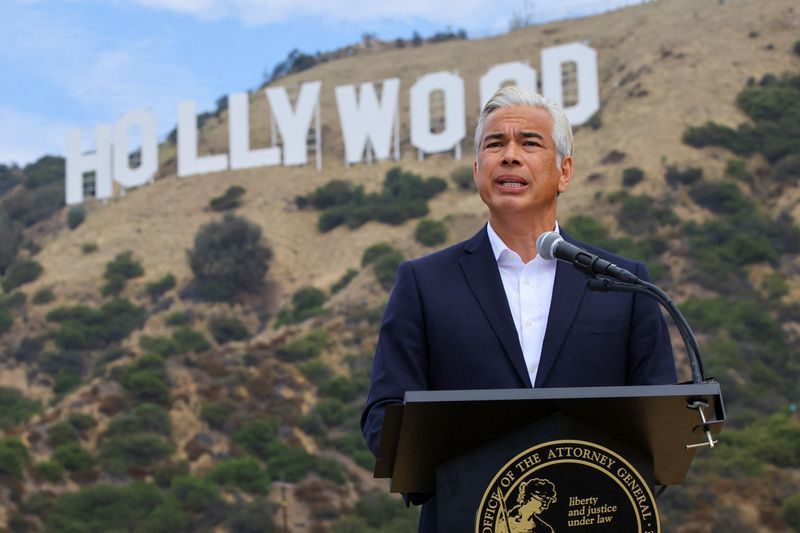
The political dimensions of this case have become immediately apparent. All twelve state attorneys general pursuing the lawsuit are Democrats, while critics of the merger have pointed to the involvement of Paramount CEO David Ellison's father, billionaire Oracle co-founder Larry Ellison, who has developed substantial political ties with Republican President Donald Trump. Oregon Attorney General Dan Rayfield framed the state action as essential consumer protection, emphasizing that state regulators must step forward when federal oversight appears insufficient. California Attorney General Rob Bonta characterized the federal approval as a "rubber-stamping" of a problematic transaction and highlighted broader concerns about Trump administration handling of major antitrust matters.
Antitrust enforcement has increasingly become a vehicle for political contestation in recent years. Democrats have seized upon merger review and antitrust cases as mechanisms to address public frustration with corporate consolidation and rising living costs, while simultaneously challenging Republican administrations perceived as business-friendly. Notably, some Republican state attorneys general have participated in antitrust actions alongside Bonta's office against other corporate giants such as Live Nation and Nexstar's acquisition of television broadcaster Tegna. Bonta appealed directly to these Republican counterparts during Monday's press conference, suggesting that their absence from the current lawsuit represented a missed opportunity for bipartisan antitrust enforcement.
The states present a detailed economic analysis of how Paramount-Warner Bros Discovery consolidation would reshape competitive dynamics. The combined company would control approximately 27 percent of the theatrical film distribution market nationwide, 30 percent of blockbuster film distribution specifically, and 27 percent of basic cable channels. This vertical integration would eliminate the competition that currently exists between the two studios for prime theatrical release dates and valuable cinema screen placements. Theater owners and moviegoers would face reduced competitive options, potentially resulting in higher admission prices and diminished content diversity. Similarly, cable television distributors and their millions of subscribers depend upon competition between Paramount and Warner Bros across major channels including CNN, MTV, HGTV, Cartoon Network, and Nickelodeon—competition that the merger would substantially diminish.
Hollywood's creative workforce has emerged as a particularly vocal constituency opposing the merger. Writers, actors, production crew members, and other entertainment industry workers fear that consolidation would accelerate job losses and reduce opportunities throughout the supply chain. Theater owners similarly worry that a combined studio would alter release strategies, potentially producing fewer films overall despite the companies' public statements about maintaining production levels. These labor concerns reflect anxieties about structural changes to an industry already facing disruption from streaming services and changing consumer viewing habits.
Paramount has mounted a vigorous defense, asserting that the states' legal arguments misrepresent settled antitrust doctrine and mischaracterize competition within the entertainment industry. The company maintains that the merger would ultimately benefit consumers and producers by enabling efficiency gains and expanded content creation. Paramount projects that the combined studios would achieve $6 billion in annual savings through eliminating redundant infrastructure, marketing, and administrative functions. CEO Ellison has committed publicly to maintaining annual theatrical film releases at thirty movies per year, positioning this as evidence that the merger would actually expand rather than contract content production.
The states have characterized such production commitments as essentially unenforceable and insufficient safeguards against anticompetitive conduct. Even if Paramount maintained promised film output levels, the states argue, the merged entity would still occupy a position of unparalleled market power enabling significant price increases and quality reductions. The anticipated ripple effects through state economies would harm tens of thousands of entertainment sector workers, from screenwriters to lighting technicians. These spillover consequences would extend beyond the entertainment industry itself, affecting suppliers, hospitality businesses, and communities dependent upon film and television production.
The legal challenge poses substantial financial and strategic risks for Paramount regardless of ultimate judicial outcome. Industry analysts characterize the state lawsuit as "the most credible threat yet" to the transaction's completion. Paramount has committed to paying Warner Bros Discovery shareholders approximately $650 million in quarterly fees if the deal fails to close before October, creating escalating financial pressure. Any extended litigation could force the company to renegotiate deal financing, trigger uncertainty regarding its stock valuation, or potentially render the entire transaction economically unfeasible. Historical precedent suggests that similar merger challenges typically require eight months or longer for judicial determination, meaning Paramount faces prolonged uncertainty and mounting costs.
The case also carries broader implications for how states increasingly leverage antitrust authority in response to perceived federal regulatory failures. As antitrust has become more politically charged, state attorneys general have stepped into roles traditionally dominated by federal regulators. This multi-state enforcement approach could establish precedent for challenging major corporate transactions at the state level when federal agencies decline to block them. For Malaysian and Southeast Asian observers, the case demonstrates how consolidation pressures and regulatory responses in major media markets directly influence global content distribution, investment flows, and the competitive landscape for regional entertainment companies seeking to operate internationally.

