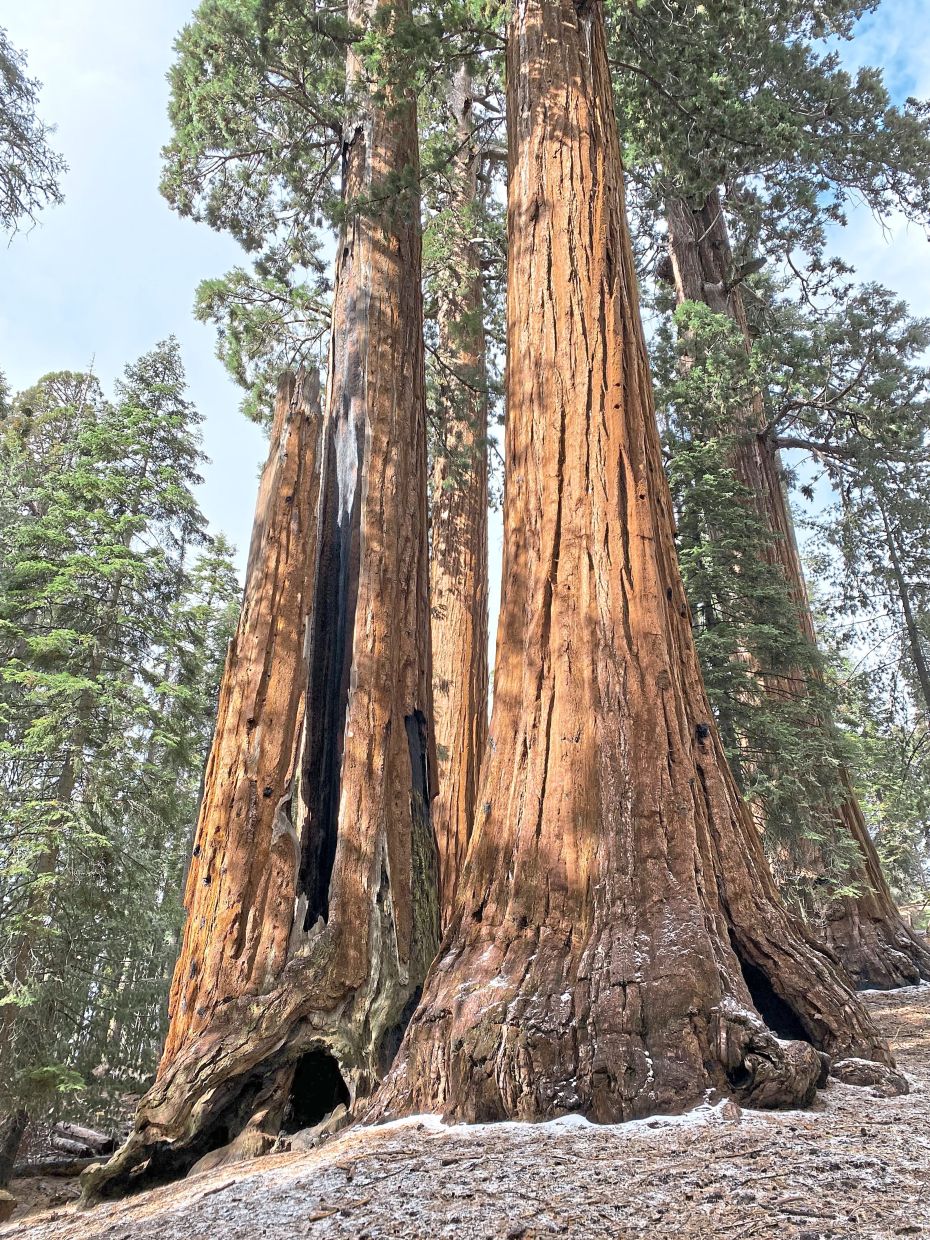
California's ancient giant sequoias, among Earth's largest and longest-living organisms, are the focus of an unprecedented restoration effort aimed at preventing a repeat of the catastrophic wildfires that swept through the southern Sierra Nevada in 2020 and 2021. Those fires proved devastating for the species, killing approximately 20 per cent of all giant sequoias in the world—a staggering loss of trees that can reach 91.5 metres in height and survive for three millennia. The tragedy has galvanized a broad coalition of environmental groups, government agencies and scientific institutions to fundamentally rethink how California manages these irreplaceable forests.
The scale of the destruction was difficult for those directly involved to process. Kevin Conway, state forests programme manager for Cal Fire, California's primary firefighting agency, spoke candidly about the emotional weight of witnessing such losses. The intensity and breadth of the fires exposed what had long been recognized by ecologists but largely ignored in forest management policy: that modern firefighting practices, paradoxically, had made giant sequoia groves far more vulnerable to catastrophic burns. For decades, the conventional approach of suppressing all wildfires had allowed dense accumulations of smaller trees, brush and dead wood to build up in the understory, creating ideal conditions for flames to burn with unprecedented ferocity.
The Giant Sequoia Lands Coalition, established to coordinate the response, brings together eight primary organizations with jurisdiction over the 94 groves scattered across California. Cal Fire, California State Parks, the National Park Service, the US Forest Service, the Bureau of Land Management, UC Berkeley, Tulare County and the Tule River Indian Tribe of California form the core partnership, supported by nine additional organisations providing research, funding and logistical assistance. This level of inter-agency coordination is relatively rare in American environmental management, reflecting the urgency that stakeholders feel about the situation.
Since launching their restoration work in 2022, coalition members have made substantial progress across the landscape. The thinning of overgrown brush and smaller tree species has been completed in 44 of the 94 giant sequoia groves. More impressively, crews have planted over 682,000 sequoia seedlings in areas that suffered severe burn damage during the 2020 and 2021 fires, establishing the foundation for forest regeneration across thousands of hectares. In four years, the partnership has reduced fire danger on 9,409 hectares of forest land, according to a report released in early May, demonstrating that meaningful landscape-scale change is possible when institutional barriers are overcome.
Steve Mietz, former superintendent of Redwood National Park and now president of Save the Redwoods League, captured the sentiment driving these efforts when he noted that the challenge is fundamentally a race against an inevitable threat. The fire season will return, Mietz emphasized, and when it does, the forests must be in better condition to withstand flames. Critically, he stressed that scientists and managers possess the knowledge needed to protect these ancient trees—this is not a problem without solutions, merely one requiring sustained commitment and resources.
The ecological history of giant sequoias explains why current management approaches had become so problematic. These trees evolved over millennia in fire regimes where flames moved through groves every ten to twenty years, as lightning strikes and controlled burns set by Indian tribes created regular disturbance cycles. The giant sequoias adapted remarkably to this reality: their massive cones require heat to release seeds, and their spongy, reddish bark grows up to 60 centimetres thick, functioning as natural insulation that protects the living tissue beneath from intense heat. However, roughly a century ago, California began systematically suppressing all wildfires, disrupting these natural cycles and allowing vegetation to accumulate to unnaturally dense levels.
Kristen Shive, a fuels and forest specialist with UC Berkeley's Cooperative Extension Program, described the shock of surveying the 2020 and 2021 burn areas. Scientists found thousands of acres that had burned at such intensity that even these fire-adapted giants could not survive. The emotional toll was substantial, Shive explained, because the deaths resulted largely from human forest management decisions rather than from conditions that the trees' evolution had prepared them to withstand. Climate change compounds this vulnerability; prolonged droughts in 2012-2016 and 2020-2022 killed millions of other trees across the Sierra Nevada, converting them into potential fuel that can intensify wildfires further.
The restoration strategy focuses on returning forests to conditions closer to their pre-suppression state. This means removing vast quantities of smaller tree species—white fir, red fir and incense cedar—that create dense thickets around the giant sequoias. Drought-killed larger trees such as sugar pines and ponderosa pines are also removed with chainsaws. Much of this material is piled and burned during the off-season, a process that mimics the natural fire regimes that shaped these forests for thousands of years. Some larger pieces of wood on private land are sold to lumber companies, creating an economic mechanism that helps offset the substantial costs of forest thinning operations.
Following mechanical thinning, areas are treated with controlled burns conducted using techniques that California Indian tribes employed for centuries before European colonization. Conway emphasized that this approach serves multiple ecological purposes simultaneously: it reduces the intensity at which subsequent wildfires will burn, allows more sunlight to penetrate the forest canopy, and creates conditions where sequoia seedlings can establish and grow. The objective is to restore forests to a more open, thinner structure that naturally resists drought, fire and disease—conditions that prevailed before fire suppression policies fundamentally altered these ecosystems.
The restoration effort has not proceeded without controversy. In 2022, the Earth Island Institute filed a lawsuit against the National Park Service, arguing that planned fuel reduction projects in Merced Grove within Yosemite National Park lacked sufficient environmental analysis. A federal district court dismissed the case, and the Ninth Circuit Court of Appeals upheld that decision in 2023, allowing work to proceed. Merced Grove has been threatened by six wildfires in the past fifteen years alone, underscoring the urgency of preventive management. Thinning and controlled burning operations in that grove began last year and are expected to continue through the current fire season.
For Malaysian and Southeast Asian readers, this California restoration effort offers important lessons about managing ancient forest ecosystems in an era of climate change. The giant sequoia case demonstrates that even ecosystems shaped by natural disturbance regimes become vulnerable when human management suppresses those disturbances over extended periods. Southeast Asia's own ancient forests—from the rainforests of Malaysian Borneo to the teak forests of Thailand and Myanmar—face analogous pressures from fire suppression, logging history and changing climate patterns. The coalition approach used in California, bringing together government agencies, indigenous communities, scientific institutions and conservation organisations, may offer a useful model for regional cooperation on transboundary forest management challenges.
The restoration programme also highlights the long time horizons required for meaningful ecological recovery. Giant sequoias live for millennia, and the partnership recognizes that restoration work undertaken now will take decades or centuries to fully mature. Yet the rate at which catastrophic wildfires are intensifying—driven by climate change and decades of fire suppression—has created a genuine emergency. Conway and his colleagues are working to compress what would normally be a very gradual process into a much tighter timeframe, aware that the window for preventing further catastrophic losses may be narrowing. Success will require sustained political will, adequate funding and public understanding that restoring ecosystems sometimes requires accepting and managing fire rather than eliminating it entirely.

