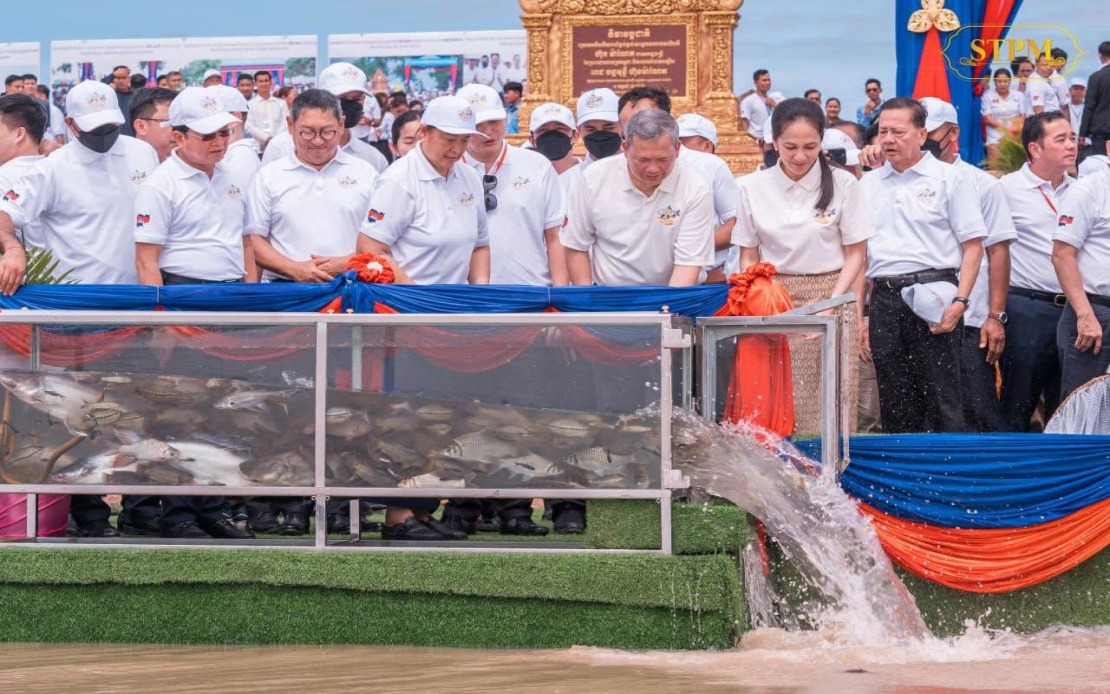
Cambodia is tightening its grip on illegal fishing activities in prime spawning zones after Prime Minister Hun Manet issued direct orders to local authorities to pursue violators with renewed vigour. Speaking during National Fish Day celebrations in Svay Rieng Province, the premier underscored the urgent need to safeguard the country's aquatic resources, which form the backbone of both food security and rural livelihoods across the Kingdom.
The directive carries particular weight in the context of Cambodia's fishing sector, which employs vast numbers of artisanal fishermen and provides essential protein to millions. Protecting spawning areas—where fish reproduce during critical seasons—is vital to maintaining healthy stock levels that can sustain these communities long into the future. Hun Manet's emphasis on safeguarding breeding grounds reflects growing recognition that short-term exploitation threatens the very foundation upon which Cambodia's fishing industry depends.
Central to the new enforcement push is the mobilisation of military units stationed around Tonle Sap, the country's largest freshwater lake and a crucial fishing region. The armed forces have spent the previous two years combating resource-related crimes across land and maritime boundaries, drawing on expertise developed through years of border security operations. By redirecting military capacity toward fishing enforcement rather than expanding dedicated fisheries law enforcement, the government is attempting to resolve a longstanding challenge: Cambodia historically lacked sufficient specialised officers trained to investigate and prosecute natural resource crimes effectively.
Hun Manet acknowledged this capacity gap directly, noting that reliance on military personnel for environmental policing reflects the shortage of dedicated natural resource enforcement specialists. The government's strategic approach involves leveraging existing military infrastructure and training rather than building costly new enforcement bodies from scratch. However, this arrangement remains temporary by design. The Prime Minister indicated Cambodia's intention to reduce military involvement in civilian law enforcement, signalling that developing permanent, professional fisheries agencies remains a long-term objective as resources and training capacity allow.
Among the immediate threats the government has identified is large-scale clam dredging, which devastates both marine ecosystems and the livelihoods of traditional fishing communities who depend on sustainable harvesting. Hun Manet issued an unequivocal order to cease such operations, framing the decision as essential to protecting those whose families have fished these waters for generations. The ecological damage from mechanised dredging extends beyond the dredging sites themselves, affecting water quality and spawning habitat across wider areas.
The agricultural and fisheries sectors occupy a symbolic and practical place in Cambodia's national identity and development strategy. Hun Manet characterised agriculture as "the nation's stomach"—the foundation of food self-sufficiency—while describing fisheries as its "source of protein," emphasising the complementary role both sectors play in ensuring nutritional security. This framing reflects reality: Cambodia's annual fish catches contribute billions to the national economy while feeding rural and urban populations alike. Threats to these sectors reverberate across society, potentially creating food insecurity and economic hardship far beyond fishing communities themselves.
The emphasis on protecting marine and freshwater resources during breeding seasons is scientifically grounded. Fish populations require undisturbed breeding cycles to regenerate; interrupting these cycles through illegal harvesting or habitat destruction can trigger population collapses that take years or decades to reverse, if recovery is possible at all. By targeting enforcement specifically during spawning periods, Cambodia aims to give fish populations critical protection windows when they are most vulnerable to overexploitation.
The symbolic dimension of the National Fish Day event—marked by the release of 1.5 million fish and aquatic species into the Vai Ko River in Svay Rieng—reinforces government commitment to fisheries renewal and restoration. Such initiatives serve multiple purposes: they contribute to stock replenishment, generate public support for conservation policies, and create visible evidence of government action on a priority issue. For fishing communities watching these releases, they signal official recognition that fisheries management is not merely a bureaucratic concern but a matter worthy of high-level political attention.
For Southeast Asia more broadly, Cambodia's enforcement approach offers both lessons and cautionary notes. Illegal fishing remains a regional scourge, with criminal networks exploiting weak enforcement and porous maritime boundaries to strip fishing grounds across national jurisdictions. Cambodia's decision to deploy military assets reflects a problem shared across the region: dedicated fisheries enforcement agencies often lack the training, equipment, and political support to confront organised fishing crimes. Countries including Malaysia, Thailand, and Vietnam have grappled with similar challenges, deploying naval forces and special enforcement units to combat piracy and illegal harvesting.
However, the Cambodian approach also reveals underlying vulnerabilities. Relying on military personnel for environmental law enforcement can blur lines between security operations and civilian policing, potentially creating accountability challenges. Moreover, military enforcement typically addresses symptoms rather than root causes—the demand for illegal catches, corruption within local governance, and the economic desperation driving some fishing communities toward unsustainable practices. Sustainable solutions require complementary investments in fisheries science, community education, and livelihood diversification for those dependent on destructive fishing methods.
The timing of Hun Manet's directive carries strategic significance in Cambodia's broader development narrative. As the country aspires to middle-income status, managing natural resources more efficiently and sustainably has become a national policy priority. International investors and trading partners increasingly scrutinise environmental governance, making effective fisheries management not merely a conservation imperative but an economic necessity. Demonstrating capacity to enforce environmental regulations can enhance Cambodia's reputation and access to premium markets for sustainably harvested products.
Looking forward, the success of Cambodia's illegal fishing crackdown will depend on sustained political will, adequate resourcing, and development of permanent institutional capacity for fisheries enforcement. The military's interim role must genuinely transition toward a professional, civilian-led system capable of investigation, prosecution, and management. Regional cooperation will prove essential, as fish stocks migrate across borders and trafficking networks operate across jurisdictions. Establishing information-sharing arrangements and coordinated enforcement with neighbouring countries could amplify the impact of national measures. For Malaysian observers, Cambodia's struggle mirrors challenges confronting all Southeast Asian nations as they attempt to balance resource exploitation with preservation, development with sustainability.

