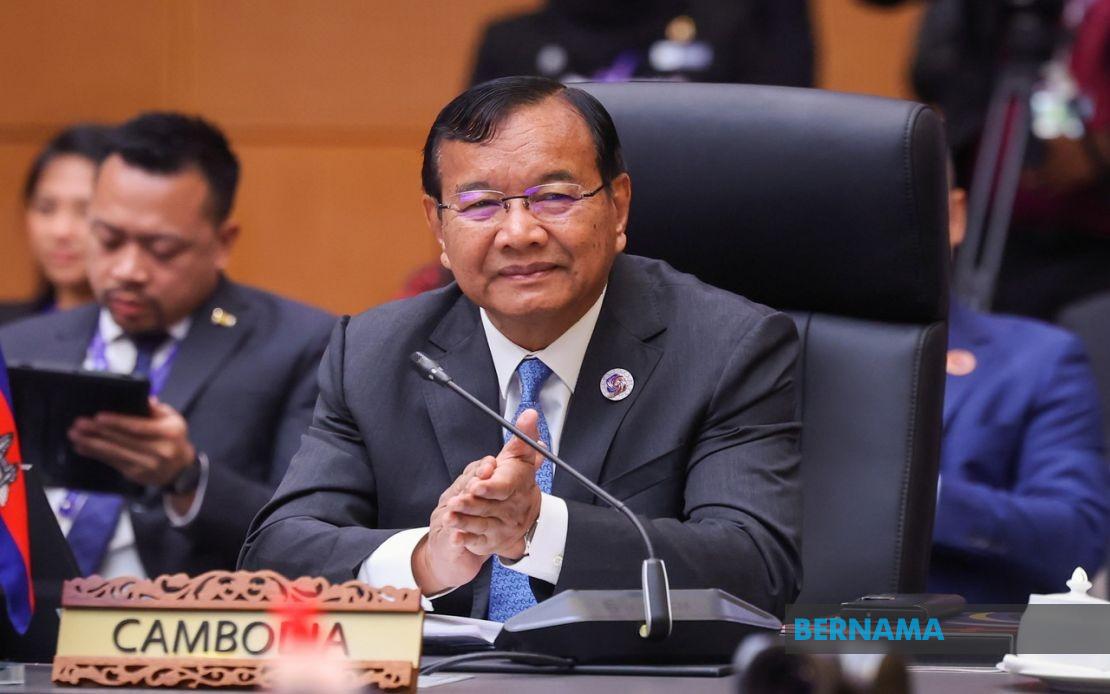
Cambodian Deputy Prime Minister and Foreign Affairs Minister Prak Sokhonn touched down at Kuala Lumpur International Airport on August 3, commencing a two-day official visit designed to strengthen diplomatic ties between the neighbouring nations. His arrival at KLIA Terminal 1 in the afternoon was marked by a ceremonial reception, underscoring the significance both governments place on reinforcing their multilateral partnership during a period of sustained regional engagement.
The timing of Sokhonn's visit carries broader geopolitical weight within the ASEAN framework. Malaysia and Cambodia, both integral members of Southeast Asia's primary regional bloc, have deepened their institutional cooperation through successive joint commission meetings. This particular visit represents a continuation of high-level dialogue mechanisms that have evolved considerably since the two nations established formal diplomatic relations, reflecting a maturation of bilateral structures designed to coordinate policy across multiple domains.
Sokhonn was welcomed by Cambodian Ambassador to Malaysia Ouk Chandara and Malaysian Government chief ceremony officer Datuk Rozainor Ramli, signalling the protocol-level importance assigned to the engagement. The formal reception apparatus deployed at the airport demonstrates that both capitals view such visits not merely as routine diplomatic exercises but as occasions requiring institutional affirmation of partnership commitment. This ceremonial dimension, while seemingly procedural, serves important signalling functions to domestic constituencies and regional observers about the stability and depth of bilateral relations.
The deputy prime minister's immediate schedule includes a courtesy call on Malaysian Prime Minister Datuk Seri Anwar Ibrahim, a customary diplomatic gesture that nonetheless provides opportunity for informal discussion of bilateral concerns. Following this initial engagement, Sokhonn will engage in a full programme of official meetings that extends through the following day, permitting comprehensive airing of bilateral issues at multiple institutional levels. These sequential high-level meetings reflect a structured approach to diplomatic engagement that maximises opportunities for substantive dialogue.
The centrepiece of Sokhonn's visit will be the third meeting of the Cambodia-Malaysia Joint Commission for Bilateral Cooperation, scheduled for August 4 in Kuala Lumpur. This forum represents the institutional apex of bilateral cooperation, designed to conduct thorough examination of progress achieved through previously concluded agreements and to chart trajectories for future collaboration. The JCBC structure permits systematic review of implementation outcomes, identifying bottlenecks or opportunities for acceleration, and enables senior officials to resolve outstanding issues that might otherwise fester within individual ministry-to-ministry channels.
Beyond the joint commission proceedings, Sokhonn will conduct bilateral talks with Malaysian Foreign Minister Datuk Seri Mohamad Hasan. These discussions will likely probe deeper into regional security architecture, particularly regarding maritime cooperation in shared waters and counterterrorism coordination—issues of considerable salience given contemporary transnational challenges. The bilateral format permits frank discussion of sensitive matters that might not be appropriately aired in the multilateral JCBC environment, offering space for candid exploration of divergent perspectives or bilateral grievances requiring resolution.
The economic dimensions of Malaysia-Cambodia relations provide compelling backdrop to this diplomatic engagement. Trade between the nations has expanded substantially, with bilateral commerce reaching RM5 billion in 2025, representing a notably robust 27.4 per cent year-on-year increase. This commercial expansion reflects deepening commercial integration and suggests that private sector actors across both economies perceive significant mutual opportunity. The acceleration in trade flows indicates that institutional frameworks supporting commerce are functioning effectively, and that tariff structures and regulatory environments are not impeding transaction flows to a degree that would dampen merchant activity.
Malaysia's position as Cambodia's third-largest foreign investor carries particular significance for understanding regional economic stratification. With cumulative Malaysian investments totalling USD3.20 billion deployed across 162 registered projects within Cambodia's borders, Malaysia has emerged as a consequential actor in Cambodia's foreign direct investment landscape. This investment footprint extends Malaysian economic interests deeply into Cambodia's productive sectors, creating interconnected business communities and supply chains that generate mutual prosperity and interdependence. Such economic entanglement typically reinforces political will to maintain stable diplomatic relations, as disruptions to bilateral harmony would impose direct costs on Malaysian enterprise and Cambodian workers employed within Malaysian-invested operations.
The third JCBC meeting carries particular importance as it enables systematic assessment of whether existing bilateral frameworks are producing intended outcomes or require recalibration. The commission's capacity to review implementation progress against agreed bilateral agreements means it functions as accountability mechanism ensuring that commitments translate into tangible results. This institutional rigour distinguishes genuine bilateral cooperation from rhetorical affirmations, permitting both governments to demonstrate to their constituencies that diplomatic engagement delivers concrete benefits rather than merely generating diplomatic theatre.
For Malaysian policymakers, Sokhonn's visit represents opportunity to reinforce Southeast Asian stability by consolidating relationships with immediate neighbours. Cambodia, positioned at intersection of multiple regional power dynamics, holds strategic importance for Malaysia's vision of a peaceful, prosperous ASEAN. By maintaining high-level engagement and demonstrating commitment to bilateral cooperation through institutional investment, Malaysia helps anchor Cambodia within the ASEAN framework, potentially moderating external pressures that occasionally strain regional cohesion.
The visits also permits exploration of potential collaboration in emerging areas such as digital economy cooperation, green technology partnership, and enhanced tourism connectivity. These domains represent growth frontiers where bilateral cooperation could generate mutual benefit beyond traditional investment and trade channels. The JCBC framework's flexibility permits expansion into novel areas without requiring new institutional creation, allowing incremental deepening of integration as opportunities emerge.
Looking forward, the trajectory of Malaysia-Cambodia relations will likely be shaped by broader regional developments, particularly evolving great power competition in Southeast Asia. Maintaining robust institutional engagement through mechanisms like the JCBC helps both nations navigate complex regional dynamics whilst preserving autonomy and advancing national interests. Sokhonn's visit, whilst episodic, contributes to longer-term relationship architecture that will determine whether Malaysia-Cambodia partnership deepens or stagnates in coming years.

