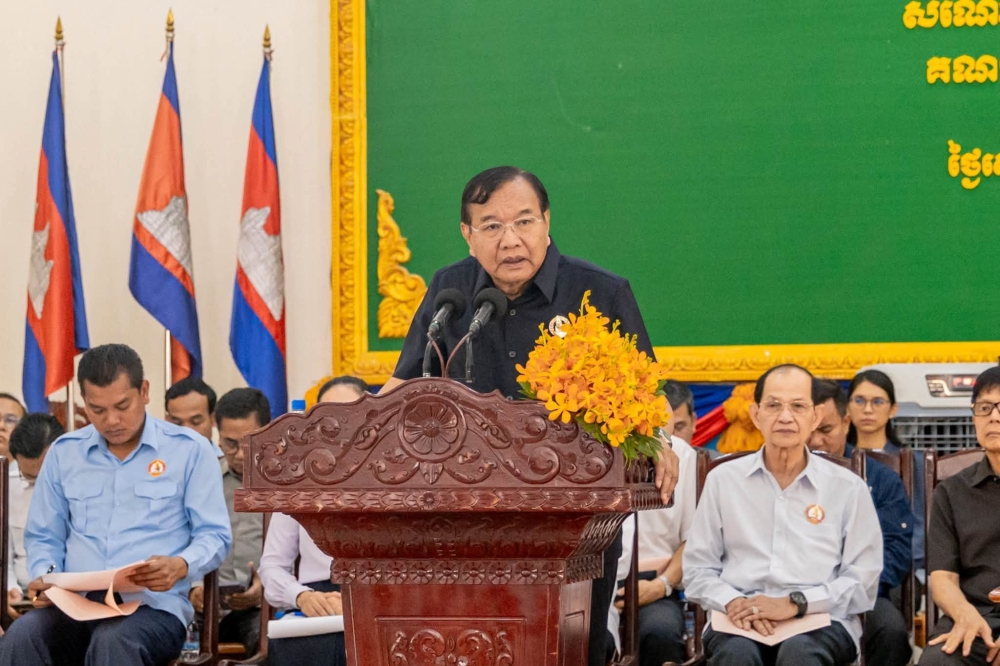
Cambodia's Deputy Prime Minister and Minister of Foreign Affairs and International Cooperation Prak Sokhonn touched down in Malaysia this week for a two-day official visit, signalling the continued commitment of both nations to deepen their strategic partnership in an increasingly complex regional landscape. The high-level delegation, arriving at Sepang, represents another milestone in the longstanding diplomatic relationship between Phnom Penh and Kuala Lumpur, two members of the Association of Southeast Asian Nations (ASEAN) that have maintained consistent engagement across multiple sectors.
The timing of Prak Sokhonn's visit reflects broader efforts within ASEAN to maintain cohesion and dialogue despite mounting geopolitical pressures facing the region. As a senior figure in Cambodia's government hierarchy, the Deputy Prime Minister's presence underscores how both nations view the importance of preserving institutional channels of communication and collaborative frameworks. Such high-level exchanges have become increasingly valuable as Southeast Asian countries navigate the complexities of great power competition and evolving security dynamics in their immediate vicinity.
Bilateral relations between Malaysia and Cambodia encompass a diverse array of cooperation mechanisms spanning trade, investment, cultural exchange, and people-to-people contact. The visit provides an opportunity for both governments to assess progress on existing initiatives and identify new areas where mutual interests can be advanced. For Malaysia, engagement with Cambodia forms part of its broader ASEAN diplomacy and its commitment to maintaining balanced relationships across the region's ten member states.
Cambodia's leadership has placed particular emphasis on regional integration and economic development as cornerstones of national policy. Malaysia, as a more economically developed nation with established infrastructure and institutional frameworks, represents a valuable partner for knowledge transfer and investment collaboration. The dialogue between the two countries can facilitate discussions on sectoral cooperation, from agriculture and manufacturing to technology and digital transformation—areas where Malaysia's experience could prove instructive.
From Malaysia's perspective, the visit reinforces its role as a constructive ASEAN player committed to building bridges among member states. The country has long positioned itself as a proponent of regional stability and inclusive dialogue, values that resonate particularly well with smaller ASEAN members seeking predictable and respectful engagement with more influential regional actors. Prak Sokhonn's presence in Kuala Lumpur demonstrates that this approach continues to bear diplomatic fruit.
The visit also occurs against the backdrop of ongoing discussions within ASEAN on regional security matters and the implementation of the ASEAN Regional Forum and other multilateral mechanisms. Malaysia and Cambodia, alongside other member states, are engaged in shaping the region's collective response to transnational challenges including maritime security, counter-terrorism, environmental protection, and pandemic preparedness. High-level visits such as this create platforms for discussing these shared challenges and coordinating positions.
Trade and investment flows between the two countries have shown resilience, though both nations recognise potential for substantial expansion. Malaysian companies operate across various sectors in Cambodia, including agribusiness, manufacturing, and services, while Cambodian exports to Malaysia include agricultural products and light manufactures. The Deputy Prime Minister's visit provides space for both sides to explore how regulatory frameworks might be streamlined and new partnerships initiated to benefit businesses in both countries.
People-to-people connections form an often-overlooked dimension of bilateral relations. Significant Malaysian communities reside in Cambodia, particularly in business hubs, while Cambodian students and professionals increasingly pursue opportunities in Malaysia. These informal networks contribute substantially to mutual understanding and facilitate smooth governmental cooperation. Official visits frequently yield commitments to educational exchange programmes and cultural initiatives that strengthen these human connections.
The visit also offers Cambodia's leadership an opportunity to articulate its policy priorities and development vision to a Malaysian audience, while gaining insights from Malaysia's experience in areas ranging from institutional governance to economic diversification. Such exchanges of perspectives can prove invaluable as both nations confront the shared challenges of post-pandemic recovery and long-term sustainable development.
Looking ahead, the outcomes of Prak Sokhonn's visit will likely influence the trajectory of Malaysia-Cambodia relations over coming months. Both countries have expressed commitment to expanding cooperation, and the conversations during this official visit may yield specific agreements or initiatives that translate these aspirations into concrete collaborative projects. Whether in trade, education, or diplomatic coordination on regional matters, the engagement serves Malaysia's broader strategic interest in maintaining strong ASEAN cohesion.
For the wider Southeast Asian region, robust Malaysia-Cambodia ties contribute to the overall stability and functionality of ASEAN as an institution. As the bloc faces external pressures and internal challenges, maintaining healthy bilateral relationships among member states reinforces the organisation's capacity to speak with collective voice and coordinate responses to regional concerns. Deputy Prime Minister Prak Sokhonn's visit should therefore be understood not merely as a bilateral event, but as part of the intricate diplomatic architecture sustaining ASEAN's relevance in an uncertain regional environment.

