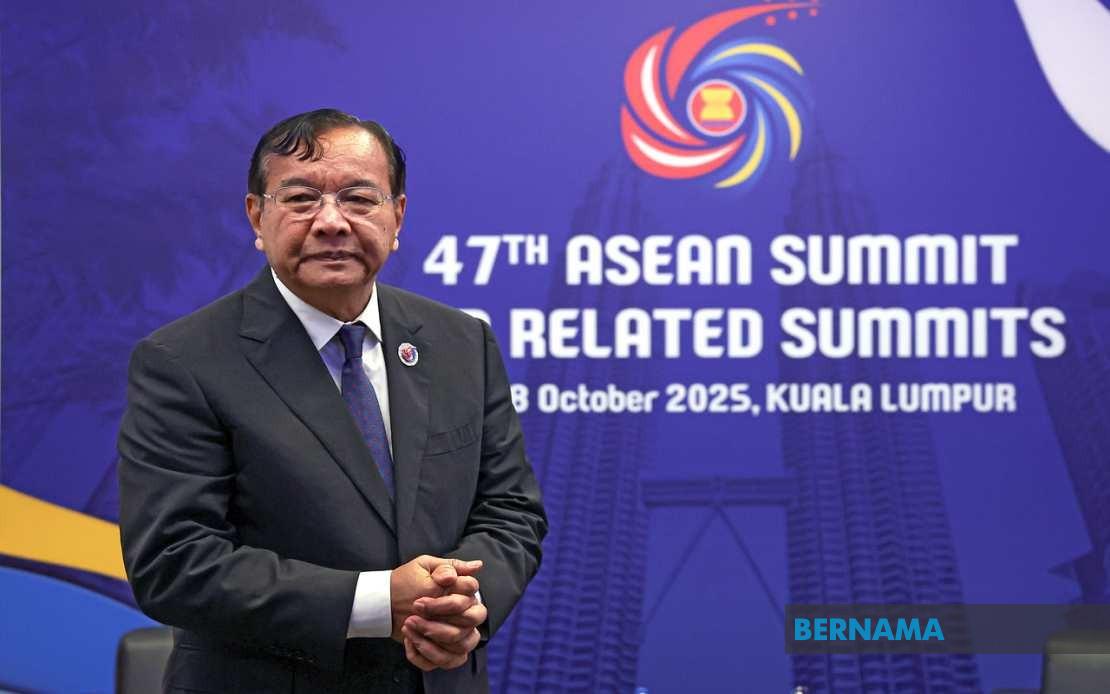
Cambodian Deputy Prime Minister and Minister of Foreign Affairs and International Cooperation Prak Sokhonn has arrived in Malaysia for a significant two-day official visit that marks a watershed moment in bilateral relations. The centrepiece of his engagement is the third Malaysia-Cambodia Joint Commission for Bilateral Cooperation (JCBC), scheduled to be co-chaired with Malaysian Foreign Minister Datuk Seri Mohamad Hasan. This resumption carries particular weight as it ends a two-decade pause in a formal mechanism that last convened in Siem Reap in 2006, signalling renewed political commitment from both nations.
The timing of this high-level visit reflects deliberate diplomatic choreography ahead of a significant milestone. Malaysia and Cambodia will mark seven decades of diplomatic relations in 2027, and officials from both sides view the restoration of the JCBC as emblematic of their intent to deepen engagement across multiple domains. The Foreign Ministry's statement underscores that this gathering is not merely ceremonial but represents a fresh chapter in a partnership that has weathered considerable regional transformations over the past quarter-century.
Before the formal JCBC proceedings, Prak Sokhonn is scheduled to meet Prime Minister Datuk Seri Anwar Ibrahim in a courtesy call that will afford leadership-level discussion on bilateral priorities and regional considerations. These one-on-one conversations at the highest level typically establish the strategic direction that bilateral commissions then operationalise through their working mechanisms. Observers expect both leaders to emphasise continuity in their relationship whilst charting ambitious goals for cooperation.
The revival of the JCBC mechanism itself carries substantive implications for the bilateral architecture. When the commission last met in 2006, it had presumably addressed economic cooperation, cultural exchange, and other dimensions of partnership. The current resumption allows both nations to comprehensively review the state of relations, identify new opportunities, and create structured frameworks for collaboration. The expected signing of Agreed Minutes at the conclusion will formalise the outcomes and establish concrete commitments, providing accountability and benchmarks for progress.
Trade dynamics underscore the economic foundation underpinning this diplomatic refresh. In 2025, bilateral commerce between Malaysia and Cambodia surged by 27.4 per cent year-on-year, reaching RM5 billion (US$1.17 billion). Malaysian exports to Cambodia totalled RM4.13 billion (US$970 million), whilst Cambodian shipments to Malaysia contributed RM880 million (US$200 million). This expansion demonstrates that economic ties have flourished even without the formal bilateral commission operating, suggesting significant untapped potential should political and institutional frameworks be strengthened.
Malaysia's investment presence in Cambodia further underscores the depth of economic engagement. As of 2024, Malaysian cumulative investments in the Kingdom stood at US$3.20 billion (RM13.07 billion) distributed across 162 registered projects. This positioning places Malaysia as Cambodia's third-largest foreign investor, a status reflecting both historical ties and confidence in the Cambodian market. For Malaysian businesses, the JCBC's revival may facilitate clearer pathways for expansion, dispute resolution mechanisms, and strategic sector identification.
From a Southeast Asian perspective, the Malaysia-Cambodia engagement carries broader regional significance. Cambodia's geographic position as a bridge between mainland and maritime Southeast Asia, combined with its pivotal role in ASEAN deliberations, makes the health of bilateral ties consequential. Malaysia's substantial investments and trade flows mean that stable, institutionalised relations serve mutual prosperity. The JCBC's restoration potentially sends signals about renewed multilateral cooperation at a time when regional geopolitical currents demand coordinated responses.
The two-decade hiatus itself warrants contextual understanding. The 2006 period represented a different era in Cambodia's development trajectory and regional dynamics. The intervening years witnessed Cambodia's economic acceleration, democratic processes, and shifting regional alignments. The decision to resurrect the commission now suggests both nations believe conditions are favourable for elevated engagement and that addressing outstanding issues or identifying new cooperation areas merits the formality of a high-level bilateral mechanism.
For Malaysian stakeholders, particularly the business community, the JCBC's revival offers opportunities for structured engagement with Cambodian counterparts. Beyond trade and investment, the commission typically addresses labour mobility, tourism, cultural preservation, and potentially security cooperation. Malaysian investors seeking clarity on regulatory environments, contract enforcement, or sectoral opportunities can leverage the commission's discussions to advocate for investor-friendly policies.
The visit also reflects Cambodia's broader diplomatic strategy of maintaining balanced engagement across multiple partners. As China and Vietnam remain dominant in Cambodia's foreign policy calculus, the emphasis on reviving the Malaysia commission indicates a deliberate effort to strengthen partnership diversity. For Malaysia, this positions the country as a stable, constructive partner in Cambodia's development and regional integration.
Looking forward, the implications of this visit extend beyond immediate bilateral outcomes. Successfully reviving the JCBC could inspire similar mechanisms with other ASEAN neighbours and demonstrate Malaysia's commitment to institutionalising regional cooperation. The commission's work schedule and meeting frequency, once established, will signal the priority each government assigns to the relationship. Moreover, the substantive outcomes—whether focusing on infrastructure, skills development, or sectoral cooperation—will reveal whether this is primarily a relationship maintenance exercise or a genuine attempt to unlock new value.
The Agreed Minutes expected to emerge from this week's meetings will constitute the formal record of both governments' priorities and commitments. Observers will scrutinise the documents for specificity regarding timelines, resource allocation, and implementation mechanisms. Such clarity distinguishes symbolic gestures from genuine cooperation frameworks and will influence how Malaysian and Cambodian stakeholders interpret the relationship's trajectory.

