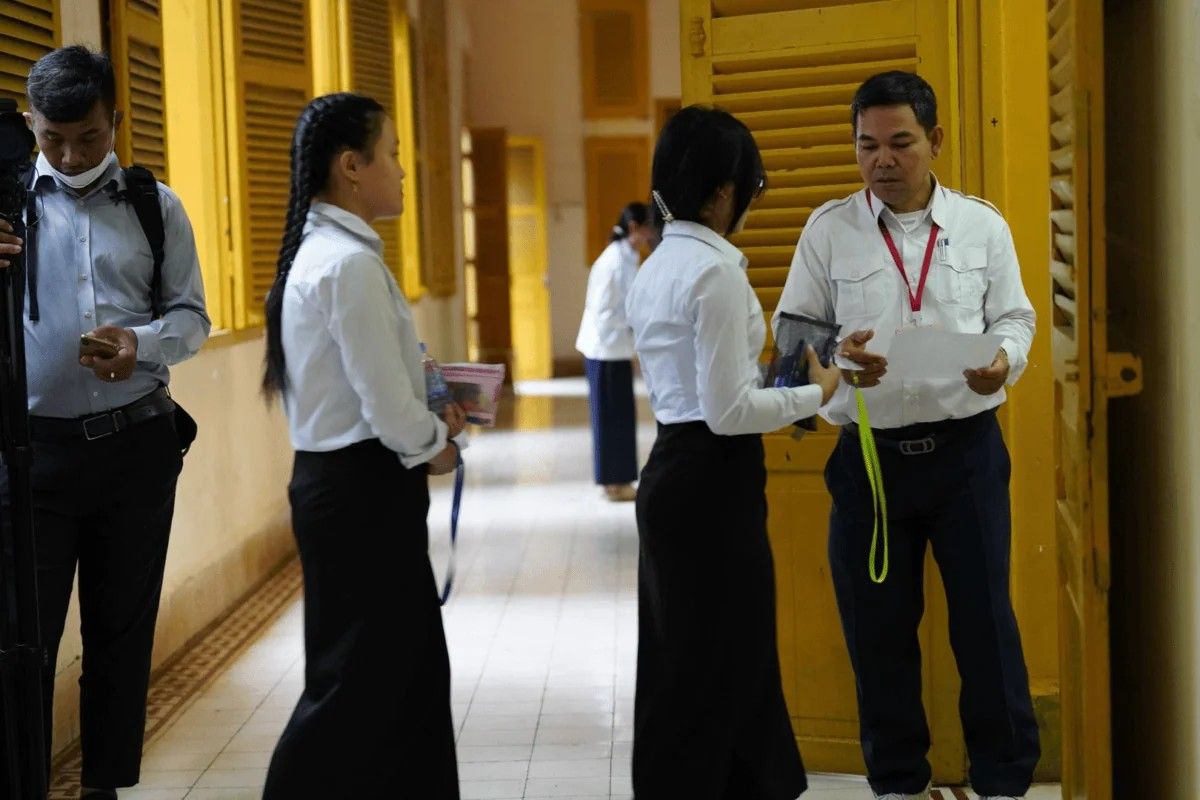
Cambodia's education system pushed forward on August 10 with the commencement of Grade 12 final examinations affecting more than 150,000 students nationwide, even as persistent tensions with Thailand continue to disrupt schooling in border communities. The high school graduation tests represent a crucial milestone for Cambodian youth, yet their administration occurs against an unsettled backdrop of territorial disputes and military occupation that has displaced students and educators across frontier provinces. The simultaneous operation of examination centres across the kingdom and the closure of schools in contested areas highlights the fragmented educational landscape resulting from last year's border hostilities.
The examination intake encompasses students pursuing two distinct educational streams, with over 37,000 candidates enrolled in science-focused curricula and more than 130,000 pursuing social science subjects. This distribution reflects Cambodia's educational priorities and labour market demands, with the social sciences pathway attracting significantly larger numbers of learners. Minister of Education, Youth and Sport Hang Chuon Naron addressed the opening ceremony in Phnom Penh, emphasizing that this year's testing environment represented a marked improvement over the previous year's circumstances, when examinations coincided with active military conflict.
The previous examination cycle occurred on August 28 of last year, precisely one month after the initial armed exchanges erupted along the Cambodia-Thailand border. That timing meant students and teachers confronted unprecedented disruptions, with some learners forced into makeshift study arrangements during family evacuations. Hang Chuon Naron recounted an encounter with a particularly resilient student from Oddar Meanchey province whose family had abandoned their home as Thai forces advanced, yet who managed to achieve top examination grades while studying from tractors during their flight. Such accounts underscore the educational resilience demonstrated by Cambodian students despite extraordinary hardship.
The persistent closure of 25 schools across border provinces remains the most visible consequence of unresolved territorial tensions with Thailand. These institutions remain inaccessible due to Thai military occupation of the areas where they operate, preventing regular classroom instruction for affected students. The Cambodian government has issued formal demands for Thai forces to vacate these locations and permit students to resume normal educational activities in their established schools. Currently, only students attending Banteay Mean Rith Lower Secondary School in Oddar Meanchey province have accessed alternative provision through temporary camps established away from occupied territory, representing a partial mitigation measure for one affected institution.
The temporary learning arrangements available to displaced students fall substantially short of normal educational conditions, highlighting the educational inequality perpetuated by the border occupation. Students studying in makeshift facilities lack standardized learning environments, full access to laboratory equipment for science subjects, and the comprehensive resources available in permanent school buildings. For many Cambodian families living near the Thailand border, such disruptions compound existing educational challenges and threaten to widen achievement gaps between border-region students and their counterparts in central and southern provinces. The government's insistence on student access rights reflects recognition that prolonged closure threatens to undermine educational equity.
Measures to ensure examination integrity received particular attention following the previous year's security breach, when mathematics question papers reportedly circulated beyond authorized channels before examinations commenced. The Anti-Corruption Unit has responded by deploying more than 4,000 observers across examination centres to monitor conduct and deter irregularities. This observer deployment level matches the previous year's commitment, indicating sustained institutional investment in preventing examination fraud. Education Minister Hang Chuon Naron expressed confidence that rigorous organizational protocols, strict enforcement mechanisms, and participation by independent stakeholders would eliminate opportunities for corruption throughout this year's testing cycle.
The scale of the observer deployment represents a significant undertaking requiring coordination across Cambodia's provincial education systems and monitoring bodies. These observers function as external accountability mechanisms, creating visible deterrents against examination malpractice while providing independent verification of legitimate conduct. Their presence signals the Cambodian government's commitment to maintaining examination credibility as a basis for higher education admissions and student certification. For Malaysian and Southeast Asian observers watching Cambodia's educational governance, such anti-corruption infrastructure demonstrates institutional learning from previous failures and recognition that examination integrity underpins educational system legitimacy.
The broader geopolitical context surrounding these examinations carries implications extending beyond Cambodia's borders. Thailand-Cambodia border disputes periodically threaten regional stability and disrupt cross-border communities in ways that educational systems cannot easily accommodate. The presence of Thai military forces in Cambodian territory, regardless of disputed sovereignty claims, creates humanitarian situations affecting students' fundamental rights to education. For Southeast Asian policymakers and development organizations, Cambodia's educational disruption illustrates how security tensions translate into human development costs that persist long after military clashes cease.
Cambodia's determination to proceed with nationwide examinations despite incomplete territorial control demonstrates educational system resilience and administrative commitment. By maintaining examination schedules and deploying enhanced oversight mechanisms, the government signals that disruption will not derail its educational agenda. However, the unresolved status of 25 closed schools serves as a reminder that complete normalization remains contingent on resolution of the underlying territorial dispute. Until Thai forces vacate occupied areas or bilateral agreements clarify administrative arrangements, certain Cambodian students will continue facing educational disadvantages rooted in international tensions beyond their control or comprehension.

