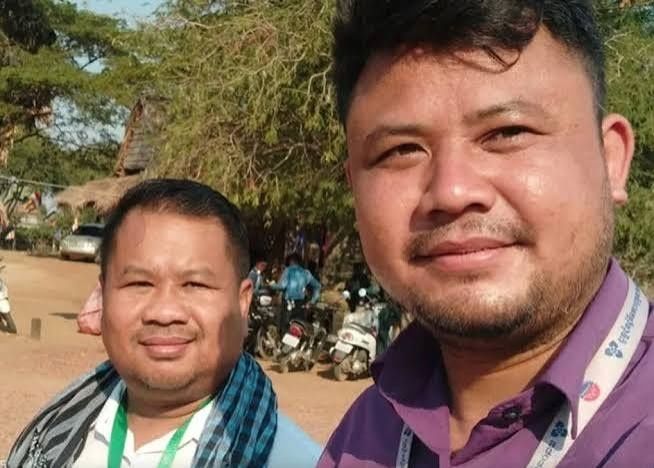
Cambodia's Supreme Court was expected to deliver its decision on a treason appeal brought by two journalists convicted for publishing photographs from the Thai border, an outcome that carries significant implications for press freedom in a country already ranked among the world's worst for media independence. Phorn Sopheap of Battambang Post TV Online and Pheap Pheara of TSP 68 TV Online face 14-year prison sentences after being found guilty of supplying foreign states with information harmful to national defence, a conviction that international media watchdogs have condemned as a troubling application of vague national security legislation.
The two men were arrested in July of the previous year while travelling back from reporting assignments at the border region, where they had documented the fallout from military skirmishes between Cambodia and Thailand. They maintain they held proper authorisation to operate within the disputed military zone and photograph the area where armed confrontations had occurred. Their case represents a test of whether Cambodia's highest court will demonstrate independence from political influence or continue patterns that observers say have characterised judicial decisions under the current government.
One of the images captured by the journalists depicted land mines along the frontier, a photograph that gained widespread circulation among Thai news organisations and provided visual evidence supporting Thailand's assertion that Cambodia had recently installed explosive devices responsible for wounding Thai soldiers conducting patrols. The image became diplomatically significant, contradicting official Cambodian government denials that it had deployed mines, with authorities instead suggesting that discovered ordnance remained from the prolonged civil conflict that concluded in the late 1990s. This dispute over photographic evidence illustrates how journalistic work at sensitive borders becomes entangled with state security claims and international tensions.
The military confrontations between the two nations in July and again in December displaced hundreds of thousands of civilians across both countries and resulted in approximately one hundred deaths among military personnel and civilians. A ceasefire declared in December has held since that time, though underlying tensions persist and the border remains a potential flashpoint for renewed violence. The Supreme Court's forthcoming decision arrives during a period when Cambodia-Thailand relations remain delicate, raising questions about whether judicial proceedings might be influenced by broader diplomatic considerations.
Siem Reap Provincial Court issued the original guilty verdict in December, determining that the journalists had deliberately violated national defence interests by distributing restricted photographs. A lower appellate court subsequently upheld this conviction in March, rejecting the men's contentions that they had acted lawfully and with appropriate permissions. The progression through these courts demonstrated no apparent reconsideration of the charges, suggesting that judicial review has functioned primarily as a formality rather than genuine appellate scrutiny.
International organisations representing journalism and press freedom have mobilised in response to the convictions, with more than a dozen associations issuing a collective statement urging the government to abandon its prosecution. The Committee to Protect Journalists, based in New York, has characterised the case as exemplifying how Cambodia wields ambiguously worded national security statutes to criminalise ordinary journalistic activity. These organisations argue that photographing military activities or border situations constitutes fundamental reporting work and should not trigger severe criminal penalties.
The timing of the Supreme Court hearing intensifies scrutiny of Cambodia's judicial independence, arriving just days after the same court upheld an incitement conviction against Rong Chhun, a prominent opposition figure. The 56-year-old politician was found guilty of stirring social unrest after engaging with residents displaced by government-sponsored development projects, a decision that observers interpret as part of a broader pattern of using criminal law to eliminate political dissent. The parallel proceedings suggest a judicial system functioning as an instrument for neutralising criticism rather than operating according to impartial legal principles.
Cambodian courts have operated under sustained international criticism regarding their independence and impartiality, with Human Rights Watch stating explicitly that recent rulings demonstrate the judiciary's lack of separation from the governing party. Government officials have responded to such accusations by insisting that Cambodia's Supreme Court operates with full autonomy, though this claim contradicts assessments by independent human rights monitors and press freedom organisations. The credibility gap between official assurances and documented patterns of politically motivated prosecutions remains a defining characteristic of Cambodia's legal landscape.
The political context has shifted somewhat with the August 2023 succession of Hun Manet, an American-educated son who assumed the prime ministerial position from his father, Hun Sen, who had dominated Cambodian politics for nearly four decades under authoritarian rule. Hun Sen's government became notorious internationally for severe human rights violations including systematic suppression of expression and association. Despite expectations that generational change might produce greater liberalisation, the judicial system has continued deploying restrictive laws against journalists, opposition figures, and civil society activists with apparent continuity from previous years.
Cambodia's standing in global press freedom assessments reflects this unchanged reality. The country ranked 161st out of 180 nations in the 2025 Reporters Without Borders World Press Freedom Index, positioning it among countries where press conditions are classified as "very serious" by the Paris-based organisation. This ranking places Cambodia near the lowest tier of countries for journalistic safety and independence, alongside nations experiencing active conflicts or governance crises. For Malaysian and Southeast Asian journalists and news organisations, Cambodia's approach signals how security rhetoric can be weaponised to suppress legitimate reporting and how regional judicial systems may not provide reliable protection for media practitioners.
The Supreme Court decision will carry symbolic weight beyond the immediate fates of Phorn Sopheap and Pheap Pheara. A ruling that upholds their convictions would reinforce the message that Cambodia views border-related journalism as inherently treasonous, potentially chilling coverage of military activities throughout the country. Conversely, an overturned verdict might suggest that Cambodia's highest court retains genuine independence, though sceptics note that such optimism would contradict the pattern established by recent decisions. The ruling offers a crucial indication of whether Cambodia's legal system can function as a genuine check on executive power or remains fundamentally compromised by political interference.

