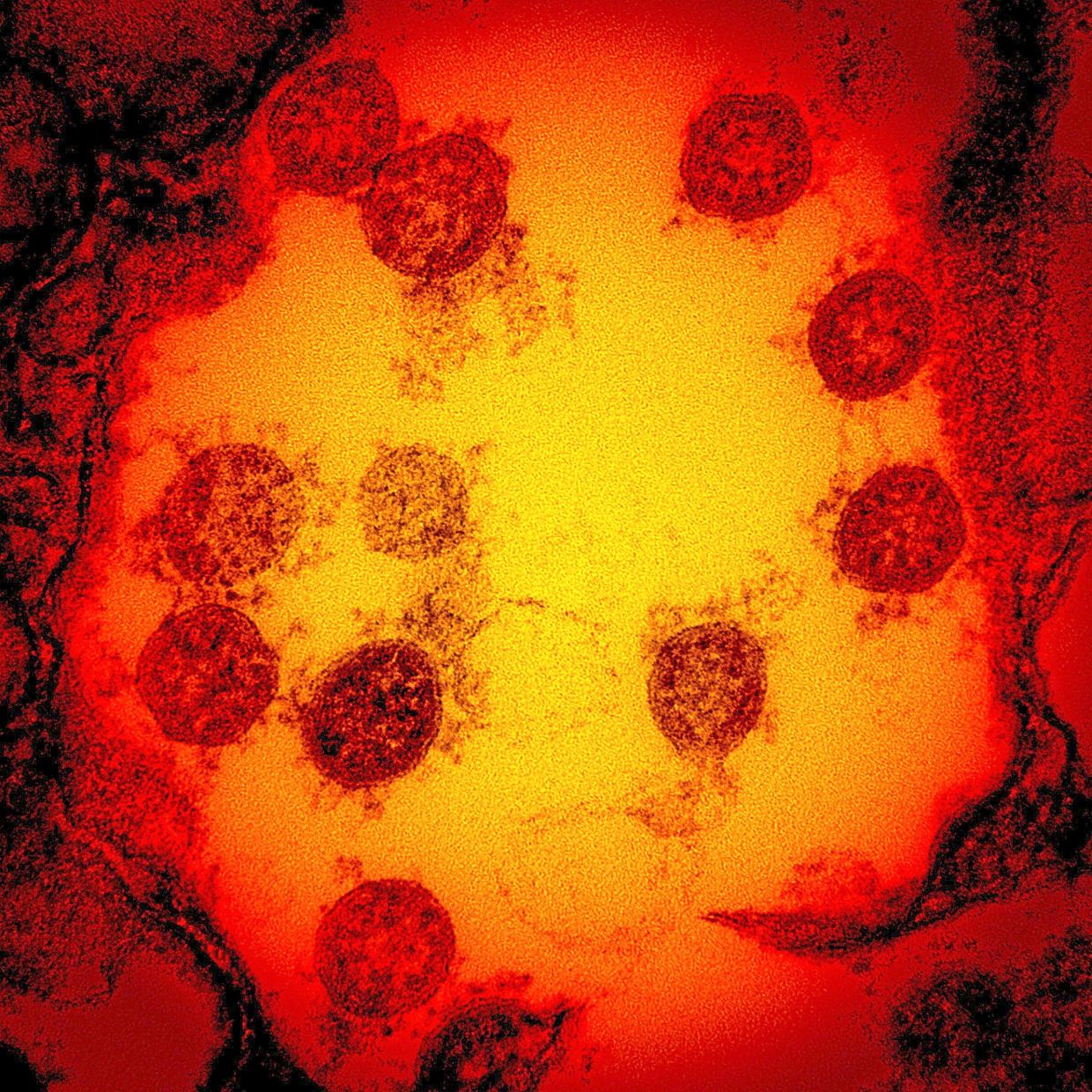
Viruses bearing ominous acronyms—SARS-CoV-2, SARS, MERS—evoke stark images of healthcare workers in full protective equipment and trigger widespread anxiety across populations. The global pandemic experience has underscored a fundamental vulnerability in our vaccine arsenal: current approaches target specific viral strains, yet the enemy constantly mutates. Now, researchers at Cambridge University believe they have found a solution that could fundamentally reshape pandemic preparedness. Scientists there have created a vaccine technology enhanced by artificial intelligence that, rather than chasing individual virus variants, promises broad protection against entire virus families and could potentially avert the next global health catastrophe.
Dr Jonathan Heeney, the lead researcher and Professor of Comparative Pathology at Cambridge, describes the breakthrough using an apt metaphor: possessing a master key rather than dozens of individual ones for different apartments. The core insight driving this innovation stems from a critical weakness in conventional vaccine strategy. Most vaccines address pathogens retrospectively—they target the strain that caused the most recent outbreak or spreads most rapidly at the time of development. This reactive posture means populations are forever playing catch-up as viruses evolve. Heeney explains that vaccines remain perpetually engaged in an unwinnable pursuit, always trailing behind the pathogen itself rather than positioning defenders ahead of the threat.
The paradigm shift embodied in this technology discards that chase altogether. Instead of developing strain-specific immunity, the new approach trains the immune system to recognize and respond to characteristics shared across an entire virus family. By identifying the molecular features that the immune system targets—features that remain consistent despite mutations—the researchers have created a vaccine that should theoretically protect against multiple variants and even unknown strains within that viral family. This represents a genuine departure from conventional immunology practice and could fundamentally alter how the world responds to emerging infectious threats.
Heeney, a Canadian heading the Laboratory of Viral Zoonotics at Cambridge's Department of Veterinary Medicine, developed this concept following the devastating 2013–2016 Ebola outbreak across West Africa. That catastrophe proved transformative for his thinking. Ebola had historically appeared only in central Africa, particularly the Democratic Republic of Congo, yet when it emerged in Guinea, initial responders misidentified it as Lassa fever, gastroenteritis, or cholera. The confusion consumed three to four months while the virus spread unchecked across Guinea, Sierra Leone, and Liberia. By the time health authorities understood what they faced, the outbreak had already claimed approximately 11,300 lives according to the World Health Organization. Many of those who died were healthcare workers undertaking their professional duties. The lesson crystallized for Heeney and his colleagues: the world could not tolerate such delays again.
Returning to Cambridge, Heeney assembled a team determined to revolutionize vaccine development. They incorporated artificial intelligence from the outset, aggregating vast amounts of information about diverse viruses and analyzing that data to identify patterns invisible to traditional research methods. The AI algorithms examined both similarities and differences within the critical regions of viruses—the segments that provoke immune responses. This computational approach allowed researchers to recognize not merely one variant or strain, but the fundamental characteristics shared across entire populations of related viruses. In essence, the technology reads the molecular grammar common to a virus family and teaches the immune system to interpret that grammar rather than memorize individual sentences.
This innovation arrives at a moment of escalating biological risk. The frequency of emerging diseases has accelerated dramatically due to global population growth, increased cross-border human movement, and expanding human encroachment into previously undisturbed animal habitats. Viruses that existed relatively benignly within animal populations—to which those animals had evolved resistance—now encounter humans who possess no such immunity and no evolved defenses. When a pathogen encounters a completely naive host population, as Heeney describes, the results prove catastrophic for the new species. The virus encounters no constraints and spreads with frightening efficiency.
The Cambridge team, collaborating with British biotechnology firm DIOSynVax, has already progressed beyond theoretical work. A clinical trial involving 39 volunteers, sponsored by University Hospital Southampton, has been completed and published in peer-reviewed literature. The results justified advancement to larger-scale testing, representing a significant milestone in translating laboratory innovation into clinical reality. This progression from concept to human testing demonstrates that the technology possesses genuine potential rather than remaining speculative.
Historically, pandemics have recurred throughout recorded civilization. The Black Death of the Middle Ages devastated Europe, while the 1918–1920 influenza pandemic killed between 25 and 50 million people globally. More recently, COVID-19 killed millions and disrupted economies worldwide. Heeney identifies influenza as perhaps the most concerning threat—a particularly challenging virus due to its structural complexity and mutation rates. Yet he remains fundamentally optimistic that this new technological platform could prevent another catastrophic pandemic, fundamentally altering the trajectory of future disease outbreaks.
The research team continues advancing their computational approach. They are now deploying sophisticated modern artificial intelligence systems to construct an increasingly powerful platform capable of analyzing vastly larger datasets and identifying patterns at greater speed. This computational sophistication enables researchers to respond to emerging threats with unprecedented rapidity, potentially moving from viral identification to vaccine deployment within weeks rather than the months consumed during the Ebola crisis. Heeney emphasizes that his primary focus is demonstrating to the global scientific and medical community that this technology is both safe and more effective than conventional approaches—that it genuinely delivers on its theoretical promise.
The implications for a region like Southeast Asia deserve particular attention. The region's tropical climate, high population density, and significant wildlife-human interface create conditions where zoonotic diseases readily emerge. Countries including Malaysia face particular vulnerability to novel pathogens, as evidenced by historical outbreaks like Nipah virus. A broadly protective vaccine platform developed first for influenza and potentially extended to other virus families could profoundly enhance regional biosecurity. Should the Cambridge technology prove successful in upcoming trials and regulatory approval processes, Southeast Asian health authorities would likely prioritize its adoption for their populations.
Heeney characterizes this work as potentially inaugurating an entirely new era in vaccine manufacturing and pandemic prevention. The convergence of advanced artificial intelligence with immunological science creates possibilities that seemed impossible merely a decade ago. Rather than waiting for each new pandemic to emerge before scrambling to develop targeted defenses, humanity could potentially maintain technological readiness against entire families of viruses. This transformation—from reactive to proactive disease management—could reduce the devastating human and economic costs that pandemics exact upon the world. Should the larger clinical trials confirm the promise of these initial results, this technology may indeed prove to be the master key that unlocks a fundamentally safer future.

