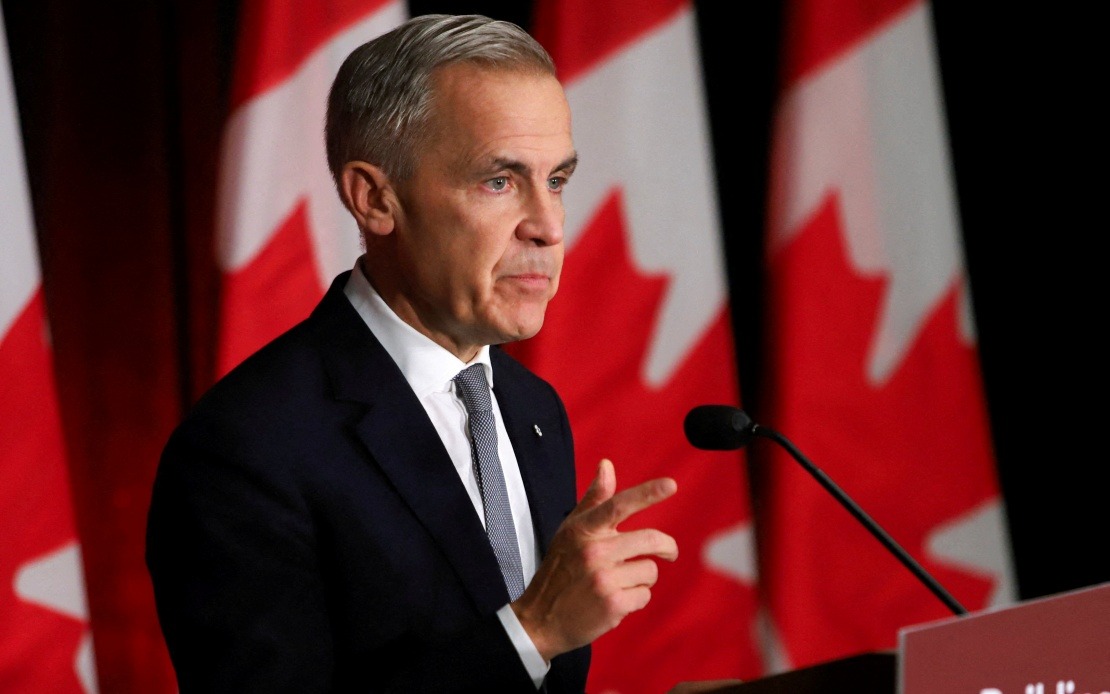
Canadian Prime Minister Mark Carney announced on Tuesday that he has engaged directly with US President Donald Trump to accelerate bilateral trade negotiations, signalling an attempt to defuse mounting tensions between the two neighbouring economies. The commitment to intensify talks in the coming weeks represents a diplomatic effort to address escalating trade friction that threatens to disrupt the substantial cross-border commerce underpinning both nations' prosperity.
Carney's remarks came in response to Trump's decision on Monday to sign three proclamations imposing an additional 50 per cent tariff on a range of Canadian goods. The US administration justified the tariffs by alleging that Canada was discriminating against American commercial interests, triggering what could become a consequential trade dispute between close allies. The timing and scope of the action signals Washington's determination to reassert its negotiating position in continental trade relationships.
The newly imposed tariffs will affect specific product categories including dairy products, alcoholic beverages, motor vehicles and related goods, with the charges scheduled to take effect on August 19. The White House documentation made clear which sectors face the additional burdens, though notably excluded from the tariff regime are energy products, potash, fish and critical minerals—exclusions that reveal the calculus behind the selective targeting of Canadian exports.
Canada's response was swift and pointed. Carney characterised the tariff measures as part of a broader pattern of unilateral trade actions that contravene the Canada-United States-Mexico Agreement, the trilateral accord that governs continental commerce. This framing is significant for Malaysian and Southeast Asian observers, as it highlights how even established regional trade frameworks face pressure when geopolitical and domestic political considerations override free trade commitments. The dispute suggests that formal agreements provide limited protection when political incentives shift.
The automotive sector stands to absorb particularly substantial impact given the integrated nature of North American vehicle manufacturing. Motor vehicles represent one of Canada's most significant export categories to the United States, and tariffs on automotive products could reverberate through supply chains affecting components manufacturers, assembly plants, and downstream distributors. The interconnected production networks built over decades of continental integration face disruption precisely because of that integration.
Dairy and agricultural products face an equally consequential challenge. Canadian farmers and dairy producers depend heavily on market access to the larger American consumer base, and tariff barriers fundamentally alter the competitive landscape in which they operate. For Malaysian exporters watching these developments, the Canadian experience underscores how agricultural protectionism remains a persistent feature of trade relationships even between developed economies with sophisticated diplomatic relationships.
The exclusion of energy products from the tariff schedule deserves particular scrutiny. Canada supplies substantial quantities of oil and natural gas to American markets, and the decision to spare energy from additional duties reflects pragmatic recognition of American energy security interests and the political sensitivity of energy policy. This selective approach reveals how tariffs often serve political objectives rather than consistent trade policy principles.
The agreement to intensify negotiations offers a potential pathway toward resolution, though the August 19 implementation date creates urgency. Carney's reference to examining all response options suggests Canada is preparing contingent measures of its own, consistent with established practice during trade disputes. Both nations possess retaliatory capacity, raising the prospect of escalating tit-for-tat measures that could extend disruption across multiple sectors and bilateral relationships.
For Southeast Asian economies and Malaysian businesses particularly, this dispute carries indirect implications. Supply chains that incorporate North American components or compete with Canadian exports in third markets face uncertainty during periods of elevated trade tension. Additionally, the dispute reinforces concerns about the predictability of trade relationships, potentially encouraging diversification away from North American sources. Malaysian manufacturers and exporters operating in automotive, agricultural, and industrial goods sectors should monitor developments closely.
The broader context matters significantly. Trade tensions between the United States and Canada occur alongside similar disputes with other trading partners, suggesting a systematic reassessment of American trade relationships rather than an isolated disagreement. This pattern influences how other nations calculate their own trade strategies and bilateral negotiations with Washington. The Canadian situation thus serves as an early indicator of how trade relationships may evolve in a more protectionist environment.
The acceleration of negotiations reflects both nations' recognition that trade disruption carries mutual costs. Canadian exporters face market access challenges, while American consumers and businesses depending on Canadian inputs confront higher input costs and supply chain complications. The economic interdependence that bound the two nations together in previous decades remains profound, even as political forces test those bonds.
Carney's engagement with Trump demonstrates the continued importance of high-level political communication during commercial disputes. Direct conversation between national leaders can establish frameworks for resolution that bureaucratic channels alone may not achieve. However, the persistence of tariff threats despite acknowledged negotiation intentions also illustrates how domestic political constraints sometimes override diplomatic efforts.
The resolution of this dispute will establish precedents affecting how trade relationships function regionally and globally. Whether negotiation succeeds in averting or mitigating the tariffs will signal whether traditional diplomatic channels remain effective in managing trade conflicts, or whether unilateral tariff measures have become the primary language of trade policy. Malaysian and Southeast Asian policymakers are watching closely to understand what lessons this dispute holds for their own trade relationships with major powers.

