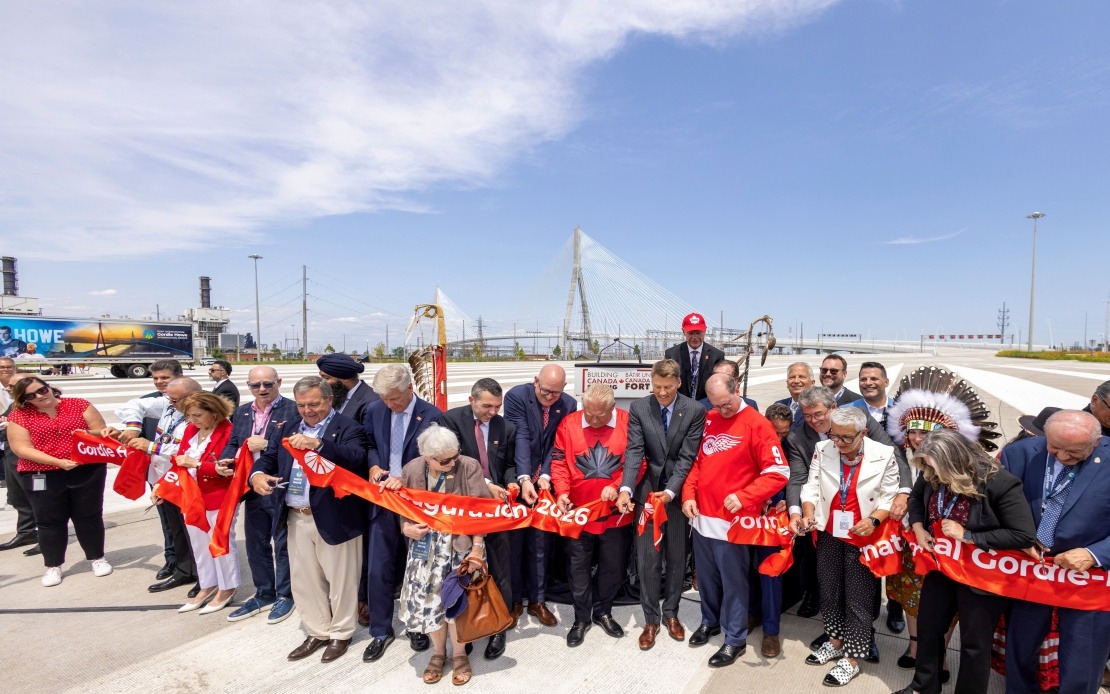
The Gordie Howe International Bridge, a multibillion-dollar infrastructure project connecting Canada and the United States, was inaugurated this week in a ceremony notably absent of American government officials. The omission reflects deepening tensions between Ottawa and Washington over trade tariffs and the financial terms governing the crossing, which is expected to facilitate substantial flows of commerce between the two countries. Despite the diplomatic friction, the bridge is set to begin operations as scheduled, with the first vehicles crossing on Monday.
The decision to hold a Canada-only opening ceremony came directly in response to new tariff measures announced by US President Donald Trump earlier in the week. Trump has imposed a 50 per cent tariff on select Canadian goods, including hockey sticks, wine and cement, measures that are scheduled to take effect on August 19, thirty days after being formally signed. The escalating trade dispute prompted Canada's infrastructure ministry to conclude that a joint celebration would be inappropriate given the current state of bilateral relations, leading to the exclusion of American representatives from the inaugural event.
Trump subsequently used social media to characterize Canada's decision as a minor inconvenience, asserting that the tariff measures justified the diplomatic snub. More significantly, the US President claimed that his administration had successfully renegotiated the bridge's underlying financial agreement, stating that the United States would now receive 50 per cent of profits from the facility. This assertion reflected Trump's broader approach to reshaping previous international arrangements that he viewed as unfavourable to American interests.
The origins of the current dispute trace back to the original agreement forged in 2012, which stipulated that American interests would receive no share of toll revenues until Canada had recovered the construction costs of the bridge. This arrangement had been negotiated under previous administrations and reflected a different geopolitical and economic context. Trump's administration sought to fundamentally alter these terms, contending that the original deal was poorly negotiated and did not adequately protect American financial interests.
These disagreements contributed to delays in the bridge's opening schedule. The crossing had originally been planned to commence operations in June, but tensions surrounding the toll arrangement led to postponement. The dispute over revenue sharing became increasingly contentious, with negotiations extending through the spring and into the summer. Eventually, a revised arrangement was announced in July, which represented a compromise between the two nations but failed to satisfy all observers on either side of the border.
Under the newly negotiated framework, revenues generated during the first fifteen years of operation will be allocated toward covering the bridge's maintenance and operational expenses. After these costs are satisfied, the remaining revenues will be divided between Canada and a fund controlled by the United States, specifically designated for economic development purposes. While this arrangement gives American interests a stake in the bridge's long-term profitability, it differs from Trump's characterization of securing fifty per cent of profits from inception.
The renegotiated deal prompted considerable criticism within Canadian political circles. Opposition parties attacked Prime Minister Mark Carney for what they characterized as capitulating to American pressure and accepting unfavourable terms. These domestic political challenges highlight how infrastructure projects can become entangled in broader questions of national interest and negotiating leverage, particularly when one party perceives itself as having been forced to accept less favourable conditions.
Despite the diplomatic standoff and domestic controversy, the bridge will proceed with normal operations. The crossing represents a crucial link in the continental trade system, addressing a strategic bottleneck in the Detroit-Windsor corridor that has long constrained bilateral commerce. According to Canadian broadcasting sources, approximately one-third of all trade between the two countries currently transits through the regional trade corridor, which includes multiple bridges and tunnels serving the area.
From an American logistics perspective, the bridge holds significant importance for the Detroit region specifically. US Department of Homeland Security assessments indicate that roughly 45 per cent of commercial traffic moving through the Detroit metropolitan area is expected to utilize the new crossing once it becomes fully operational. This concentration of traffic underscores the bridge's strategic value for North American supply chains and the automotive sector particularly, which relies heavily on cross-border component flows.
The situation presents a complex challenge for Malaysian and Southeast Asian observers seeking to understand contemporary trade dynamics. The dispute between Canada and the United States, two wealthy democracies operating within a long-established trade framework, demonstrates how tariff disputes and demands for renegotiation of existing agreements can rapidly escalate. For region-dependent exporters, the conflict signals that even deeply integrated bilateral relationships remain susceptible to rapid deterioration when political pressures and protectionist sentiments gain prominence.
Moreover, the bridge's opening amid acrimony illustrates the distinction between physical infrastructure completion and political normalization. While the facility will operate and facilitate trade flows, the absence of ceremonial unity reflects genuine disagreement about the terms governing the arrangement. This distinction between functional capacity and political cooperation may resonate with Southeast Asian policymakers managing their own cross-border infrastructure projects amid shifting geopolitical alignments.
The tariff measures announced by Trump represent a broader approach to trade policy that prioritizes renegotiating existing arrangements rather than maintaining established frameworks. Whether the tariffs will actually be implemented as threatened or serve as negotiating leverage remains unclear, but their announcement has already influenced bilateral infrastructure politics. For the region, these developments underscore how trade policy and infrastructure projects intersect in ways that transcend purely economic calculations.

