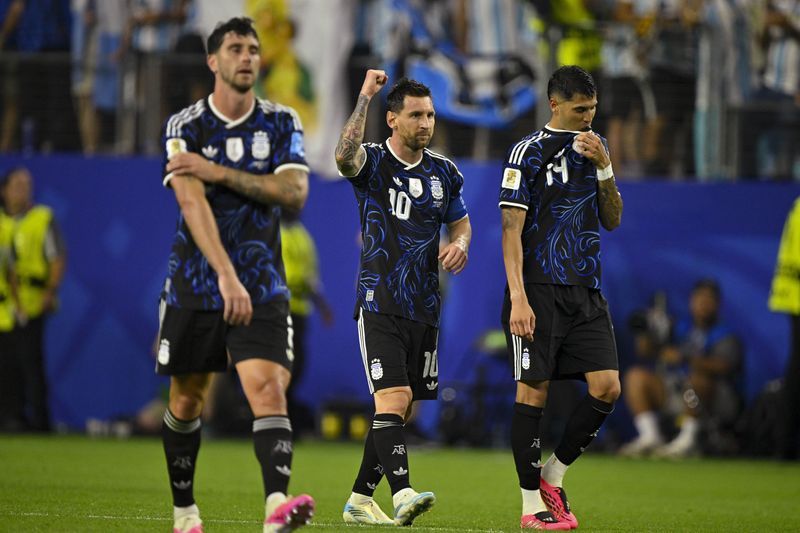
Cape Verde enters their knockout-stage encounter with Argentina on Friday carrying the momentum of an unexpectedly successful group campaign, with coach Bubista adamant that the African outsiders will not abandon the fearless football that has defined their maiden World Cup appearance. Ranked 67th in the world at the tournament's outset, the island nation has already exceeded many expectations by advancing from a group that included Spain and Uruguay, results that have emboldened rather than humbled the coaching staff as they prepare to face the competition's top-ranked team.
The messaging from Bubista has remained remarkably consistent throughout Cape Verde's time in the tournament, suggesting a tactical and psychological clarity that extends beyond the usual diplomatic platitudes of international football. By drawing matches against established nations and finishing second in their group, the team has provided empirical evidence that they belong at this level of competition, a reality the coach invoked repeatedly when discussing the challenge ahead. This consistency of message—combining respect for opponents with genuine confidence in their own methods—reflects a coaching philosophy that resists the temptation to second-guess or fundamentally alter approaches based on intimidating fixtures.
When discussing the prospect of facing Lionel Messi and Lionel Scaloni's Argentina, Bubista rejected the notion that his team would need bespoke tactical arrangements to contain the world's most dominant individual talent. Rather than fixating on Messi as a singular threat requiring special attention, the coach framed Argentina as a complete challenge, one that demands the same commitment to collective organisation and defensive structure that served Cape Verde well against Spain and Uruguay. This perspective suggests a mature understanding that attempting to nullify Messi through man-marking or double-teaming risks compromising overall team shape and exposing vulnerabilities elsewhere on the pitch.
The coach's articulation of Cape Verde's objectives reflected the mentality of a side that has already achieved something remarkable but recognises the window of opportunity before them. Advancing to the last 16 would represent an extraordinary achievement for a nation making its World Cup debut, yet Bubista's language conveyed no sense of overachievement or gratitude for participation. Instead, he spoke of his team's earned place in the competition, grounds secured through qualification and consolidated through performances in the group stage. This framing matters significantly for the psychological positioning of both teams heading into Friday's match.
The group-stage results that propelled Cape Verde forward warrant closer examination, as they suggest a team with particular strengths in defensive organisation and set-piece management. The ability to frustrate Spain and Uruguay, sides accustomed to dominating possession and creating chances through intricate passing movements, indicates a disciplined structure that does not panic when facing technically superior opponents. Against Argentina, whose attacking prowess depends significantly on transitional speed and the creative brilliance of their midfield, Cape Verde's defensive solidity could prove more valuable than traditional forecasts might suggest.
Bubista's repeated emphasis on maintaining identity while adapting to opponents reflects a coaching principle that has gained currency in modern football, particularly among teams facing superior technical talent. Rather than attempting wholesale tactical reconstruction against Argentina, Cape Verde would appear intent on perfecting their existing shape, potentially adjusting personnel or pressing triggers rather than abandoning the fundamental approach that earned their group-stage progress. This pragmatism, combined with the psychological advantage of having already exceeded expectations, could create conditions where Cape Verde remains competitive for extended periods.
The coach's comments regarding respect and humility were notably balanced against assertions of ambition and a genuine desire to progress. This rhetorical positioning avoids both the trap of appearing intimidated and the appearance of disrespect that could undermine the mental preparation of his players. For supporters across Africa and the broader developing football world, Cape Verde's participation in this knockout stage and their refusal to adopt a defensive posture holds symbolic weight beyond the immediate match result. The island nation competes not merely for three points but as a representative of smaller footballing nations that have historically been marginalised in World Cup discourse.
Argentina, conversely, enters the match as the tournament favourite, carrying the weight of defending their 2022 championship and establishing a legacy under Scaloni. While Cape Verde presents obvious quality advantages that would favour Argentina across most measurable metrics, the psychological dynamics favour the underdog in ways that technical analysis often misses. A team that has already exceeded external expectations and performed admirably against superior opposition may possess psychological resilience that defies conventional wisdom about talent disparities.
The broader context of this match extends to what it represents for African football's emergence in World Cup competitions. Cape Verde's progression, combined with performances by other African nations, suggests shifting dynamics in global football where teams from developing nations can compete effectively through disciplined organisation, tactical intelligence, and mental fortitude rather than presumed technical inferiority. Bubista's confidence in his team's methodology, backed by actual results rather than mere rhetoric, reflects this evolving landscape where presumptions of dominance can be challenged by intelligent football and collective commitment.
For Malaysian and Southeast Asian observers, Cape Verde's approach offers instructive lessons about competing against superior opponents through clarity of purpose and refusal to abandon core principles. The region's national teams frequently face similar challenges when confronting established football powers, and the African team's philosophy of maintaining identity while respecting opponents provides a template worthy of consideration. That Bubista speaks of ambition and advancement rather than mere participation represents a psychological positioning that shapes how teams approach high-stakes competition.
The Friday match will undoubtedly be challenging for Cape Verde, yet the manner in which they have conducted themselves and communicated their intentions suggests a team unlikely to surrender without extracting maximum effort and demonstrating the qualities that earned their group-stage advancement. Whether that proves sufficient to overcome Argentina's resources and experience remains an open question, but the psychological preparation and coaching clarity evident in Bubista's messaging suggests Cape Verde will compete on terms that reflect their actual capabilities rather than external assumptions about their limitations.

