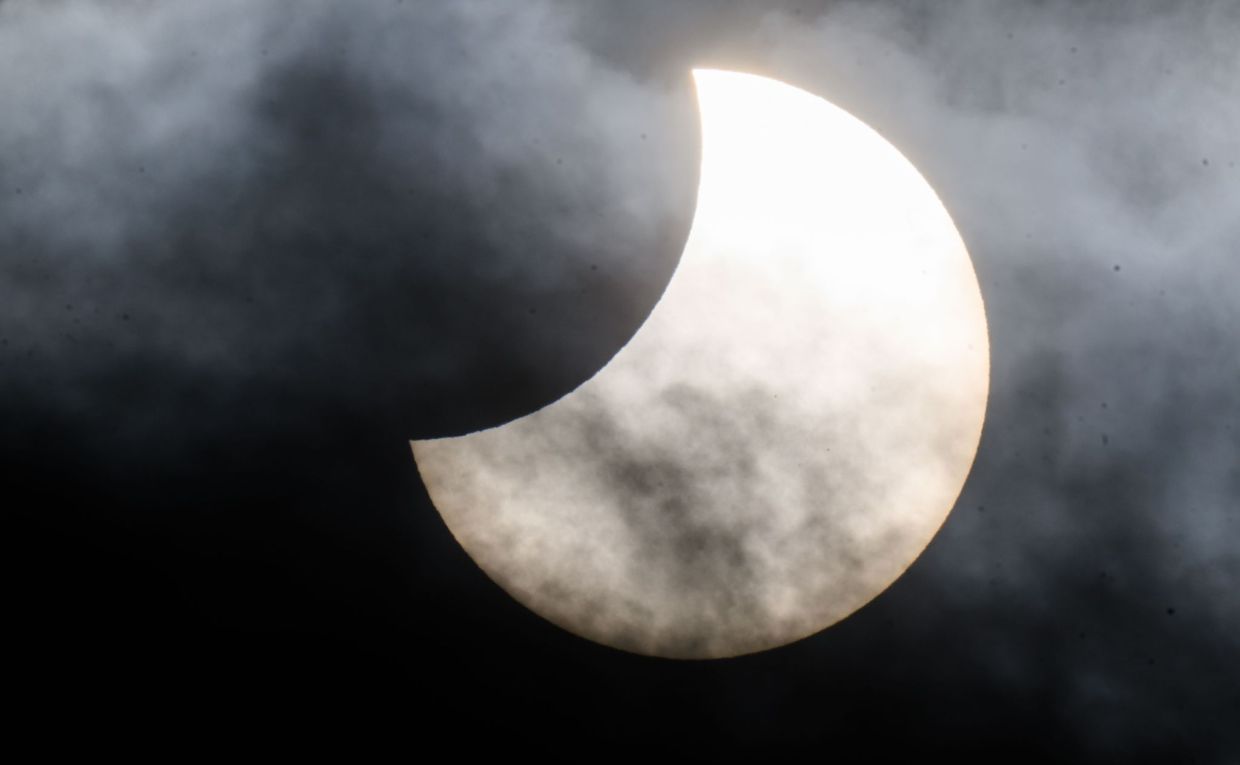
The coming August brings a rare astronomical treat—two significant eclipses within weeks—creating prime opportunities for photography enthusiasts across multiple continents. While such celestial spectacles once required expensive professional equipment, the latest generation of smartphone technology now levels the playing field, allowing anyone with a capable device and basic knowledge to document these natural wonders. Understanding how to prepare your phone and apply fundamental photographic principles can transform casual observers into successful night-sky photographers.
The solar eclipse gracing the planet on August 12 will deliver the most dramatic visual impact for those positioned along its path of totality. Eastern Greenland, western Iceland, and portions of Spain—including the Balearic Islands and Mediterranean coastline—will experience the sun's complete concealment by the moon. The umbral shadow will sweep across Europe with sufficient intensity that observers in countries including Ireland, the United Kingdom, France, Portugal, Italy, Switzerland and Algeria will witness approximately 90 percent solar coverage, an impressive partial eclipse in its own right. The phenomenon commences around 5 pm GMT as the lunar disk first encroaches upon the solar surface above Scandinavia and Greenland, then progresses southward, peaking between 6:15 pm and 6:45 pm GMT as it traverses the continent. Meanwhile, partial phases will be discernible across much of Europe and extending into North Africa, reaching as far as Ukraine and Morocco, ensuring visibility opportunities for millions across the region.
August's second celestial event—a partial lunar eclipse visible on August 28—offers different photographic possibilities and accessibility advantages. This eclipse will be observable from Europe, Africa, and both American continents, with particularly favourable conditions for observers in Latin America and along the western coasts of the United States and Canada. The phenomenon occurs as the full moon in the constellation Aquarius transitions through Earth's umbral shadow, with the lunar disk appearing to undergo near-total obscuration for most viewers in the Western Hemisphere. At maximum eclipse, approximately 94 percent of the moon's visible diameter will reside within Earth's umbra, creating a striking visual effect that approaches a fully total lunar eclipse without achieving it technically.
Modern smartphone cameras have evolved dramatically in their capacity to document night-sky phenomena, owing largely to sophisticated computational photography algorithms embedded within their processors. These devices employ internal image optimization techniques that compensate for low-light conditions, effectively democratizing astrophotography that previously remained the domain of enthusiasts equipped with thousands of dollars in specialized equipment. Google's Pixel line exemplifies this advancement through its dedicated astro mode, which automatically engages when the device detects suitable celestial subjects in sufficiently dark conditions. Users simply press the shutter button and observe a countdown timer, often indicating an exposure duration of approximately four minutes, during which the camera gathers light and processes data to produce remarkably detailed night-sky imagery. Samsung Galaxy devices offer comparable functionality through their Expert RAW application, though activation of this astrophotography capability requires deliberate user selection within the camera application's advanced settings.
Successful eclipse and night-sky photography depends fundamentally upon location selection and environmental conditions. Photographers should identify observation points characterized by minimal light pollution, as artificial illumination severely compromises photographic quality and visual acclimation. Specialized light-pollution mapping resources such as the Light Pollution Atlas provide valuable guidance by displaying regional sky-brightness data through a color-coded system, where darker hues—particularly blues and greens—indicate locations with genuinely dark skies suitable for astronomical observation. This preparation step proves particularly valuable for those in or near urban and suburban areas, where even modest distances from city centers can yield dramatically superior observational conditions.
Optimizing your smartphone itself for night-sky work requires several straightforward adjustments. Reducing display brightness to minimal levels and activating night mode or dark mode within display settings permits your eyes to acclimate properly to darkness, significantly enhancing both direct observation and your phone's ability to capture faint celestial details. Within the camera application, activating night mode—and particularly any dedicated astrophotography mode available on your specific device—leverages the phone's computational photography capabilities. For devices lacking specialized astro modes, setting the camera focus to wide or far positioning approximates the infinite-focus requirements of celestial photography, ensuring that distant objects remain acceptably sharp in the resulting image.
A stable camera platform dramatically enhances photographic outcomes during extended exposures, particularly given that astro modes frequently employ exposure times measured in minutes. Inexpensive universal smartphone tripods, available globally for approximately US$10 to €10, prove highly effective and eliminate the steadiness challenges inherent in handheld photography. For those without tripod access, smartphone image stabilization has improved substantially over recent years, though alternative stabilization approaches—such as positioning the phone flat against a stable surface and utilizing the self-timer function to avoid vibration from button depression—offer viable compromises. This self-timer technique proves particularly valuable when optimal angles preclude vertical tripod positioning, as the countdown function prevents the vibration introduced by manually pressing the shutter control from degrading image quality.
Photographing the solar eclipse itself demands specific precautions and technical adjustments. Conventional sunglasses provide wholly inadequate eye protection and should never be relied upon for direct solar viewing. Instead, specialized eclipse glasses employing appropriate solar filters represent the only safe method for direct observation. However, smartphones equipped with appropriate solar filters or using the camera's auto-exposure reduction capabilities can contribute to eclipse documentation without requiring observers to gaze directly at the sun—a critical safety distinction. By tapping the sun icon visible in many camera interfaces, users can reduce exposure settings to their minimum values, effectively darkening the captured image to prevent solar overexposure while allowing the sun's outline and any lunar occultation to become visible in the resulting photograph.
For those photographing with young children or seeking alternative observation methods that eliminate direct solar viewing entirely, the projection technique offers an elegant solution. This approach involves projecting the sun's image onto a reflective surface—accomplished through a small mirror, pinhole camera, or simple projection device—rather than viewing it directly. The projected image displays the eclipse's progression clearly and safely, making it ideal for family observation settings while simultaneously eliminating the risks inherent in attempting to photograph the sun through a smartphone pointed at direct solar radiation. This method transforms eclipse observation into a collaborative activity accessible to people of all ages.
For Malaysian and Southeast Asian observers, while the August 12 eclipse remains primarily a European phenomenon, the August 28 lunar eclipse presents genuine observational opportunities from this region, weather permitting. Lunar eclipses prove comparatively forgiving for photography compared to solar eclipses, lacking the intense brightness and stringent viewing restrictions. The region's tropical climate and seasonal monsoon patterns will determine specific location viability, though observers in less-polluted areas of Malaysia, Singapore and throughout Southeast Asia should achieve reasonable results with properly configured smartphones. These eclipses represent accessible entry points into astrophotography for the region's growing community of sky-watchers seeking to document our dynamic cosmos using readily available technology.

