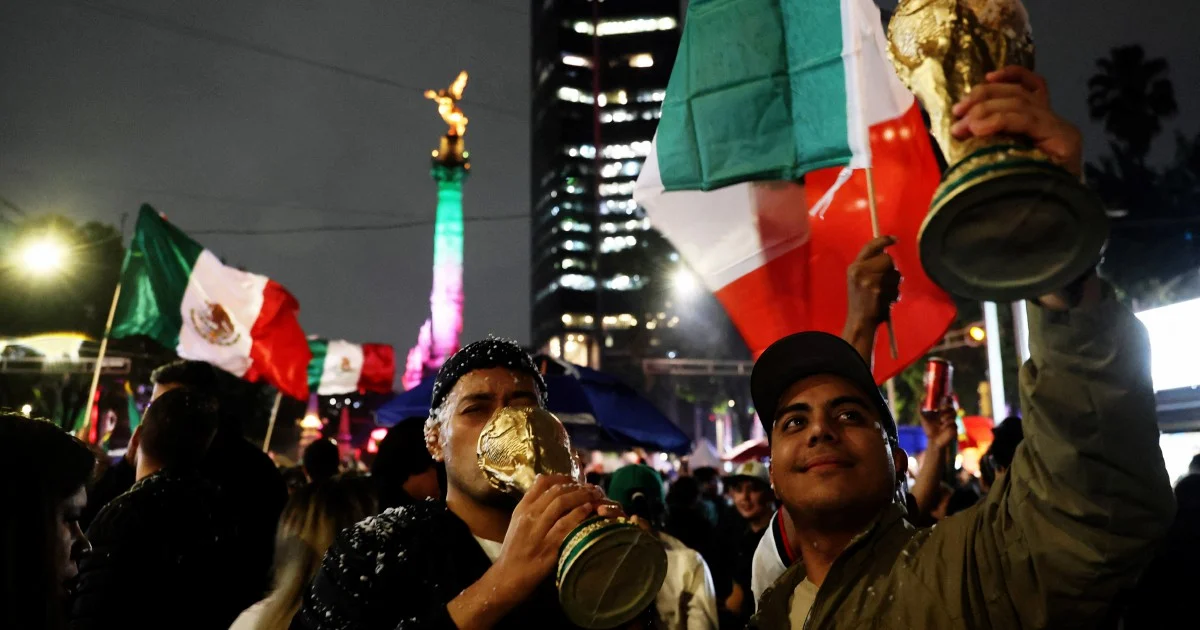
A festive gathering turned into a nightmare in Cabo San Lucas when a black vehicle suddenly accelerated into a crowd of Mexico national football team supporters on Wednesday evening. The incident unfolded at the popular seaside tourist destination, with authorities confirming that 17 individuals sought medical treatment following the collision. Los Cabos city hall released a statement detailing the emergency response, noting that the driver remained at the scene and was subsequently taken into custody by local law enforcement officials.
Footage circulating across social media platforms, verified by international news agencies, captured the chaotic moments surrounding the collision. Images show the vehicle surrounded by supporters wearing Mexico's iconic national team jerseys, their celebratory mood suddenly transformed into panic and confusion. The car then surged forward with significant speed, striking multiple individuals and propelling them upward before hitting bollards—protective barriers commonly installed in public spaces to prevent vehicle-related incidents.
The aftermath proved equally disturbing for those present. Subsequent verified video recordings show bystanders forcibly extracting an individual from the vehicle's interior, with the crowd responding aggressively to the driver. Multiple injured parties lay bloodied on the ground, their conditions initially unclear in the immediate aftermath of the incident. Emergency response teams moved quickly to the scene to provide medical assistance and establish order among the traumatised gathering.
Cabo San Lucas, situated at the southern tip of the Baja California Peninsula where the Pacific Ocean meets the Sea of Cortez, ranks among Mexico's most visited destinations. The resort town attracts millions of international and domestic tourists annually, drawn by its pristine beaches, luxury accommodations, and year-round warm climate. The incident's occurrence in such a high-profile location amplifies concerns about public safety during large gatherings and celebratory events, particularly when emotions run high following major sporting achievements.
Mexico's football culture runs exceptionally deep throughout the nation, with World Cup matches generating intense national pride and spontaneous public celebrations. Supporters typically congregate in major thoroughfares, public squares, and tourist hotspots to share the joy of their national team's performance. These celebrations ordinarily pass without serious incident, making Wednesday's tragedy an unexpected and shocking deviation from customary festive traditions across the country.
The circumstances surrounding the driver's motivation remain under investigation by local authorities. Whether the incident resulted from mechanical failure, deliberate action, or some other contributing factor has not been publicly disclosed. The arrest of the driver indicates that investigators are treating the matter seriously, though the precise charges have not yet been confirmed. Family members and legal representation will likely become involved as the case progresses through the Mexican legal system.
For Southeast Asian observers, the incident serves as a sobering reminder of the unpredictability that can emerge during mass public gatherings, regardless of a location's tourism status or development level. Malaysia, with its own passionate football fanbase and frequent large-scale sporting celebrations, must continually evaluate safety protocols at events attracting substantial crowds. The presence of protective barriers, trained crowd control personnel, and swift emergency medical response mechanisms can mean the difference between minor incidents and major tragedies.
The regional implications extend beyond Mexico itself. Tourist destinations throughout Latin America and Southeast Asia that depend heavily on visitor spending must balance the openness and accessibility that attract tourists with practical security measures. Implementing comprehensive crowd management systems—including vehicle barriers in appropriate locations, clearly marked emergency zones, and trained rapid-response teams—represents standard practice in many developed nations but remains inconsistently applied across some emerging tourism markets.
Medical facilities in Cabo San Lucas, while generally well-equipped to handle typical emergencies given the town's tourism infrastructure, faced a sudden influx of trauma cases. The speed and effectiveness of the local healthcare response demonstrated the importance of maintaining robust emergency services in tourist-dependent communities. Hospitals and clinics in such areas require adequate staffing, medical supplies, and coordinated protocols to address sudden mass casualty incidents.
For Mexico's national football federation and local authorities, the incident raises difficult questions about managing spontaneous celebrations. While discouraging fans from celebrating their national team's achievements proves neither feasible nor desirable, establishing designated celebration zones with appropriate security measures represents a practical compromise between freedom of expression and public safety. Planning authorities in major tourist destinations should consider designating areas specifically suited for large gatherings, complete with appropriate infrastructure and emergency access points.
The broader conversation about vehicle-related incidents in crowded public spaces has gained prominence globally following similar tragedies in various countries. Experts recommend comprehensive urban planning strategies that protect pedestrian areas while maintaining vehicle access where necessary. Temporary bollard systems, permanent barriers designed to blend with architectural aesthetics, and intelligent traffic management systems can effectively prevent unauthorised vehicle access without transforming public spaces into fortified zones.
As investigations progress and victims receive ongoing medical care, the incident will likely prompt soul-searching within both Mexican tourism authorities and the broader international travel industry. Balancing the authentic spontaneity that makes travel experiences meaningful with the responsible implementation of safety measures remains one of contemporary tourism's central challenges. Cabo San Lucas, despite this tragic episode, will almost certainly continue attracting visitors, but the incident will undoubtedly influence how local authorities approach public safety planning for future major events.

