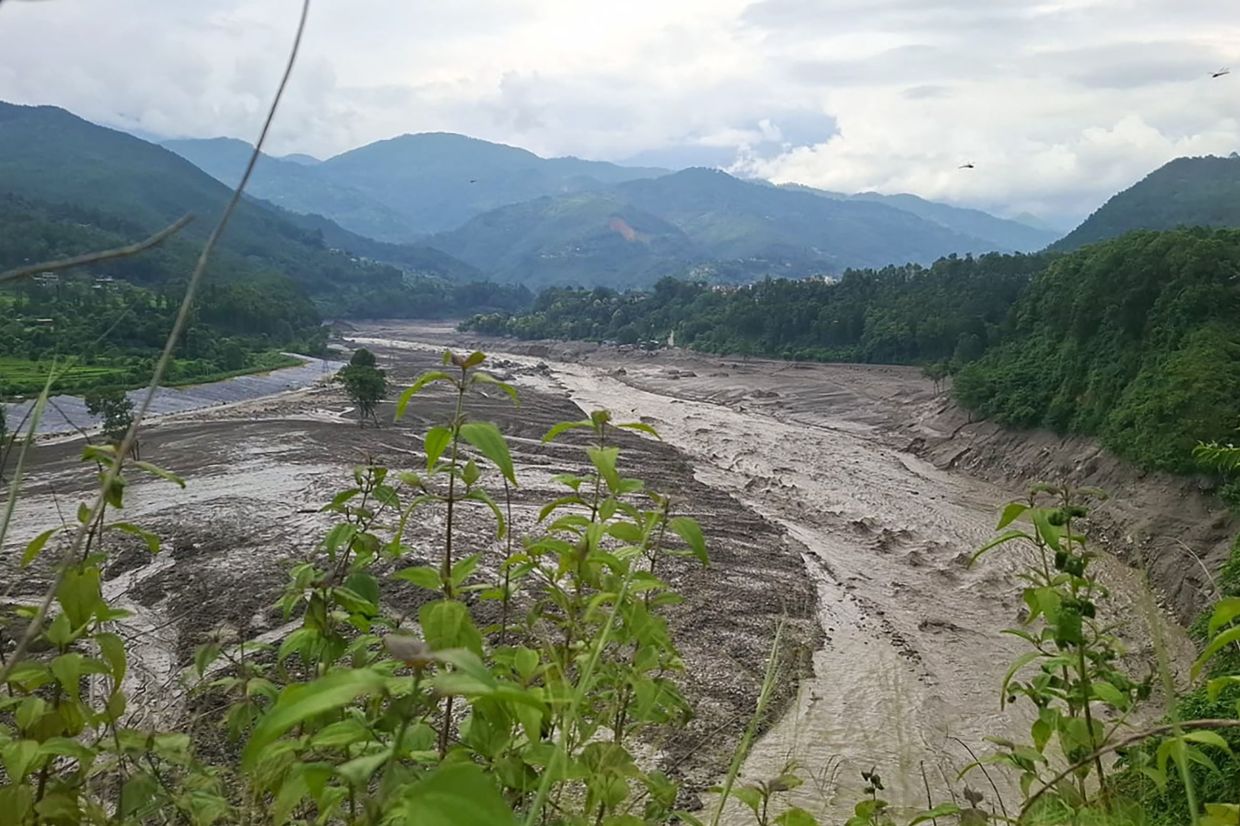
A catastrophic flash flood sweeping through Nepal on Wednesday has claimed at least 22 lives and sparked a multinational search and rescue operation as hundreds of people remain unaccounted for in one of the Himalayan nation's worst recent natural disasters. The deluge, which struck around 9 in the morning local time, devastated multiple districts and has exposed the region's increasing vulnerability to extreme weather events in an era of rapid climate change.
Malaysian citizens have been directly caught up in the crisis. The Foreign Ministry reported that its embassy in Kathmandu has received distressing notifications from travel agencies indicating contact has been lost with 11 Malaysians believed to be in Rasuwa district, one of the hardest-hit areas. This figure forms part of a broader international impact, with officials confirming that 384 tourists overall have gone missing, including 291 visitors from nations such as India, the United States, the United Kingdom, and Malaysia. The majority of missing persons are thought to be pilgrims—many from India and the Indian diaspora—who were traversing the region en route to the sacred Mount Kailash shrine in Tibet's Chinese autonomous region, a destination of profound spiritual significance for Hindus across South Asia.
The Bhotekoshi River, which sits at the heart of this unfolding tragedy, transformed into a torrent of destruction as it burst its banks, obliterating villages, severing transportation networks, and damaging critical energy infrastructure including hydropower facilities. In Nuwakot district, which has emerged as among the most severely impacted zones, entire multistoried buildings, commercial vehicles, and transit vans were buried beneath enormous quantities of mud and debris. The scale of structural devastation prompted officials to issue urgent warnings to inhabitants across several districts, cautioning them to maintain strict distance from the Bhotekoshi, Trishuli, and Narayani river systems as additional dangerous conditions persisted.
Investigators from the International Centre for Integrated Mountain Development, based in Kathmandu, have determined that an avalanche originating from a glacier initiated the catastrophic sequence of events. Specifically, the Lhende Khola River, which feeds into the Bhotekoshi system, experienced unprecedented flooding after an ice and rock avalanche from a glacial formation on Nepal's side of the border obstructed the watercourse, creating a sudden and violent release of accumulated water downstream. This represents a troubling pattern: the same tributary had experienced severe flooding merely fourteen months prior, suggesting an accelerating cycle of glacial instability in the region.
Disaster risk reduction specialist Saswata Sanyal from the climate research centre emphasized the dire implications of the Himalayan warming pattern. He noted that the recurring nature of such events within compressed timeframes reflects fundamental changes to the mountain ecosystem, arguing that early warning systems now represent the frontline of adaptation strategy for communities inhabiting these increasingly perilous zones. The statement underscores how traditional infrastructure and emergency response frameworks designed for historical weather patterns are becoming obsolete as climate impacts intensify.
The scientific evidence underpinning these concerns is sobering. Research teams operating in Kathmandu have recently documented that glaciers spanning the Hindu Kush Himalaya region are retreating at accelerating velocities, with ice loss rates that have doubled since the year 2000. Human-caused climate change, operating through mechanisms of rising atmospheric temperatures, stands as the primary driver of this transformation. Extreme weather phenomena—encompassing prolonged heat waves, intense precipitation events, and catastrophic landslides—have become increasingly frequent across the mountainous belt that encompasses Nepal and neighboring territories including India.
The Himalayan region confronts particular vulnerability to climate-driven hazards due to atmospheric warming occurring at rates substantially exceeding the global average. This differential heating pattern disrupts traditional precipitation cycles, destabilizes glacier masses that communities downstream depend upon for water security, and elevates the probability of sudden hydrological events that overwhelm existing protective infrastructure. The past twelve months have witnessed multiple instances of such catastrophes, with a comparable disaster occurring in August of the previous year when a glacial lake in adjacent Tibet overflowed due to unseasonable heat, resulting in nine fatalities and destruction of vital cross-border connectivity including a crucial bridge linking Nepal and China.
Government authorities have mobilized extensive response mechanisms. Sasmit Pokharel, representing the Nepali government, confirmed that assistance requests have been directed toward both India and China, enlisting the specialized capabilities and manpower that neighboring powers can provide for mountain rescue operations. Chinese President Xi Jinping issued directives to accelerate search and rescue initiatives in the Gyirong region along the Tibetan frontier, where Chinese state media reported that large-scale operations were underway, though no casualty figures were immediately disclosed. Simultaneously, Indian Prime Minister Narendra Modi engaged directly with Nepal's Prime Minister Balendra Shah, pledging comprehensive humanitarian aid and coordinating relief and rescue team deployments through established bilateral frameworks.
The tragedy arrives amid a broader reckoning within the Himalayan scientific and policy communities regarding the sustainability of current settlement and infrastructure patterns. As glacial melt accelerates and precipitation becomes more erratic, questions mount about the viability of existing hydropower installations—themselves vulnerable to the very flooding they were constructed to manage—and the long-term habitability of river valleys that have historically been relatively stable. The concentration of tourism infrastructure along traditional pilgrimage routes, combined with the region's role as a critical source of water and hydroelectric power for South Asia, means that climate-driven hydrological instability carries implications extending far beyond immediate affected communities.
The international dimension of this disaster serves as a reminder that climate impacts transcend borders and sovereignty. The presence of Malaysians, South Korean workers, British tourists, and citizens from across South Asia among those affected illustrates how the Himalayan climate crisis represents a shared regional challenge. For Malaysia specifically, the incident underscores the vulnerability of its citizens to natural hazards in mountainous regions across South and Southeast Asia, raising questions about consular preparedness, travel advisory systems, and coordination mechanisms with regional partners during transnational emergencies of this magnitude.

