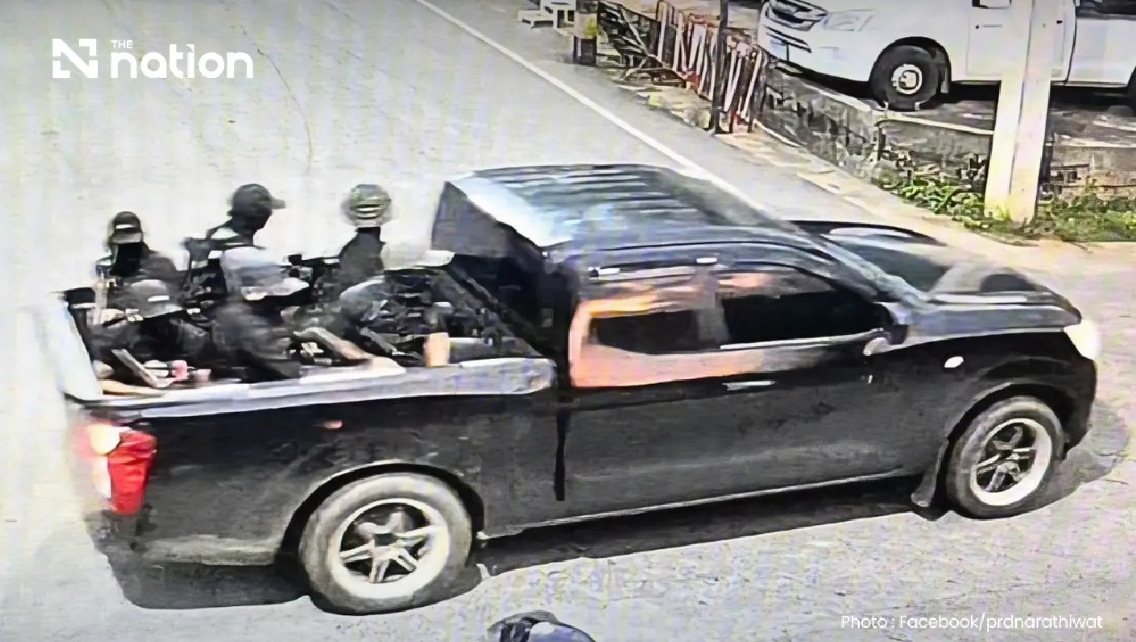
A coordinated assault on a paramilitary checkpoint in Narathiwat province has been meticulously documented by security cameras, offering investigators a rare window into the tactical execution of an insurgent attack that claimed five lives and wounded civilians in less than two minutes. The July 22 raid on the Bukeh Sami checkpoint demonstrates the sophistication and planning underlying recent violence in Thailand's troubled deep south, where security challenges continue to test regional stability and Malaysian border communities monitoring developments across the frontier.
The attack unfolded at approximately 6.45pm at the checkpoint located in Tanyong Mat subdistrict, Ra-ngae district, a facility staffed by members of the 4509th Ranger Company under the 45th Ranger Regiment Task Force. Initial security assessments suggested six attackers were involved, but subsequent analysis of footage from multiple camera angles fundamentally altered investigators' understanding of the incident's scope. Detailed examination revealed two distinct operational teams totalling nine individuals, suggesting a level of planning and resource coordination that points to organized insurgent capacity rather than opportunistic violence.
The primary assault force comprised seven attackers operating from a black Nissan pickup truck with Songkhla registration plates, while a two-person mobile support element followed on a red-and-white Honda Wave motorcycle. The truck's occupants wore black garments approximating paramilitary ranger uniforms paired with broad-brimmed hats that obscured their facial features—a deliberate attempt to sow confusion about the attackers' origins. The motorcycle team's composition suggested different tactical responsibilities: one occupant carried an 11mm pistol while the passenger, disguised in a black women's hijab, wielded an AK-pattern rifle and functioned as the group's rear security element.
The assault's execution revealed practiced coordination and fire discipline. As the pickup approached the checkpoint from Tanyong Mat market direction, occupants in the truck bed initiated concentrated volleys from M16 and AK-type rifles at three rangers positioned at the roadside checkpoint perimeter. The initial volley proved instantly lethal, dropping all three sentries. The vehicle then halted, and dismounting team members suppressed the checkpoint's concrete bunker where two additional rangers were stationed, maintaining covering fire while other operatives systematically searched the installation for weapons and equipment.
The attackers methodically targeted the checkpoint's defensive position, directing sustained fire toward the bunker structure before executing what amounted to a tactical loot operation. The raiders recovered four folding-stock AK-type rifles, one 11mm pistol, four ammunition magazines, and four bulletproof vests—a focused acquisition suggesting prior reconnaissance and knowledge of available weaponry. As the group withdrew toward their vehicles, one attacker launched a pipe bomb toward an elevated structure adjacent to a nearby bridge, apparently intended as a final harassing gesture. The entire operation concluded within approximately 90 seconds, after which both the pickup and motorcycle proceeded toward Dusongyo subdistrict.
The human toll of this abbreviated assault proved devastating. Five rangers died at the scene: Sergeant Major First Class Theerayut Somakerd, and ranger volunteers Sakiriya Jena, Wimon Dabthong, Nattasit Kaewsena, and Salahuding Pi. Additionally, six civilians sustained injuries in the crossfire, including a ten-year-old child, complicating the attack's classification as a precision military operation. Initial reports provided conflicting casualty figures ranging from two to five civilian injuries before authorities settled on the final count of six, illustrating the chaos and confusion characterizing immediate post-incident assessment.
Forensic analysis conducted throughout the night following the attack generated substantial physical evidence. Security teams recovered more than 100 spent cartridge cases scattered across the road, comprising ammunition associated with M16 rifles, AK-pattern weapons, and 11mm pistols. Investigators identified additional ammunition believed to represent rounds ejected during weapon malfunctions and subsequent clearing procedures, providing insights into operational tempo and potential equipment reliability issues. The checkpoint's reinforced bunker bore extensive bullet scarring, while pipe bomb residue was recovered near the structure targeted during the withdrawal phase.
The black Nissan pickup utilized in the assault was subsequently discovered abandoned and deliberately incinerated, presumably representing an attempt to eliminate forensic evidence linking the vehicle to the operation. However, security forces had already established vehicular checkpoints and roadblocks along anticipated escape corridors, potentially limiting the attackers' available routes and constraining their operational reach. The burnt pickup nevertheless remains valuable as physical evidence, with investigators examining its remains for fingerprints, ballistic markings, and other identifying characteristics.
Narathiwat Governor Boonchuay Homyamyen coordinated the overnight investigation alongside senior law enforcement and military commanders, including Provincial Police Region 9 commissioner Pol Lt Gen Piyawat Chalermsri, Narathiwat police chief Pol Maj Gen Prayong Khot Sakha, and Colonel Witthaya Sariya of the 45th Ranger Regiment Task Force. The interagency response mobilized bomb-disposal technicians, tactical police units, and forensic teams, reflecting the security establishment's prioritization of this incident. Yet the attackers' apparent success in extracting from the immediate vicinity and destroying their primary vehicle underscores persistent challenges in containing insurgent elements operating in Narathiwat's complex terrain.
For Malaysian readers and regional observers, this incident illustrates the enduring security challenges confronting Thailand's troubled provinces. The attack's tactical sophistication, coordinated multi-team structure, and apparent prior intelligence gathering suggest capabilities that extend beyond ad-hoc militant activity. Such operations generate spillover concerns for neighboring Malaysia, where cross-border movement and logistical support networks have historically complicated counterinsurgency efforts. The assault's outcome—successful weapon acquisition, rapid disengagement, and apparent escape—may provide tactical lessons that influence subsequent insurgent operations throughout the region, making thorough investigation and information sharing increasingly critical for broader regional security.
Inventory discrepancies regarding stolen weapons and equipment troubled investigators, as early accounts provided conflicting details about quantities and weapon types taken during the raid. Authorities continued verifying the complete inventory of missing items, recognizing that accurate documentation of stolen armaments carries implications for subsequent threat assessments. The successful acquisition of military-grade rifles and body armor represents a significant material gain for insurgent actors, potentially enhancing their operational capacity in forthcoming months and underscoring the consequences of this security breach beyond the immediate human casualties.

